
Who knew that when I fell in love with my boyfriend, I would also fall in love with India and Indian culture? As a foodie, I never really cared for Indian food most of my life; however, I had a terrible introduction to Indian food. Twenty years ago, my friends dragged me to a $6.99 Indian all-you-can-eat buffet. They did me no favors in introducing me to their version of quality Indian food. Yes, on the streets of Bangalore, you can enjoy an epic Indian lunch for under seven dollars. Here in America, a seven-dollar Indian lunch is on par with

McDonald’s, just add curry powder. If you are looking for Indian cooking for beginners, there are some simple tricks to take that curry from $6.99 buffet to Vikas Khanna worthy.
Cook with chicken thighs because life’s too short for dry meat and regret.
When it comes to Indian cooking for beginners, let’s talk protein. I don’t mean to start poultry drama, but chicken breasts are so overrated. Bland. The tofu of the bird world. If you’re still out here cooking with chicken breasts, it’s time we had a serious (but loving) intervention—because chicken thighs are where it’s at. Juicy, flavorful, forgiving, and frankly, cheaper than therapy.

Chicken thighs are more forgiving than Grandma. Except for my grandma, who still doesn’t know I voted for Trump. Chicken thighs stay moist like they’ve signed a contract with Aquafina. You can accidentally forget them in the oven for five extra minutes while you are playing with the dog. Those chicken thighs will still come out juicier than a reality show confession.
You know what lives in chicken thighs? FLAVOR. Real, dark-meat, can’t-fake-it flavor. Breasts are the millennials of the chicken world—enthusiastic, but you have to teach them everything. Thighs? They’re the seasoned professional with a smoker’s voice and five decades of culinary wisdom. They’ve seen things. Been in White Bean Chicken Corn Chili, lived in Fig Chicken Curries. They’ve partied in Adobo Mole, danced in soy sauce, and they still came out tender.
Of course, if you are talking about Indian cooking for beginners, you may also want to look at cooking with uniquely flavored meats such as venison, duck or goat’s brains.
Contrary to popular belief, not all Indians are vegetarians. Yes, Jainism and certain Hindu and Buddhist sects strongly emphasize vegetarianism, but most Indians do eat meat. Looking to try cooking with lamb or venison? Use turmeric or paprika to take away from that gamey flavor. Or you can even soak your protein in milk for an hour.

Everything You Never Knew About Cooking with Fresh Spices
(And Were Probably Too Ashamed to Ask Because You’ve Had That Jar of Oregano Since the Obama Administration)
You know that jar of paprika that says “Best By: 2017”? Throw it out. No, don’t sniff it. It doesn’t smell like anything because it’s older than your niece. Until I met my boyfriend from Bangalore, I never really paid attention to my spice cabinet. Boy, was I missing out on a big part of being a good Indian chef and just a better cook in general. These days, I create my own Curry Powder and I grind my own Garam Masala. Do you care about your food having intense flavors, especially when creating impressive chilis and curries? Then your 12-year-old jar of nutmeg is about to get the funeral it deserves.
Cooking with fresh spices is like upgrading from a flip phone to a Google Pixel Pro 10. It’s the difference between whispering a lullaby to your food and shouting Beyoncé Cowboy Carter lyrics at it through a megaphone made of flavor. I mean, if Beyoncé understood country music at all. Maybe I shouldn’t be comparing my cooking to Beyonce…
Fresh spices pop. They sing. They are soulful. Like Jelly Roll without the tattoos and the lingering heroin odor. They tell your taste buds, “We’re doing things differently now.”

- Fresh cumin? Nutty and warm. If your cumin smells like armpits? Toss it.
- Fresh coriander? Citrus-y and bright. Fresh
- black pepper? Oh. My. God. It’s like spicy black glitter.
Roasting wakes up the essential oils trapped inside those innocent-looking seeds and transforms them into full-blown aroma fireworks. It’s like unlocking a hidden level in your food where everything is somehow deeper, toastier, and smells like you could be impressing Gordon Ramsay.
Warning: doing this will make your kitchen smell like the entrance to an Indian supermarket. In the best way.
Spices don’t improve with age like wine or Nicholas Cage. No matter how tightly you sealed that jar of thyme, it’s not aging like a fine single malt—it’s aging like milk. Invisibly. Quietly. Tragically.
So how long do spices last?
- Ground spices: about 6 months to a year
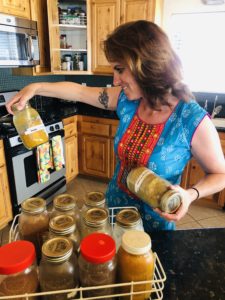
- Whole spices: 2–3 years if they’ve been living right (a.k.a. in a cool, dark, spice monastery)

If you’re not sure if a spice is fresh? Rub a little between your fingers and sniff. If it smells like… air, it’s dead. If it smells like something that makes your nostrils dance? Congratulations, it lives!
Roasting those onions
Roasted onions are the beginning of a great meal, whether it’s a stew, curry or chili. You can not begin to develop flavors if your onions are raw. (This goes the same for raw spices.) Peel your onions and cut them in half. Then dice into thin slivers. Now you are ready to roast your onions, most likely in ghee. Sometimes I use bacon fat or coconut oil, just depending on the dish I am looking to create. Roast those onions. Then roast them longer. No matter the dish you are creating, expect this step to take 15 minutes.
Everything You Ever Wanted to Know About Dal—But Were Too Gassy to Ask

When it comes to new relationships, no one wants to talk about the fart room. That is why when my boyfriend and I first started dating, I told him, I don’t care for dal. No, what I really don’t care for is sleeping in the garage with the dogs after I enjoyed a bowl of dal. But wait, there are other options! No joke, I have always been terrified of most legumes, especially dal. My body is not a fan of legumes. Until I met my boyfriend and he did some explaining about how to actually cook dal, I had no idea I was doing everything wrong. And enjoying a great Dal Vension Curry does not have to leave me running to the fart room.
Did you know there is a culinary science about pre-soaking your dal overnight? Soaking the dal helps break down oligosaccharides, which is a fancy way of saying, “you might fart less.”
Aside from making you less gassy, pre-soaking that masoor dal has a lot of upsides. For one, it makes your dal curry cook so much faster. Do you really want to stand over the pan full of chana dal for two hours, waiting for it to soften, when you could be watching Gutfeld? Soaking your dal will give your finished product a much finer texture as well, so your Dal Masala won’t taste like beach sand at a $6.99 Indian buffet.
Dal, Rice’s emotionally available best friend.

From Goa to Mumbai, dal is the national side dish of India. Whether you’re North, South, East, West, or somewhere floating in the Indian Ocean, there’s a dal for you.
- North India: Think dal makhani (buttery black lentils that could win a Nobel Peace Prize), chana dal, and toor dal in hearty, ghee-soaked curries.
- South India: Enter sambar (dal + vegetables + tamarind + emotional depth), and rasam (soupy, spicy, sinus-clearing miracle).
- East India: Bengal gives us musurir dal with mustard oil, sass and sometimes even lentil fritters for extra flair.


- West India: Gujarat goes sweet and tangy with Gujarati dal, and Maharashtra’s amti brings in the god-tier combo of spice + jaggery.
So you went on Pinterest and you found a Dal Recipe you are dying to create in your home kitchen. So what kind of dal should you stock your Dal Drawer with?
- Toor dal (split pigeon peas): Nutty, reliable, cooks evenly. The Labrador retriever of Dals.
- Chana dal (split Bengal gram): Chunkier, holds its shape, often used in soups.
- Masoor dal (red lentils): Quick-cooking, mellow, the one you call when you forgot to soak anything.
- Urad dal (black gram): The VIP in dal makhani, and also the secret agent inside idli and dosa batter.
- Moong dal (mung beans): Gentle, light, sometimes used for khichdi when you’re sick or pretending to be healthy.
- Rajma (kidney beans) & chickpeas (chole): Technically legumes, not dals, but they crash the dal party often and no one complains. Try this hearty Chole, often served with breakfast in Tamil Nadu, along with freshly fried Puris.

Let’s ride this bike to the nearest Indian grocer!

Cooking with dal is not just cooking—it’s a lifestyle. You soak. You drain. You boil until tender in your pressure cooker. You add curry leaves roasted in more ghee, and suddenly you’ve created a bowl of edible joy that could make Gordon Ramsay sit down and cry gently into his roti.
So go on. Respect the soak. Embrace the simmer. And remember: behind every great Indian curry is a humble bowl of dal, steaming like a warm hug, whispering, “You didn’t need meat anyway.”
Namaste, and pass the pickle.
Okay, so what is pickle, you may be asking? No, I’m not talking about what I attempt to grow in the garden every year (If the wild burros would just stop eating it) or what I order extra of every time I sit down with a protein burger at Five Guys. Indian pickle is a life-changing spicy Indian condiment. If I had never met my Anglo-Indian boyfriend while fishing for trout in 2014, this spice-loving foodie probably would have never found herself spellbound on the pickle aisle of Pioneer Cash and Carry, trying to decide between the Telugu Onion Pickle and the Priya Ginger Pickle.
Naans, parathas and pooris

Yes, I do realize that anyone who has ever stepped into a seven dollar all you can eat Indian buffet has tried naans. Or maybe you buy them frozen at Trader Joe’s.
Home-baked naans, chapatis and parathas are just so easy to create. Why buy those store-bought ones that are chock-full of calcium propionate, sorbic acid, and sodium benzoate. Hydrocolloids like agar and carrageenan can also help retain moisture, keeping the bread soft and you know, as unnatural as Nancy Pelosi’s face.
You could be creating your own delicious flatbreads at home! Indian home cook tip: Purchase a tortilla press. You will thank me later. This easy kitchen device can save you time and take your chapatis to Mumbai standards. Want to start baking some Bangalore-worthy breads? This is a great and simple Garlic Naan recipe from one of my favorite food bloggers. Use a cast-iron pan to heat the naans and lots of very fresh garlic!
Why wok?
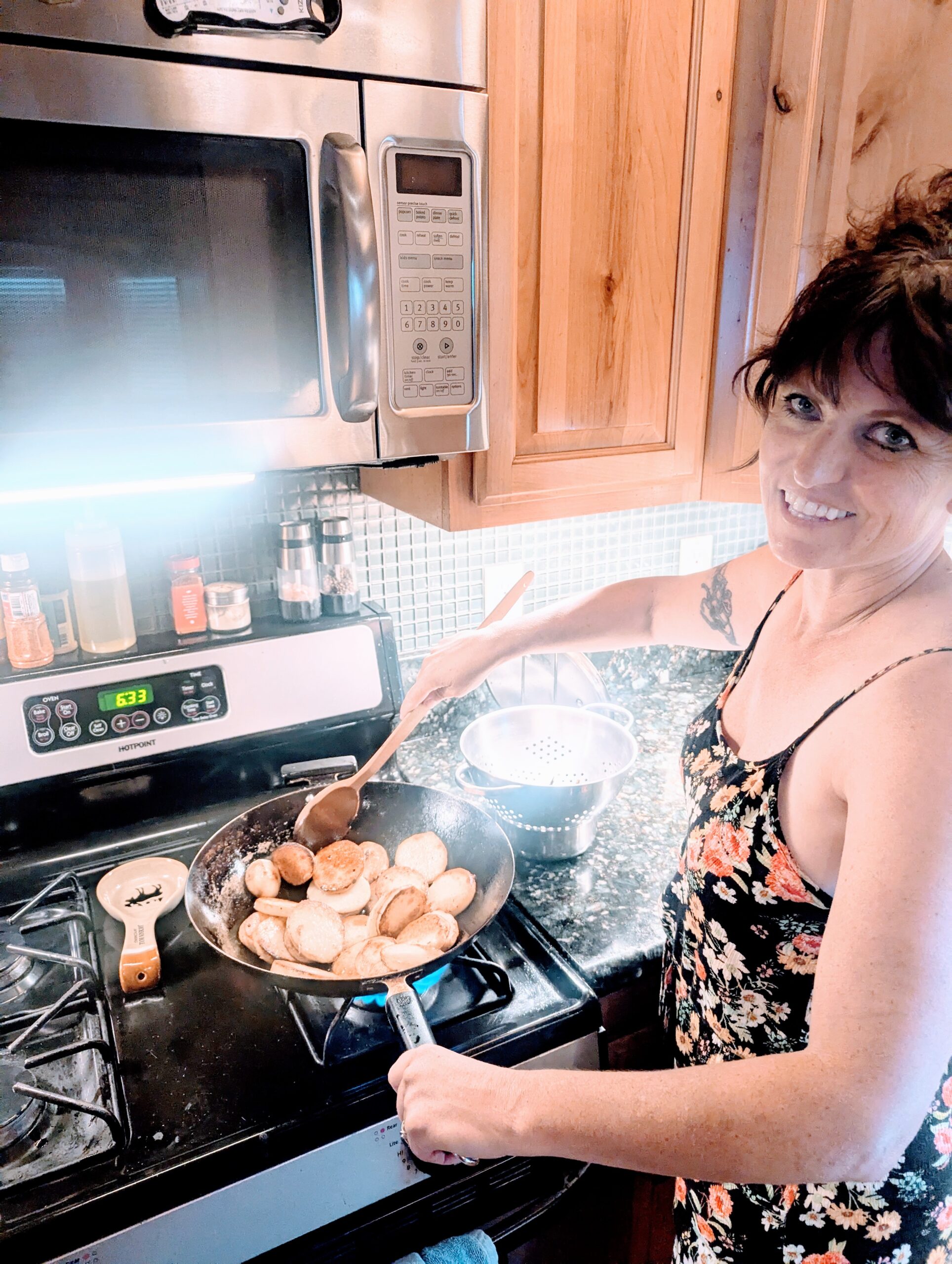
When it comes to Indian cooking for beginners, you need to purchase two other kitchen devices. You need a pressure cooker and you need a wok. I simmer all my curries in our wok. Much like Asian cooking, you get a higher heat intensity when cooking certain dishes in the wok. While learning Indian cooking for beginners from my southern Indian born boyfriend, I learned that when you roast those spices and braise those onions, you simply can’t do a good job without a wok.
When it’s time to fry your peppers, whether you use Serrano peppers or dried red chilis, you need the depth of that wok, or you will be coughing up chili smell for hours (Believe me, I know!) Roast those chilis in so much ghee in the base of your wok so they are just smothered in ghee. Turn your wok to an angle to be able to do this. If you roast your chilis in lots of oil and kind of submerge them, your house won’t fill up with chili smoke. You won’t choke on chile air while in the roasting process!
Under pressure
Why yes, creating the perfect Indian curry can be a time-consuming project. If you are a fan of Rachael Ray’s 30-minute meals, Indian c ooking may not be for you! A thirty-minute curry will have raw spices! This is why people think curry powder tastes like dirt! Because when your spices are raw, they are almost indelible! It took falling in love with an amazing Indian cook for me to learn this! A pressure cooker can help you streamline the Indian cooking process. We use the pressure cooker quite a bit to break down lamb quickly. We also use it to quickly cook our dal. When we create something like a Lamb Vindaloo, it helps create a complicated Goan dinner, relatively quickly.
Yogurt: The Real MVP of Indian Cooking
If you are even slightly serious about becoming a decent Indian home cook, go ahead and accept this now: You need yogurt. A lot of it. Not the sad, watery stuff hiding in the back of your fridge. We’re talking thick, creamy, full-fat yogurt that actually does something.
My go-to?
Kirkland Greek yogurt from Costco — because we’re not trying to churn our own dairy like it’s 1850.
Also solid: Fage full-fat Greek yogurt, which is about as close as you’ll get to proper Indian curd without booking a flight. And yes, traveling to India has absolutely turned me into a yogurt snob. There’s no going back. American yogurt? It feels like it needs to apologize.
In Indian cooking, yogurt is doing everything: It works to cool down your “I got carried away with the chilies” curry. It also adds richness without making things heavy. Sometimes I’ll even sub in cottage cheese in certain dishes like palak paneer—because rules are flexible, and honestly, it works.
When Things Get Spicy (Emotionally and Culinarily)
Let’s be real. At some point, you will overspice a dish.
You’ll taste it.
You’ll panic.
You’ll question your life choices.
You will grab the yogurt.
Indian cooking, you are alays learning
Here’s the thing about diving into Indian cooking—you never really “arrive.”
There is always:
- another new spice you have just learned about to figure out

- another new some influcncer showed on the IG to try
- another auntie somewhere silently judging your technique

On our last trip to India, I learned how to:
- scrape fresh coconut for chutney (arm workout included)
- make paneer from scratch (honestly impressive, I was proud of myself)
- and visit a local meat market… which was, let’s just say, a character-building experience
And somehow, even after all that, I still feel like I’ve barely scratched the surface. That’s kind of the magic of Indian cooking. Indian cooking isn’t something you “master” once and move on from—it’s something you keep coming back to, slightly more confident each time… and occasionally still humbled by a chili pepper.
I can’t wait for our next trip to India to see what we will learn next time abroad!
🍛 Indian Cooking for Beginners FAQ
What is the best way to start learning Indian cooking at home?
The best way to start Indian cooking for beginners is by focusing on: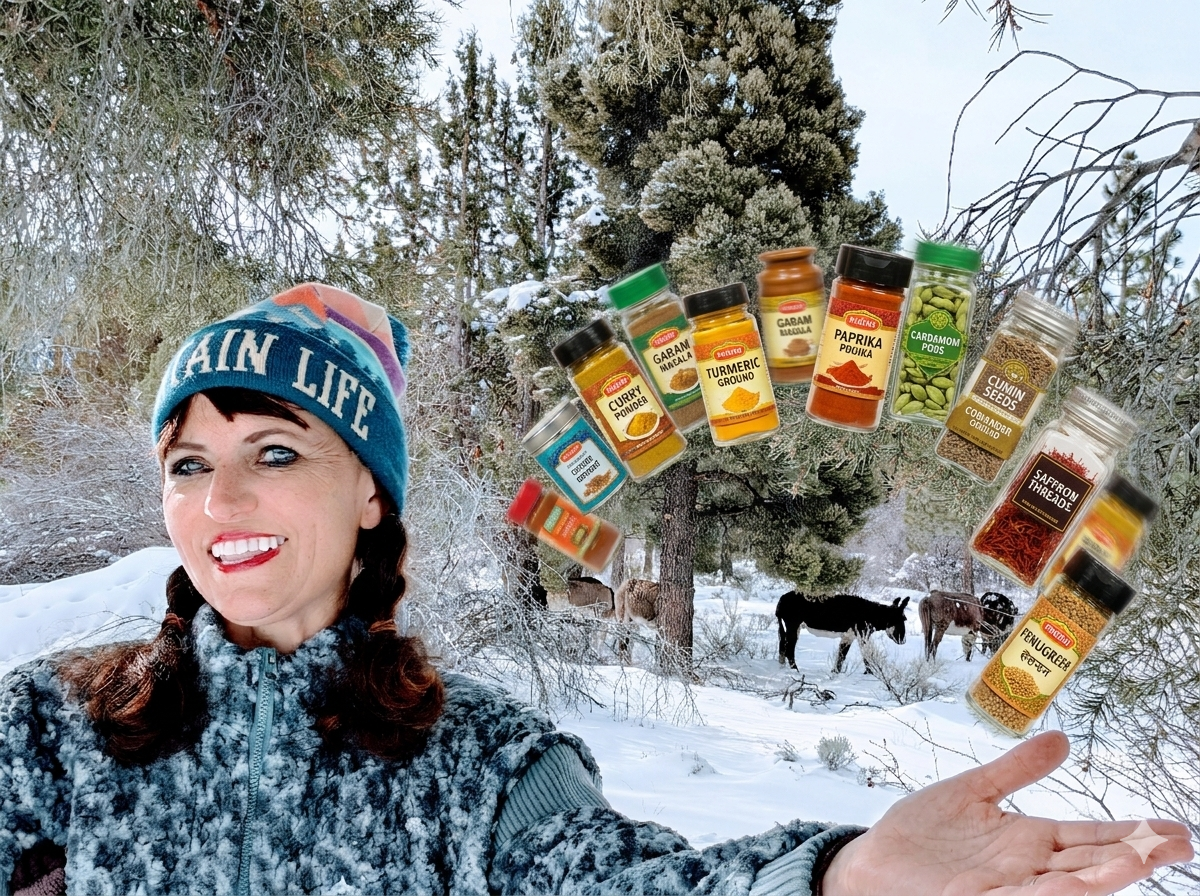
- Fresh spices
- Properly roasted onions
- Simple curries and dals
- Learning how flavors build over time
Indian cooking is less about complicated recipes and more about technique and patience.
What spices should every beginner Indian cook own?
A beginner Indian spice cabinet should include:
- Turmeric
- Cumin
- Coriander
- Garam masala
- Black pepper
- Paprika
- Dried red chilies
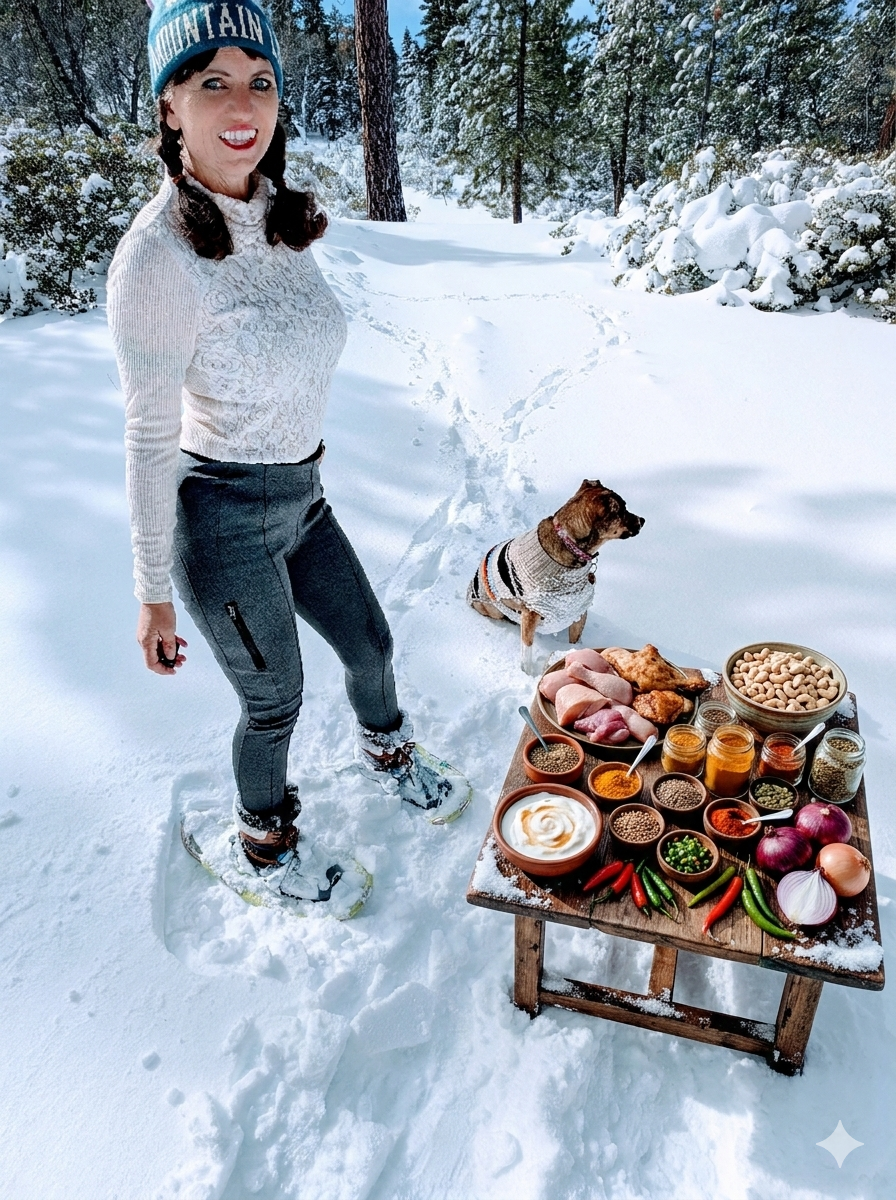
Fresh spices make a huge difference in flavor.
How long do spices last?
General spice guidelines:
- Ground spices: about 6 months to 1 year
- Whole spices: 2–3 years
If a spice has no smell left, it’s time to replace it.
Why is roasting spices important in Indian cooking?
Roasting spices helps release their oils and aroma, creating deeper flavor.
Raw spices can taste:
- Bitter
- Dusty
- Flat
Properly roasted spices are one of the secrets to great Indian food.
Why are roasted onions important in Indian curries?
Roasted onions create the flavor base for many Indian dishes.
Cooking onions slowly in:
- Ghee
- Coconut oil
helps develop sweetness and richness before adding spices or protein.
What is the best chicken for Indian curries?
Chicken thighs are often better than chicken breasts because they:
- Stay moist longer
- Have more flavor
- Hold up better in slow-cooked curries
Dark meat is much more forgiving for beginner cooks.
What is dal in Indian cooking?
Dal refers to lentils and lentil-based dishes commonly eaten throughout India.
Popular types include:
- Toor dal
- Masoor dal
- Chana dal
- Moong dal
- Urad dal
Dal is one of the foundations of Indian home cooking.
Why should you soak dal before cooking?
Soaking dal overnight helps:
- Reduce cooking time

- Improve texture
- Make legumes easier to digest

Pre-soaking also helps prevent the “why am I suddenly so gassy?” situation.
What kitchen tools are best for Indian cooking beginners?
Helpful beginner tools include:
- Pressure cooker
- Wok
- Cast-iron pan
- Tortilla press (great for chapatis and flatbreads)
These tools help recreate authentic textures and cooking techniques.
Why is a pressure cooker useful for Indian cooking?
A pressure cooker helps cook:
- Dal
- Lamb curries
- Tough cuts of meat
much faster while still developing rich flavor.
Why do Indian cooks use yogurt in curries?
Yogurt helps:
- Cool spicy dishes
- Add creaminess
- Tenderize meat marinades
Full-fat Greek yogurt is a great substitute for Indian curd in American kitchens.
What is the best yogurt for Indian cooking?
Many home cooks prefer:
- Kirkland Greek Yogurt
- Fage full-fat Greek yogurt
These are thicker and closer to traditional Indian curd.
What flatbreads should beginners learn first?

Good beginner Indian breads include:
- Naan
- Chapati
- Paratha
Homemade flatbreads are often fresher and better tasting than store-bought versions.
What is Indian pickle?
Indian pickle is a spicy, intensely flavored condiment made with ingredients like:
- Mango
- Ginger
- Onion
- Lime
- Chili
It is very different from American dill pickles.
Can beginners cook Indian food at home?

Absolutely.
Indian cooking for beginners becomes much easier when you focus on:
- Fresh spices
- Good ingredients
- Slow flavor-building techniques
You do not need restaurant experience to make great Indian food at home.


Comments
This was interesting: and it all makes sense: chicken thighs are so much tastier than chicken breast and fresh spices: when we visit the republic of Georgia: such a difference! And yes to good yogurt!
http://www.chezmireillefashiontravelmom.com
Author
I’ve definitely become a better cook in these last few years with these easy tips!
Very interesting read. You write so vividly and passionately about food! I’ve always gone for chicken breasts but will try wings. And most of my spices will probably need binning. Great to see you in the linky again.