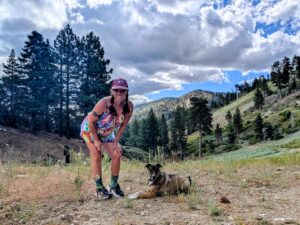
If you’ve spent more than seven minutes in Big Bear Lake, someone has already recommended Castle Rock Trail to you. And for good reason—it’s easily the most popular hike in the valley and comes with some of the best lake views this mountain town has to offer. Most visitors huff and puff their way up the first mile to The Big Boulder™—a massive climbing rock beloved by hikers, influencers, and people who own selfie sticks. According to all those “Experts” on All Trails, this is the hike to do in the Big Bear Valley.
But here’s the secret tourists never learn: Castle Rock got its name not from the boulder everyone posts on Instagram but from the castle-like moat hidden behind it. Yes, behind the boulder garden is the part everyone completely misses because they’re too busy taking photos of their Lululemon leggings “conquering nature.”
Your No-Nonsense Guide to Castle Rock Trail in Winter
Now—let’s talk winter.
Because Castle Rock in winter? She’s the same gorgeous trail wrapped in a fresh coat of NOPE. Unless you book a hike with a local hiking guide and come prepared with the right supplies.
Winter Hiking Reality Check
This trail turns into a full-on ice luge from December through March. If you try it in regular sneakers, I can guarantee only two outcomes:
You will fall.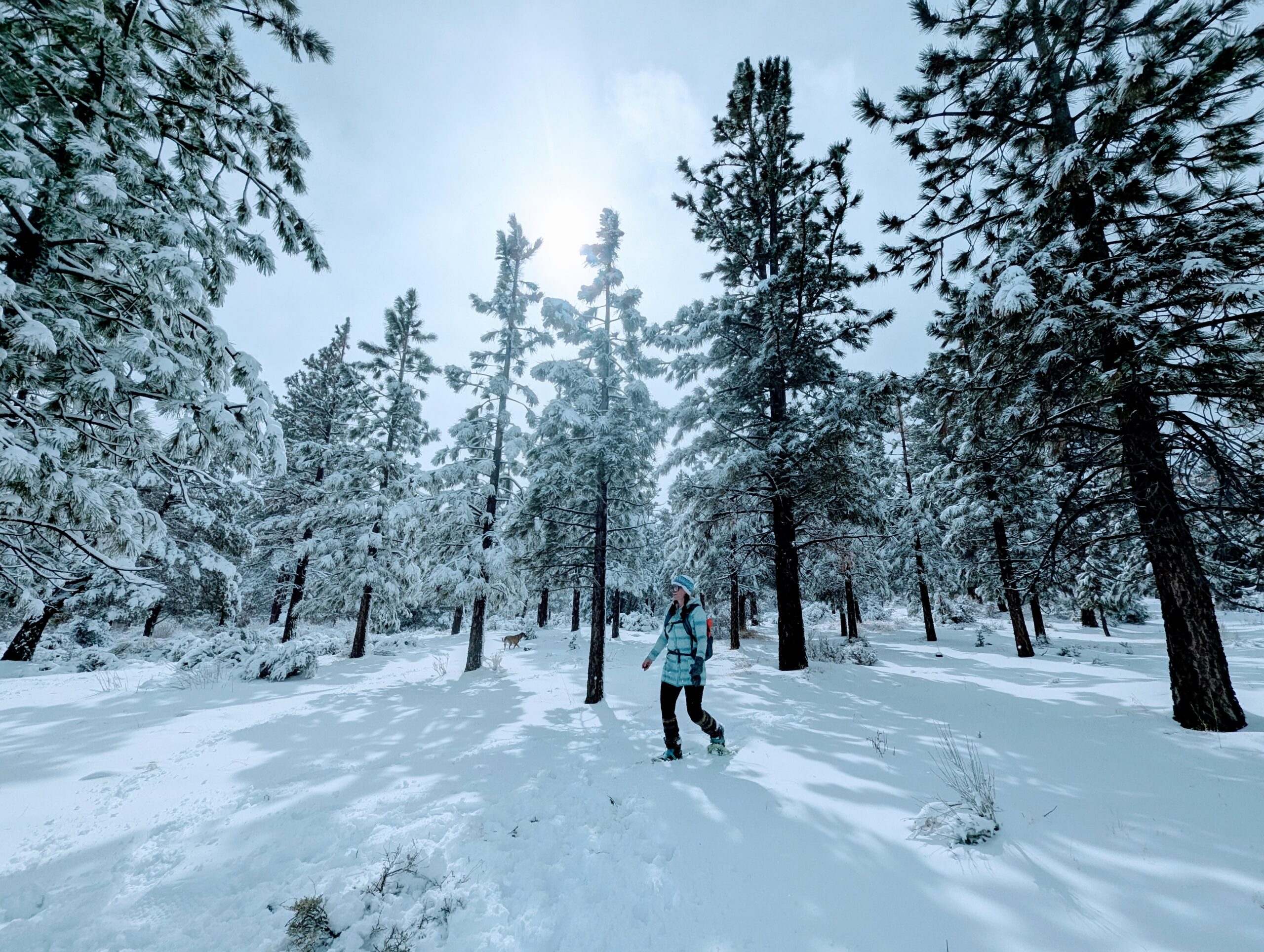
You will fall again.
Proper footwear isn’t optional—it’s survival. Think microspikes, cat tracks, or better yet, book a tour with a local guide who won’t let you shuffle up the mountain like Bambi on ice.
Snowfall on Castle Rock can hit four feet deep by mid-winter. At that point, the trail disappears entirely, and you’re basically following vibes, hope, and the footprints of the last poor soul who attempted it. For the intrepid (or deranged), you can continue past the moat and trek all the way to the edges of Bluff Lake Reserve—but unless you know what you’re doing, winter is not the time to freestyle your navigation skills. Bring a guide. Trust me.Bluff Lake is closed from November until May, but you can always hike around the Bluff Lake area, to Kidd Creek, or up to the edges of Skyline Trail to enjoy the view or hike back on the old Siberia Creek Trail (The first route to Big Bear way back in the mid 1800’s!) These are all stunning Winter Wonderlands!
What Winter Hiking Really Looks Like
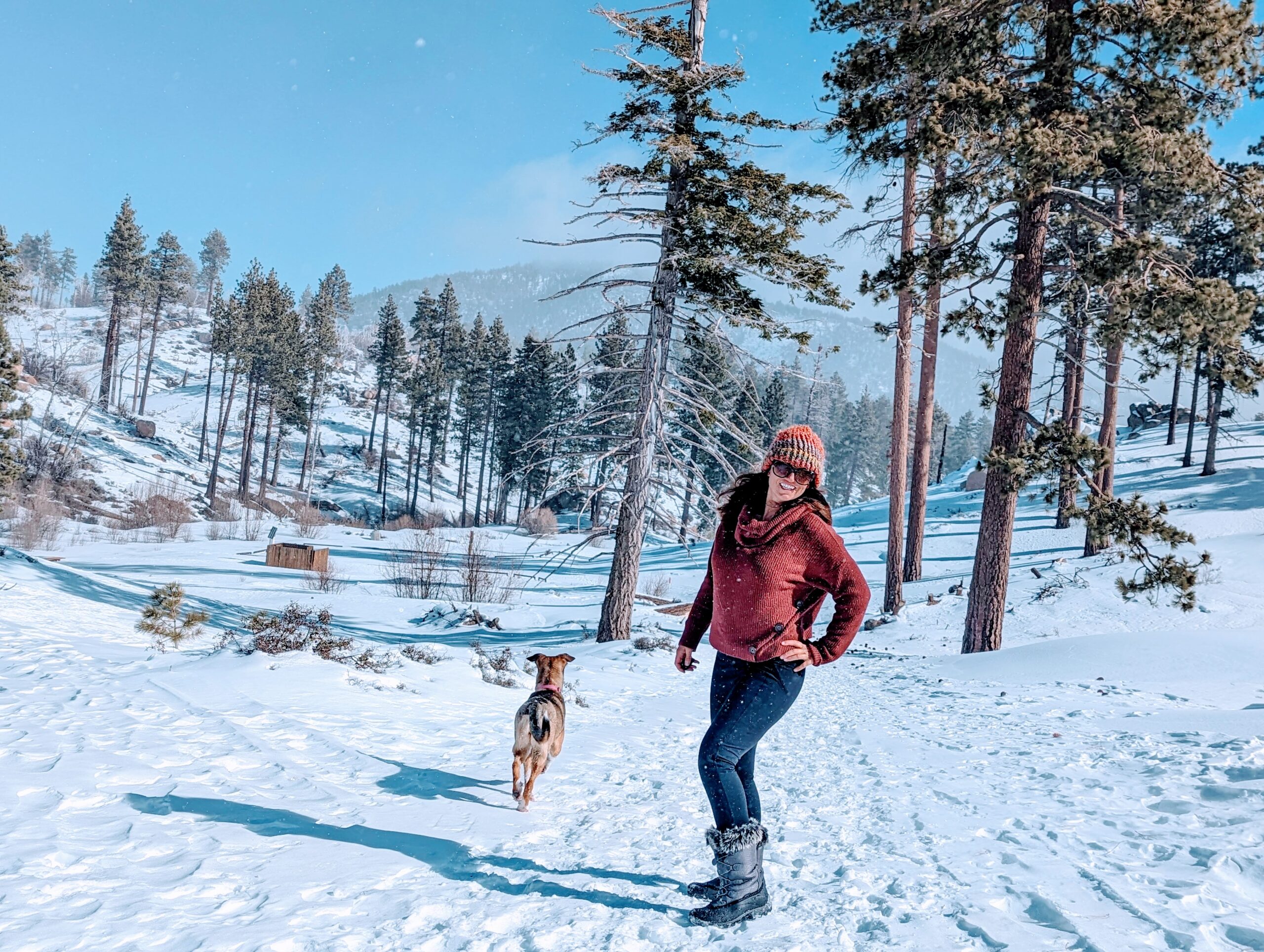
Castle Rock in winter is not the same gentle little climb your summer-visiting aunt bragged about. The first half mile is usually solid ice, which conveniently keeps the trail blissfully empty except for locals who own a tragic amount of gear.
When the deep snow hits, expect microspikes at the start, then snowshoes for the long slog upward. I’ve broken trail on January mornings where I was literally kicking my way uphill through two feet of powder, sweating out every Dark Chocolate Yuletide Christmas cookie I inhaled since October. So yes—if you want a winter workout that doubles as penance for your holiday choices, Castle Rock Trail is your spiritual journey.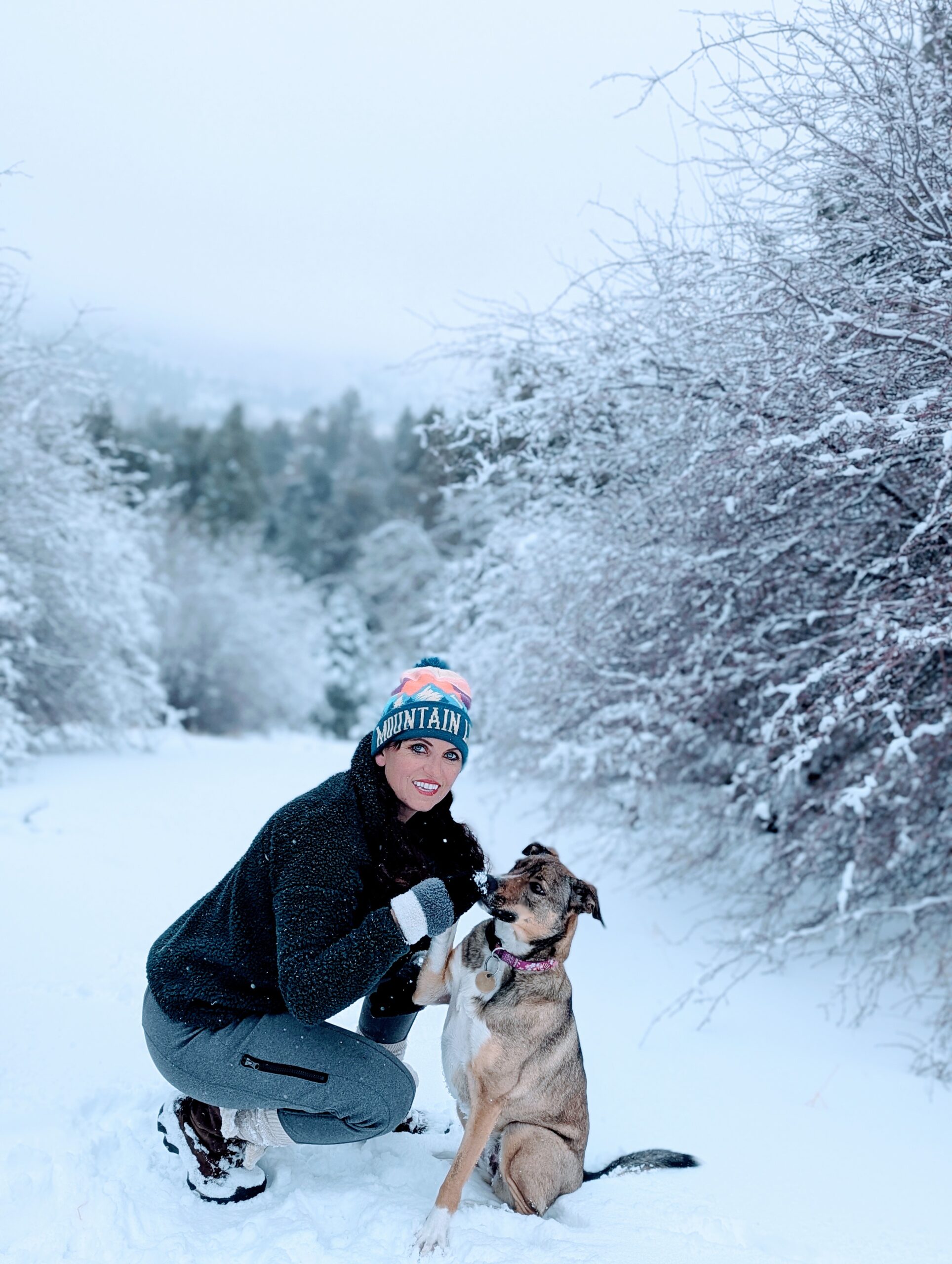
Beyond Castle Rock: The Bonus Round
Once you make it to Mill Creek Road around 7,000 feet, you’ve got choices:
Head uphill toward Skyline Trail for panoramic views of San Gorgonio—aka “the highest peak in Southern California and also a great excuse to take a break while pretending you’re admiring nature.”
Head west toward Kidd Creek for quiet, pine-covered vistas that make you feel like you’re in a postcard curated by REI.
Or take the classic winter route: continue to Bluff Lake Reserve, usually covered in snow and absolutely magical for snowshoeing on a quiet morning. Keep your eyes peeled for Red Tail Hawks, Mule deer and the occasional Cat Named Bob (Or Bob Cat)
Big Bear has endless winter beauty… but Castle Rock is where you earn your bragging rights.
Castle Rock Trail Winter Hiking FAQ
How hard is Castle Rock Trail in the winter?
Castle Rock in the winter is a completely different beast than the gentle summer path. The first half-mile frequently transforms into a steep, treacherous ice luge. By mid-winter, snowfall can easily rack up to four feet deep, completely burying the trail and turning a standard hike into an intense winter workout.
What gear do I need to hike Castle Rock Trail in winter?
Proper winter footwear is non-negotiable if you want to avoid sliding right back down the mountain. At a minimum, you will need microspikes or cat tracks for the lower icy stretches, and snowshoes for the deep powder higher up. Because the trail completely vanishes under heavy snow, booking a tour with a local mountain guide is highly recommended for safety and navigation.
Is Bluff Lake Reserve open for hiking in the winter?
The official Bluff Lake Reserve gates are closed from November until May. However, you can still snowshoe and hike all around the gorgeous Bluff Lake perimeter, head over to Kidd Creek, or trek up to the edges of the Skyline Trail to take in the quiet alpine backcountry.
Where does Castle Rock Trail get its name?
Most tourists stop at the iconic “Big Boulder” to take photos and assume that’s the main attraction. In reality, the trail gets its name from a massive, castle-like rock moat tucked away directly behind the boulder garden, which is entirely missed by visitors who don’t explore past the main viewpoint.
What additional trails connect to the top of Castle Rock Trail?
Once you clear the steep climb and reach Mill Creek Road at 7,000 feet, you have a few incredible options to extend your trek:
- Skyline Trail: Head uphill for panoramic views of San Gorgonio, the highest peak in Southern California.
- Kidd Creek: Head west for quiet, postcard-worthy pine vistas away from the crowds.
- Siberia Creek Trail: Trace the historic mid-1800s path that served as the very first route into the Big Bear Valley.