
Breeders’ Cup 2026 Handicapping: Artificial Intelligence Meets Actual Horse Sense
By Amber Woods and Some AI Chatbot Degenerate Who Claims He Knows a Guy at Churchill Downs
As far as I’m concerned, the end of October is the most wonderful time of the year. And no, I’m not talking about Christmas. I’m talking about Breeders’ Cup week! Is it because of the amazing fall colors in the San Bernardino Mountains? Is it the glorious autumn hiking weather? Or is it because the World 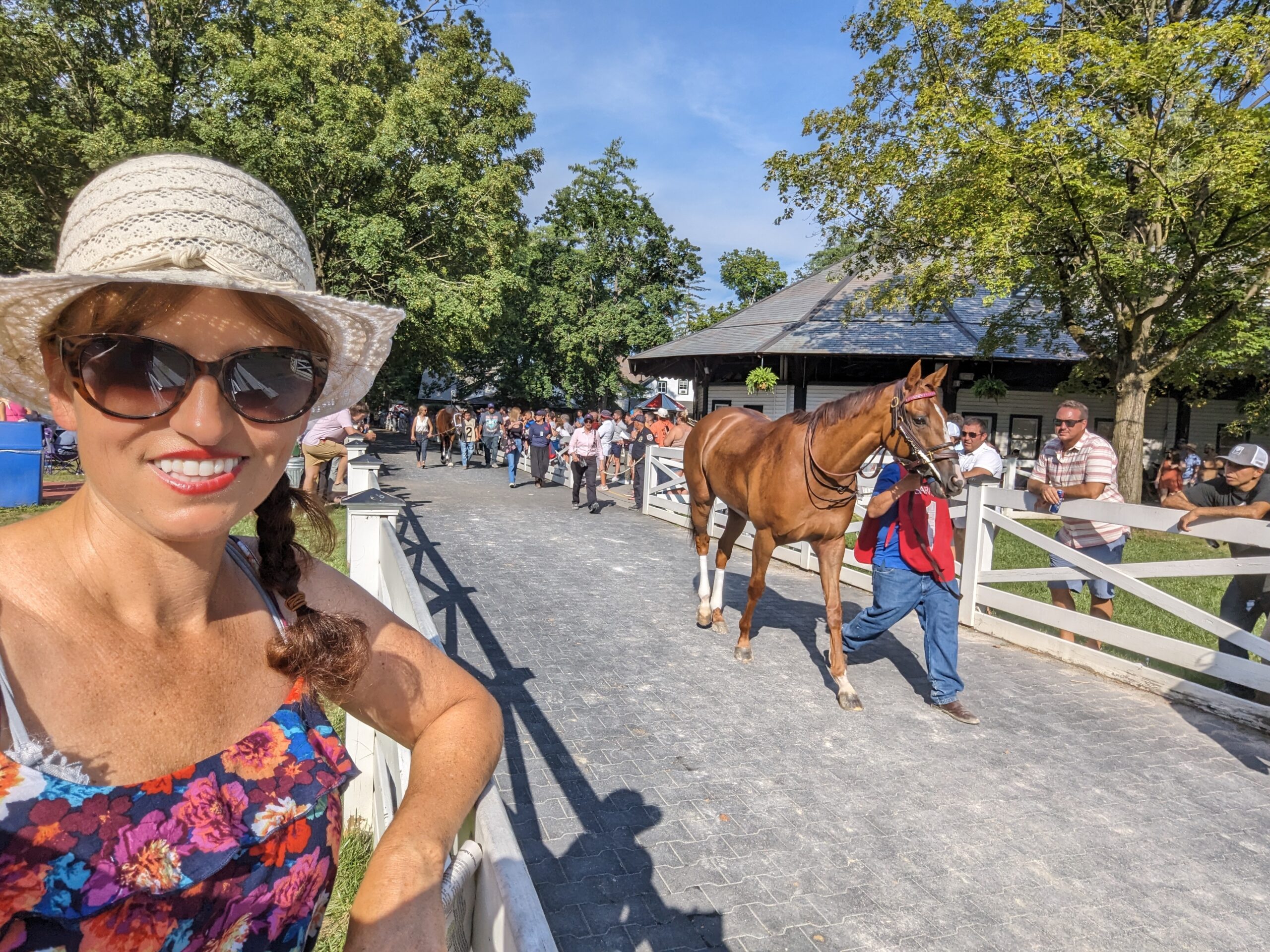 Series of Thoroughbred horse racing, the Breeders’ Cup, is finally upon us? Hmm. Let this degenerate gambler and lifelong racehorse lover give that some deep thought.
So many deep thoughts, actually, as I wander through brilliant orange and yellow oak forests, listening to horse racing podcast after horse racing podcast, taking notes, analyzing past performances and trying not to trip over a tree root while contemplating whether Aidan O’Brien is about to ruin another perfectly good American exacta.
This year, the 2026 Breeders’ Cup World Championships take place October 30–31 at Keeneland Race Course in Lexington, Kentucky. Fourteen championship races, the finest Thoroughbreds in the world, and more opportunities to second-guess myself than enduring a political discussion during Thanksgiving dinner with extended family.
Breeders’ Cup 2026: Can Artificial Intelligence Outpick a Horse Racing Degenerate?

For me, nothing quite compares to the excitement of opening the Daily Racing Form Breeders’ Cup past performances each fall. I look forward to those beautiful little columns of numbers almost as much as my dog looks forward to chasing squirrels.
But let’s be realistic. Breeders’ Cup handicapping is practically a full-time job. First, you study the past performances. Then you watch race replays. Next, you compare Beyer Speed Figures, Thoro-Graph and Ragozin Sheets. Then you start buying workout reports from people who have spent their mornings watching racehorses instead of hiking through forests of fall colors. And of course on Breeder’s Cup Friday evening, you pour a stiff drink, I mean a crisp pinot grigio and watch Jon Hardoon live from the South Point Casino in Ls Vegas, give his seminar. (And if you ever get a chance to go to this siminar in person, so worth it! And perhaps you squeeze in a podcast or twelve.
By the time I’ve finished researching one European two-year-old making his first start around an American racetrack, I’ve consumed four cappuccinos, written seven pages of notes and somehow managed not to accomplish anything productive around the house.
Apparently, running a small business is supposed to take precedence over handicapping the Breeders’ Cup. Who invented that ridiculous rule? Between operating my Hungry Mountaineer hiking and Jeep tour business and trying to get my wounded body functioning like a normal human again, I simply don’t

have the time to follow every major racing circuit as closely as I once did. I still keep up with California racing. I watch major stakes races around the country. But when the European superstars arrive at the Breeders’ Cup, I occasionally feel like someone just handed me a French restaurant menu written entirely in Klingon.
So the timesaving question became, does AI work when it come handicapping the Breeders Cup?
Could ChatGPT help me handicap the 2026 Breeders’ Cup? Could AI horse racing predictions identify overlooked European runners, compare international speed figures and uncover Breeders’ Cup longshots that even seasoned handicappers might miss? Or was I about to take financial advice from a computer that occasionally invents facts with the confidence of a politician explaining why the budget isn’t balanced?
Let the great Amber versus AI Breeders’ Cup handicapping experiment begin.
Can AI Really Handicap the Breeders’ Cup, or Is It Just Picking the Favorite?
Here’s the problem with asking artificial intelligence a question like, “Who is going to win the Breeders’ Cup Mile?” If you don’t ask the right questions or provide current, verified information, ChatGPT will confidently hand you the morning-line favorite and call it a day.
Well, congratulations, artificial intelligence. You have successfully read the odds board. Handicapping is considerably more complicated than identifying the horse everyone else already likes.

Historically, favorites win roughly one-third of Thoroughbred races, although the actual percentage varies by track, race type and the specific group of horses being studied. For a Breeders’ Cup example, research compiled by In the Money Media shows that favorites won 13 of 42 Breeders’ Cup Turf runnings between 1984 and 2025, approximately 31%. That means the favorite lost nearly 70% of those editions.
And simply picking horses with the highest win probability isn’t the same as finding profitable wagers. A horse might have a legitimate 40% chance to win, but if the public is betting that horse down to 3-5, your potential reward may not justify the risk. That’s the difference between picking winners and finding value.
Consider Englishman, the 4-5 morning-line favorite in the 2026 Breeders’ Cup Sprint. He’s obviously talented. (And he’s my favorite horse running on Saturday.) My heart will be with him but will my wallet? Figuring out whether he’s the most likely winner is different from determining whether he’s worth betting at that price. I don’t need a supercomputer to tell me Englishman is fast. I saw that the first time he broke his maiden on September 19th and I had a $100 win bet thrown down. I need some help from AI to help me determine whether another horse has a better chance than the betting public realizes. And please, ChatGPT, don’t tell me that Bob Baffert trains good dirt horses or that Charlie Appleby knows something about turf racing. What’s next? Water is wet? California gasoline is expensive?
How I Used AI to Handicap the 2026 Breeders’ Cup
Before opening the AI rabbit hole, I did my own Breeders’ Cup handicappin g. That’s important because I wanted an independent opinion before allowing a computer to influence mine. I wasn’t looking for a chatbot to tell me who to bet. I wanted a research assistant capable of collecting information I didn’t have time to dig through myself because I was too busy hiking with my dog
I began asking specific questions about European trainers, jockey combinations, pedigrees, running styles, class, distance preferences and historical Breeders’ Cup statistics because those were the areas my knowledge was lacking. Rather than asking who would win the Juvenile Turf, I asked how the American runners compared with the European horses, particularly those whose races don’t have American Beyer Speed Figures.
Instead of asking for a random longshot, I wanted to know which overlooked runners had demonstrated competitive speed, improving form, a favorable pace setup or an outstanding record on firm ground. I also wanted to investigate which international trainers actually perform well when shipping horses to America. And this is where things began getting interesting.
European Horses at the Breeders’ Cup: Should We Just Hand Them the Turf Trophies?
When it comes to Breeders’ Cup handicapping, European horses have an impressive history of making American turf runners look like they’re still trying to locate their passports. According to statistics published by At The Races, European-trained horses won 37 of the 68 Breeders’ Cup turf races contested from 2016 through 2025. That’s approximately 54.4% of those races won by European-trained horses. This is an important distinction: It means Europeans won 54.4% of the individual turf races during that period. It does NOT mean that every European horse shipped overseas had a 54.4% chance of winning.
If it did, I’d be writing this a rticle from a villa in Tuscany.
The European advantage becomes even more impressive when you examine individual divisions. European-trained horses won nine of the ten Breeders’ Cup Turf races held from 2016 through 2025. But dirt is an entirely different story. At The Races reports that no horse coming directly from a European prep won a Breeders’ Cup dirt race between the expansion of the championship program in 2007 and the end of 2025.
That doesn’t mean a foreign horse cannot win on American dirt. Japanese runners, in particular, have demonstrated that international dirt form deserves serious consideration. (Hello Forever Young, another horse I have loved for years)
It means geography, surface and the type of racing preparation matter. A horse trained to accelerate over soft European grass isn’t automatically prepared to handle American dirt kickback, aggressive early fractions and the type of tactical speed required around tighter turns. Neither a horse’s passport nor the accent of its trainer should determine whether it belongs on your betting ticket.
Aidan O’Brien: The Man Who Apparently Owns the Breeders’ Cup Juvenile Turf
If you’re researching European Breeders’ Cup trainers, Aidan O’Brien is the first name worth knowing. He’s essentially the franchise owner of the Breeders’ Cup Juvenile Turf, except nobody appears to have informed the other trainers that they’re competing against a multinational Thoroughbred corporation. Heading into the 2026 championships, O’Brien had 21 career Breeders’ Cup victories, tying Bob Baffert among the all-time leading trainers. Between 2011 and 2025, O’Brien recorded 17 victories from 130 Breeders’ Cup starters, a win rate of approximately 13.1%, according to In the Money Media’s historical analysis. That percentage doesn’t sound overwhelming until you consider the extremely competitive nature of these races.

And then there’s the Juvenile Turf. O’Brien has won eight of the first 17 editions of the Breeders’ Cup Juvenile Turf, an incredible 47% of the races contested. He’s also won the last four editions heading into 2026. Apparently, if O’Brien enters four horses in the Juvenile Turf, the other trainers are just there for the complimentary coffee. His biggest Breeders’ Cup longshot winner? Order of Australia, who captured the 2020 Breeders’ Cup Mile at 73-1. Order of Australia entered off the also-eligible list, won from post 14 under Pierre-Charles Boudot and led an O’Brien-trained sweep of the first three finishing positions.
The $2 win payoff was $148.40. And somewhere in America, a handicapper who threw out the horse because of the outside post is probably still attending therapy.
For 2026, Aidan O’Brien has four Juvenile Turf entrants: Great Barrier Reef, Haffner, Florida Bay and Man’s Best Friend. I wanted AI to investigate all four rather than simply selecting whichever O’Brien horse had Ryan Moore aboard. Because apparently there’s more than one successful jockey in Europe. Who knew?
Ryan Moore, William Buick and the European Jockeys Worth Knowing
American handicappers know the big domestic names. But European jockey statistics deserve just as much attention, especially in turf races. According to America’s Best Racing, Ryan Moore entered the 2026 Breeders’ Cup with 16 victories from 104 mounts, approximately a 15.4% winning percentage.
William Buick had nine Breeders’ Cup wins from approximately 39 mounts, an impressive rate of about 23%. Moore’s longtime partnership with Aidan O’Brien is particularly significant, but jockey selection alone isn’t a handicapping system.
A top rider cannot magically transform a five-furlong specialist into a mile-and-a-half marathon runner.
What I want to know is whether the jockey can save ground, settle a horse accustomed to running in straight European races and time the final move appropriately on Keeneland’s tighter turf course.
Who the Hell Is George Boughey? And Is Chappell Roan Running in the Juvenile Turf?
Here’s where my international handicapping research starts getting entertaining. Naturally, I know Aidan O’Brien and Charlie Appleby. But when I begin studying dozens of overseas entries and unfamiliar trainers, the names start sounding like a list of modern pop stars. Who the hell is Chappell Roan? Is that a singer, a European jockey or the horse that finished third at Newmarket? Apparently, I’m officially old and that’s okay as I add even more Joni Mitchell to my Spotify playlist

One trainer who caught my attention this year is George Boughey, responsible for Libertango in the Breeders’ Cup Juvenile Turf Sprint. Boughey is based in Newmarket, England, and has developed a strong reputation with young horses.
Racing Post statistics covering British Flat racing from 2022 through the available 2026 results show his two-year-olds winning 105 of 588 turf starts, approximately 18%. His overall British Flat record in that period was approximately 16%.
That’s not a guarantee of success in an American Grade 1 race, but it gives me a much better understanding of the operation behind Libertango.
Libertango is no random overseas visitor hoping to discover American hospitality and free Kentucky bourbon. She’s a legitimate European stakes performer who has already defeated elite competition. And that brings me to one of the most intriguing races on Friday’s Breeders’ Cup card.
Breeders’ Cup Juvenile Turf Sprint: Libertango Versus Brickyard Belle
The 2026 Breeders’ Cup Juvenile Turf Sprint covers 5½ furlongs on turf, bringing together an international field of two-year-old sprinters. Libertango, trained by George Boughey, is the 5-2 morning-line favorite. American contender Brickyard Belle, trained by Miguel Clement, is listed at 3-1. Now this is exactly where an AI handicapping assistant could be useful.
Brickyard Belle enters with published Beyer Speed Figures of 90 and 86, according to the Daily Racing Form. She is unbeaten in two starts, including a victory in the Grade 3 Matron Stakes, and has demonstrated an ability to finish strongly. Libertango’s European races do not carry directly comparable published American Beyer figures in that DRF listing. That does not mean she’s slower. It means we need a valid comparison rather than asking artificial intelligence to invent a suspiciously convenient number.
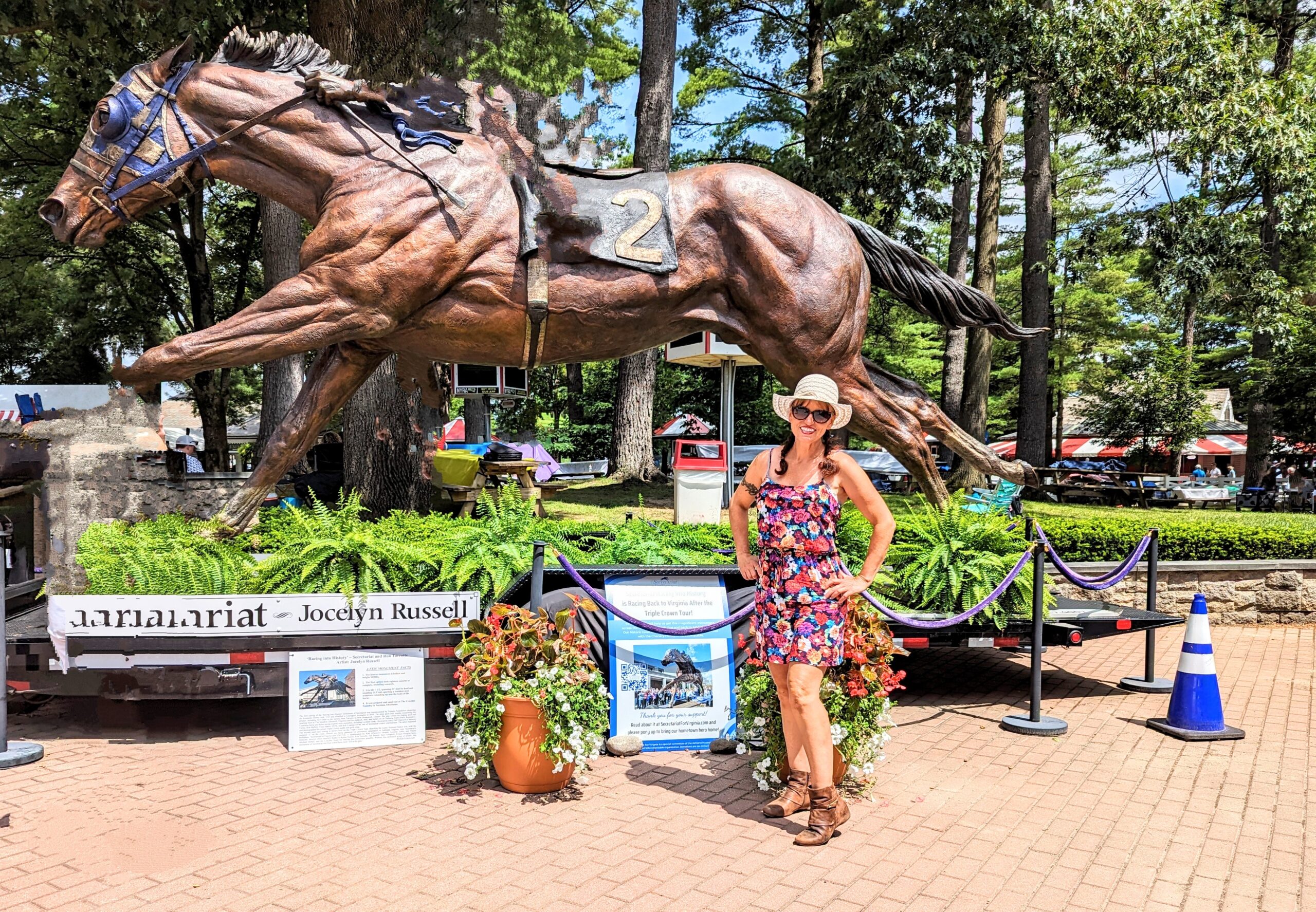 Libertango’s European form includes a victory in the Albany Stakes at Royal Ascot, where she came from well off the pace to defeat a large field that included Sun Goddess. Yes, that Sun Goddess.
Daily Racing Form’s analysis describes a filly with exceptional late acceleration, but it also raises an important concern: Libertango has done her racing over straight courses. At Keeneland, she’ll have to navigate a bend while competing against unfamiliar American horses.
Brickyard Belle already understands the tactical demands of American racing and has demonstrated a powerful closing kick of her own. Meanwhile, Harper’s Corner has recent Beyer figures of 90, 87 and 88, making her another interesting American speed-figure comparison.
So which horse actually has the best late speed?
Without comparable sectional ratings adjusted for distance, course, pace and conditions, I cannot honestly declare Libertango faster or slower than Brickyard Belle. But I can compare their race shapes. Libertango typically relies on a strong late surge, while Brickyard Belle has also demonstrated an effective closing style in American turf competition. If the pace gets heated, both could benefit.

If the European filly loses ground negotiating her first American turn or gets trapped in traffic, that impressive finishing kick might arrive approximately three seconds after my betting ticket becomes worthless.
And what about Ruiva and Wood Island? I love both these longshots in here. Both are on the also-eligible list, meaning they need defections to enter the starting field. Ruiva has published recent Beyers of 76 and 77, while Wood Island has posted 77 and 78 in his two most recent races. Ruiva demonstrated serious early speed in the Indian Summer Stakes at Keeneland, posting early fractions of 21.15 and 44.37 seconds before weakening late. Wood Island chased that hot pace and finished third.
That gives handicappers a useful pace scenario if either horse draws into the race, but neither should be treated as an actual starter unless officially admitted. I do not need AI to handicap a horse that isn’t running. I’ve made enough bad wagering decisions entirely on my own.
Breeders’ Cup Juvenile Fillies Turf: Sun Goddess, Vanta & the Million-Dollar Distance Question
If there is one Friday race where I wanted AI to provide serious handicapping insight, it’s the Juvenile Fillies Turf. The 2026 field includes Sun Goddess, Amusingly, Green Empress, Vanta and Domestic Agenda. And the comparisons are fascinating.
Sun Goddess, trained by Aidan O’Brien, is the 6-5 morning-line favorite. She enters the race with six victories from eight starts, including three Group 1 wins.According to every European from here to Nice, she is the next coming of Enable? At least that’s what the chaps across the pond are nattering on about.
Her championship victories include the Phoenix Stakes and Cheveley Park Stakes at six furlongs, plus the Moyglare Stud Stakes at seven furlongs.
But here’s the part that matters when handicapping the Breeders’ Cup Juvenile Fillies Turf: Sun Goddess has never raced a mile or around two turns. She’s by Sioux Nation out of Etoile Bleu, a daughter of Starspangledbanner. There’s plenty of sprinting influence in that pedigree, although the sire and dam alone don’t establish an absolute distance limit.
Aidan O’Brien has expressed confidence that her long stride, temperament and ability to settle will allow her to handle the additional distance. And considering O’Brien’s record, I’m inclined to listen. But whether I want to accept approximately 6-5 on a horse trying two turns for the first time is another question entirely.
Amusingly, trained by Francis-Henri Graffard, presents a different challenge. She’s a daughter of No Nay Never out of an Oasis Dream mare and produced an impressive late burst when defeating male competitors in the Group 1 Prix Jean-Luc Lagardere over seven furlongs. She’s another one the Euros can’t stop talking about almost as much as Gezora.
Amusingly’s turn of foot is a legitimate weapon. But she also has questions to answer at a mile. Her previous attempt at that distance came with traffic and settling issues, complicating the interpretation of her performance. So is Amusingly simply a brilliant seven-furlong horse, or could a cleaner trip allow her to handle the mile?
That’s precisely the sort of question I want AI to research rather than answer with the phrase “she has excellent potential.” Everyone in the Breeders’ Cup has excellent potential. That’s why they’re in the damn Breeders’ Cup.

Then there’s Green Empress, trained by Joseph O’Brien. Green Empress has already won the Group 1 Prix Marcel Boussac at a mile in France. She’s also finished second to Sun Goddess on multiple occasions. Unlike Sun Goddess, she has demonstrated that she can win a top-level race at the required distance. Her pedigree is another interesting factor: She’s by Saxon Warrior, whose influence suggests more stamina than a pure sprint pedigree. Green Empress is listed at 10-1 on the morning line. Now we’re talking about an actual handicapping decision. And a filly I’m very interested in for trifecta plays. Would I rather accept a short price on a brilliant filly stretching out for the first time, or take a much bigger price on a proven Group 1 miler?
And don’t forget Vanta, representing California. Vanta is undefeated in three starts for trainer Jeff Mullins and enters off a victory in the Grade 3 Surfer Girl Stakes at Santa Anita. Her recent Beyer figures are 75, 74 and 71, which are lower than the 84 recorded by American rival Domestic Agenda in the Miss Grillo Stakes. But speed figures don’t tell the entire story. TwinSpires handicapper J. Keeler Johnson highlighted Vanta as a possible 20-1 Breeders’ Cup longshot, citing her finishing fractions in the Surfer Girl. Once again, Trifecta play right here.
According to the Equibase GPS data referenced in that analysis, Vanta covered her final two furlongs in 11.24 and 11.21 seconds. That’s a s erious closing kick. It doesn’t automatically make her faster than Amusingly or Sun Goddess, because the races were conducted under different conditions. But it demonstrates that Vanta possesses late acceleration worth investigating. And unlike some of her European opponents, she’s already familiar with American turns.
Domestic Agenda, trained by Chad Brown, is another horse I wouldn’t ignore. Her 84 Beyer in the Miss Grillo is among the stronger published American figures in the field, and she has demonstrated the ability to finish effectively in a route. The question is how that performance stacks up against the European Group 1 horses.
My conclusion at this stage is that Sun Goddess may be the most accomplished filly, but she isn’t automatically the best wager. And that’s a distinction any serious Breeders’ Cup handicapper should appreciate.
But saying that, I am at heart a horizontal player. Pick 5’s are my jam. When it comes time to create my Late Pick 5 ticket, chances are, I will end up singling Sun Goddess. Maybe I shouldn’t be influenced by all that British chin-wagging but yet here I am punching in my ticket with a 6-5 single.
Joseph O’Brien: Like Father, Like Son?
Aidan O’Brien’s son Joseph has become a major international trainer in his own right. And honestly, imagine Christmas dinner in that household. “So, Dad, how many Group 1 winners did you train this year?”
“Oh, a few. Pass the potatoes.”
Joseph O’Brien has developed an impressive operation with both Flat and National Hunt horses, making it important to distinguish between his overall results and his record with two-year-old turf runners. A five-season statistical summary published by AshwaEdge lists Joseph with 164 wins from 1,238 two-year-old starts, approximately 13%, across its tracked racing categories. The same database records 45 wins from 344 Class 1 starts, also approximately 13%. That class-based figure should not be confused with a verified win percentage specifically in American graded stakes races.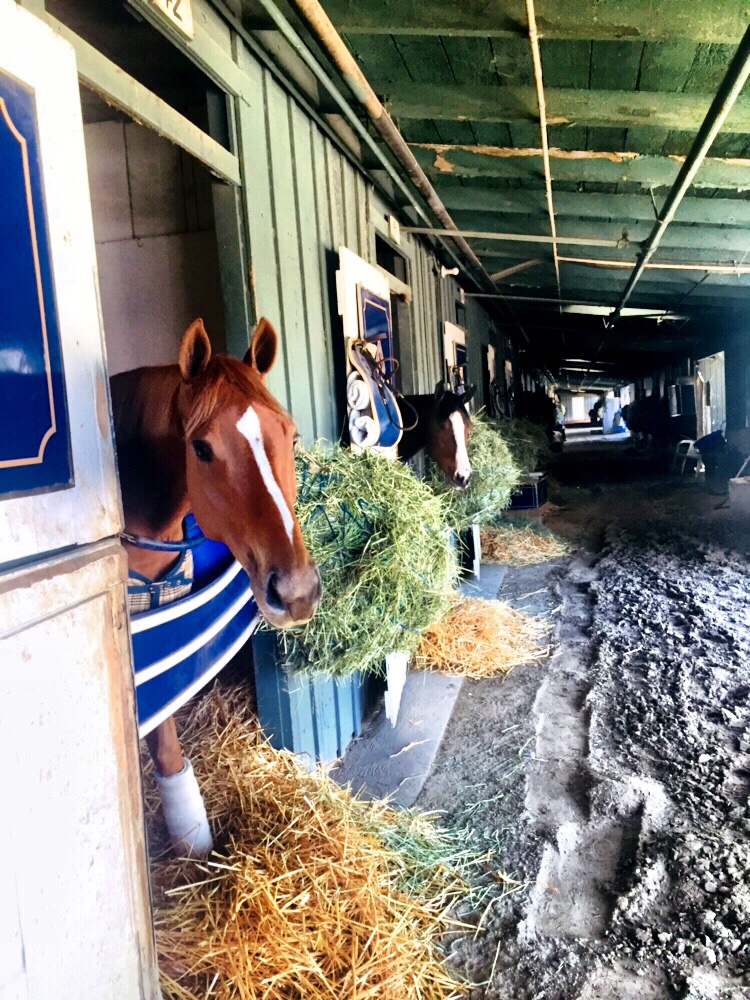
When comparing European trainers, the definition of “stakes race” matters. British and Irish Group and Listed races are not organized exactly like American graded stakes, and combined yard statistics can obscure the distinction. And this is where I really needed AI to help me out and distinguish the difference.
For the 2026 Juvenile Turf, Joseph brings Folsom Blues, a talented colt who won the Group 1 National Stakes at the Curragh over yielding ground. He also trains Green Empress in the Juvenile Fillies Turf and Alwaysanangel, another intriguing international filly. Joseph O’Brien’s horses certainly deserve serious consideration.
But here’s the question AI helped me focus on: Which European runners actually have proven form on firm ground, and which have produced their biggest performances over softer European turf? Because that little detail could mean the difference between a winning ticket and another conversation with my bank account.
Haffner Versus How’s Al Today: What Do the Speed Figures Really Say?
The Breeders’ Cup Juvenile Turf features another fascinating American-versus-European comparison. How’s Al Today, trained by Riley Mott, has published recent Beyer Speed Figures of 94, 82 and 62. His 94 is particularly impressive for a two-year-old turf runner. He won the Kentucky Downs Juvenile Mile in approximately 1:34.84, producing a powerful late move and demonstrating the ability to handle a mile against American competition. But Kentucky Downs isn’t Keeneland.
Kentucky Downs has a unique European-style turf configuration, so a horse who excels there still has something to prove on a more conventional American oval. Enter Haffner, trained by Aidan O’Brien. Haffner won the Royal Lodge Stakes at Newmarket over a mile, demonstrating that the distance is within his capabilities. His disappointing performance over softer ground in the National Stakes is a potential excuse, and his stronger form suggests he’s worth considering if the Keeneland turf comes up firm. Haffner is listed at 8-1 on the morning line, compared with approximately 3-1 for How’s Al Today. At 8-1 at post time I think Haffner is a strong win play.
So can we compare this speed figures? Not by pretending that a European Racing Post Rating or Timeform rating is identical to an American Beyer Speed Figure. Beyer, Timeform, Racing Post Ratings, Thoro-Graph and Ragozin use different methodologies. There’s no universally reliable conversion formula where you subtract a magic number from a European rating and suddenly obtain the equivalent American figure. And that is where Breeders Cup handicapping gets so complicated.

What I want to compare instead is the quality of opposition, finishing margins, race pace, ground conditions, sectional times and whether the horse has already handled the distance. In this case, How’s Al Today has the more immediately understandable American speed figure, while Haffner has established European Group-race form at a mile.
And then there’s Great Barrier Reef. Aidan O’Brien’s Great Barrier Reef, with Ryan Moore aboard, is listed at 4-1 but drew post 14. He’s won three of his first five races and finished third in the Group 1 Dewhurst Stakes over seven furlongs, following earlier performances at six furlongs. He’s attempting a mile, and the outside post adds another complication.
Meanwhile, Man’s Best Friend has demonstrated competitive European Group 1 form and has performed well on good to good-to-firm turf. At 15-1, he caught the attention of J. Keeler Johnson at TwinSpires as another potential longshot.
I’m not automatically betting the O’Brien horse with Ryan Moore. But I’m certainly not throwing out the other O’Brien horses because they aren’t the most obvious selection. Remember Order of Australia at 73-1? I’m still crying over that one.
Can AI Compare European Racing Times With American Beyer Speed Figures?
This may be the most valuable lesson in my entire AI horse racing handicapping experiment. You cannot accurately handicap European horses simply by comparing their raw finishing times against American races. A mile at Newmarket, a mile at Longchamp and a mile at Keeneland present very different challenges.

Newmarket features demanding straight-course racing. Longchamp’s turns, terrain and race configurations require different tactical approaches. Keeneland’s American turf course rewards the ability to navigate turns, maintain position and accelerate at the appropriate moment.
European turf conditions also vary considerably. Good-to-firm turf isn’t identical to firm American ground. Soft and heavy turf can completely change a horse’s running style and finishing speed.
Even distances and timing conventions can differ. A European horse might finish seven furlongs in a slower raw time than an American horse, yet have encountered a significantly more demanding course or much softer turf. That’s why sophisticated handicapping requires adjustments. AI can help identify race conditions, explain the differences between rating systems and organize verified performance data. But unless it has access to a legitimate dataset with comparable figures, it cannot manufacture accurate Beyers for European horses. Nor can it honestly tell me that Haffner is exactly three points faster than How’s Al Today.
Ragozin Sheets, Thoro-Graph and the Search for a Breeders’ Cup Longshot
I’ve been using speed figures and performance patterns for years, and I genuinely appreciate the additional perspective provided by Thoro-Graph and Ragozin Sheets. Unlike Beyer Spee d Figures, where higher numbers indicate better performances, lower Thoro-Graph and Ragozin numbers indicate stronger performances. These systems evaluate more than raw final time, including various adjustments related to track conditions, weight and ground loss. They’re particularly interesting for identifying horses that may be improving, regressing or preparing to rebound after an unusually demanding race.
I also like studying whether a lightly raced two-year-old is steadily improving or has already delivered such an exceptional performance that repeating it may be difficult. But there’s a limitation when asking AI to evaluate Thoro-Graph or Ragozin figures. These are proprietary products. Unless the actual figures are provided or made publicly available through an authorized source, AI cannot honestly determine which 2026 Breeders’ Cup horse has the best Ragozin number. For all you horse players out there, who are, you know, not a robot, I feel like both these horseplayer betting services are well worth the cash to help pick winners.
Breeders’ Cup Workout Reports: Can AI Replace Bruno’s Reports?
Another major part of my Breeders’ Cup preparation involves morning workout information. I appreciate the work of private clockers, including Bruno De Julio and Andy Harrington who spend enormous amounts of time observing racehorses usually very early in the a.m. before I’ve even pulled my first shot of espresso. However, a fast workout doesn’t automatically mean a horse is ready to produce a career-best performance.
I’m interested in how the horse moves, whether it finishes comfortably, how it gallops out, its eagerness and how the work compares with its usual training patterns. And that is where I feel experts workout opinions come in so handy. AI, however, cannot legitimately replace proprietary workout reports that it hasn’t accessed. But it can gather publicly reported observations.
For example, Daily Racing Form clocker Mike Welsch has been publishing Breeders’ Cup morning training reports from Keeneland. His Octob er 26 report singled out Knightsbridge and Napoleon Solo as making favorable impressions in preparation for the Classic. Earlier reports also discussed Sovereignty, Englishman and other leading contenders.
On October 25, Welsch reported that Turf Sprint contender Bacio completed four furlongs over the turf in 49.07 seconds, while Ruiva recorded 51.69 under different work circumstances that require context rather than a direct comparison. That’s useful information. But I wouldn’t automatically throw out Ruiva because she worked slower than Bacio. They aren’t running in the same championship division, and the purpose, pace and instructions behind each workout may differ considerably. The best workout isn’t necessarily the fastest workout.
Which is another reason I remain skeptical of any AI handicapping system that treats raw numbers like commandments delivered from Mount Sinai.
So, what Are the Horse Racing Experts Saying About Breeders’ Cup Longshots?
If you’re serious about Breeders’ Cup handicapping, listening to experienced analysts remains one of my favorite parts of championship week. But I don’t want twenty different people telling me to bet the same 6-5 favorite. I want someone to explain why a horse with a less impressive running line might be sitting on a career-best effort. As of October 27, several interesting longshot angles have emerged in published analysis. 
TwinSpires handicapper J. Keeler Johnson highlighted Vanta at 20-1 in the Juvenile Fillies Turf, Man’s Best Friend at 15-1 in the Juvenile Turf and Ruiva at 12-1 in the Juvenile Turf Sprint, contingent on Ruiva drawing into the race. Each has a specific handicapping argument. Vanta has demonstrated impressive late acceleration. Man’s Best Friend brings respectable Group 1 competition and potentially favorable firm-ground form. Ruiva possesses early speed and has already demonstrated that speed over Keeneland’s turf course.
These aren’t guaranteed winners, of course. If handicappers could guarantee winners, we’d all be living in mansions instead of trying to explain why we just spent another $45 downloading speed figures. For my own research, I’m also following the European discussions surrounding Folsom Blues, Sun Goddess, Libertango and the other international two-year-olds.
But rather than copying someone else’s picks, I want to understand why they’re attracted to a particular horse. A good handicapper should be able to explain a selection using pace, class, form, distance, pedigree, surface and price. Otherwise, we’re basically listening to someone predict the weather by examining a persimmon seed. which is apparently a thing in central Kentucky.
My Favorite Breeders’ Cup Podcasts: Because Apparently I Need Professional Help
Every fall, I spend countless hours hiking through the mountains listening to horse racing podcasts. I’m probably the only hiking guide in Big Bear Lake who can spend two hours explaining the history of the San Bernardino Mountains while internally debating whether a European turf horse needs more early speed. For the 2026 Breeders’ Cup, several programs deserve attention. Do I need more advice from the experts? Because I’m not going to lie, over thinking a race may just be my super power.
Horse Racing Radio Network (HRRN) scheduled its Breeders’ Cup Countdown broadcasts from Keeneland for October 27–29, with Bobby Neuman, Jude Feld and Angela Hermann covering morning training and interviews.
Nick Luck Daily has devoted substantial coverage to the international contenders. The October 22 episode focused on the European entries, while the October 27 Keeneland at Dawn episode included interviews and updates involving Aidan O’Brien, Brad Cox, Miguel Clement and other major racing figures. The European perspective is particularly valuable when I’m trying to determine which overseas runners have legitimate American Grade 1 potential.
Steve Byk’s At The Races has also featured an extensive Breeders’ Cup preview lineup, including David Aragona, Mike Welsch, Nick Tammaro, Nick Luck and international racing expert Kate Hunter. His October 26 program included discussion of Breeders’ Cup betting strategy with Christian Hellmers.
Meanwhile, The Ron Flatter Racing Pod remains useful for detailed racing discussion and handicapping perspectives from knowledgeable industry guests. I also keep an eye out for Rishi Persad’s racing coverage, especially when international horses and European form enter the conversation.
Jeff Siegel, You’ve Left a Horse-Shaped Hole in My Gambling Heart
For years, Jeff Siegel was one of my favorite handicappers. I appreciated his ability to combine traditional form analysis with an understanding of improving horses, pace scenarios and value. He didn’t simply identify the most accomplished horse and announce that it would win. He made you think about the race. I always did my own handicapping first, then I would compare my bets with Jeff Seigel’s on race day. Siegel’s passing left a real void in Thoroughbred handicapping coverage, particularly for those of us who appreciated his analytical style. So who should I follow now?
Matt Bernier is one of the handicappers I would suggest exploring. In August 2026, 1/ST BET and Xpressbet announced that Bernier had joined their handicapping team, producing Breeders’ Cup rankings and major-race analysis that includes his own fair-odds assessments.
I also appreciate the kind of work that David Aragona provides for Daily Racing Form, particularly his race-specific assessments, speed-figure discussions and willingness to look beyond the obvious favorite.
Mike Welsch is another essential resource when workout impressions matter. And for horseplayers interested in international form, the In the Money Players’ Podcast with Peter Thomas Fornatale and Jonathon Kinchen offers a useful combination of conventional handicapping and more specialized analysis.
I’m not suggesting any of these experts are exact replacements for Jeff Siegel. But I would rather learn from people who explain their reasoning than listen to another expert announce that the favorite looks “very tough.” Thank you, Captain Obvious.
AI Horse Racing Predictions: Can ChatGPT Handicap the Breeders’ Cup Better Than Me?
After researching the 2026 Breeders’  Cup with AI, I’ve discovered something important. Artificial intelligence can be an incredibly helpful handicapping assistant. It can organize horse profiles, identify relevant trainer statistics, compare the structure of different speed-figure systems and help locate publicly available racing information.
It can also save a tremendous amount of time when you’re trying to understand an unfamiliar European trainer or determine whether a two-year-old has ever raced around a turn.
But AI has limitations. It may rely on outdated entries, confuse similarly named horses, mix up race distances or present incomplete racing data as though it has analyzed every relevant performance. It may also sound completely confident while being completely wrong.
My 2026 Breeders’ Cup Picks: Amber Versus Artificial Intelligence
And now for the moment you’ve all been waiting for. After hours spent studying the Daily Racing Form, researching European trainers, reviewing race replays, examining Breeders’ Cup speed figures and asking ChatGPT enough questions to make its imaginary circuits consider early retirement, it’s time to reveal my selections.
As usual, I’m sharing my Breeders’ Cup picks, the horses I believe are most likely to win, and a few longshots that I think deserve consideration. But this year I’m adding something different. Alongside my personal selections, I’ll be comparing the AI-assisted handicapping opinions to my own.
Can decades of horse racing experience outperform artificial intelligence? Can AI uncover a European longshot hiding behind unfamiliar speed figures? And most importantly, will I finish Breeders’ Cup weekend celebrating with a nice elk chop dinner and upgraded shocks for my Jeep?
Or will I be eating leftover Halloween candy while explaining to my dog why we’re suddenly on a budget? Let’s find out.
Because the only thing I love more than a glorious late-October hike through the golden oak forests of Big Bear Lake is watching a 20-1 shot turn for home with a full head of steam. And then screaming, “Let’s go Nobals!” at the top of my lungs in my backyard for all the neighborhood to hear. Especially when I have a winning ticket in my hand.
And if artificial intelligence happens to pick that horse before I do? Well, perhaps I’ll give the robot a little credit. But it’s still not getting a share of my winnings.
AMBER EXACTA 2026 BREEDERS’ CUP FRIDAY AND SATURDAY PICKS, LONGSHOTS, AI COMPARISONS AND WAGERING STRATEGIES HERE
AI and I did the homework so you don’t have to!
Friday
Friday Breeder’s Cup Pick 5
KN 6 3,4,13
KN 7 2,5

KN 8 9
KN 9 5,6,7,3
KN 10 2,4,5,10,14
Friday Breeder’s Cup win bets
KN 10 4 to win
Friday Breeders Cup show bets
KN 6 13 to show
KN 8 7 to show
Friday Breeder’s Cup trifectas
KN 8 trifecta box 2,5,7,1
KN 10 2,4,5,10,14 trifecta box
Saturday
Saturday Breeder’s Cup Pick 4
KN 4 2,9
KN 5 3,7,6,2
KN 6 1,9
KN 7 1,12,14, 5
Saturday Breeder’s Cup Pick 5
KN 8 5,13, 11
KN 9 1,8,
KN 10 2,4,8
KN 11 2,3,12,13,1o
KN 12 2,3,4,5,6,7
Saturday Breeder’s Cup win bets
KN 11 2 to win
KN 12 6 to win

Saturday Breeders Cup show bets
KN 4 10 to show
KN 5 4 to show
KN 6 9 to show
KN 7 14 to show
KN 8 11 to show
KN 11 6 to show
KN 12 4 to show
Saturday Breeder’s Cup trifectas
KN 5 trifecta box 3,7, 6,4,10
KN 9 trifecta box 1,8, 9,14
KN 11 trifecta box 2,3,10,12
KN 12 trifecta box 2,3,5,6,7

