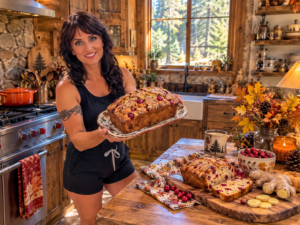
I was scampering about on a hiking trail somewhere deep in the John Muir Wilderness this a.m. when I had to take a break to shove some homemade Cinnamon Raisin Bread at my face ASAP. It was a Snack Sherpa emergency at 9,00 feet at nine a.m. I mean, as one does when one rises before dawn to chase all those fall colors through the mountains of the Eastern Sierras in October. And while standing there somewhere above 9,000 feet, surrounded by granite peaks and all of the rainbow colors of autumn, I was honestly marveling at how ridiculously delicious this home-baked, French-style bread was. I mean, it was so good, I didn’t even think to share some with Vacation Dog.

Here in the Eastern Sierra Mountains of Southern California, Schat’s Bakery off Highway 395 is legendary to road trippers, foodies and even you Californians who love Del Taco. Carb-loving travelers come from all over the world for their famous Sheepherder Bread, sandwiches and pastries. It may be the trendiest Bakkery in California (That is Dutch for Bakery, not a typo), but let me tell you, Erick Schat’s famous bread has some serious competition from my French patisserie-style Cinnamon Raisin Batard. Taste just one cinnamon-loaded slice slathered in Irish salted butter and trust me, you will drive right by Schat’s crowded parking lot.
Perfect Homemade Bread: Because We Can’t All Live Above a Paris Bakery
There I was on a hiking trail at over 9,000 feet, clutching a loaf full of organic everything and pondering through mouthfuls of Flame raisins: Why does Paris bread taste so much better? Is it the flour? The yeast? The fermentation? Or do the French just refuse to share their bread-baking secrets because they still hate us American wannabe bakers because of the orange-haired guy in the White House? So come with me, hiking through the magical autumn rainbow that is the Eastern Sierra in October and yes, we will stop for a sidebar to discuss the secrets to baking perfect bread at home together. Just as soon as I trek ten miles back to my motorhome kitchen, unlace my hiking boots and probably ice my 46-year-old knees. So after your ten-mile fall colors hiking extravaganza, if you are anything like me, you are probably ready to head back to your mountain cabin, motorhome or kitchen and bake tomorrow mornings breakfast bread. Learning the secrets to baking perfect bread at home is not just about following a recipe. Is it better flour? Happier yeast? Longer fermentation? The right oven temperature? Or do the French simply refuse to tell us because they are still holding a grudge?
 I don’t always ponder carb-filled bakery dilemmas while skinny-dipping in a snowmelt-filled creek. But sometimes I do. If you can’t nakedly cold plunge to celebrate your 46th birthday, then you are just not doing life right. But now that summertime has come to an end, man, will I miss swimming in those crystal-clear mountain creeks. Meanwhile, fall is on the horizon. Pack the UGG hiking boots because this outdoor hiking guide loves autumn colors almost as much as she loves a crispy loaf of cinnamon-raisin bread. Home-baked, of course. Is there really any other option that makes sense?
Baking Perfect Bread at Home: Why Is Paris Still Better at This?
Baking great breakfast bread does not necessarily come easily. And baking French-style bread means paying attention to the ingredients instead of throwing the cheapest flour, elderly yeast and some vaguely warm tap water into a bowl and wondering four hours later why your dough looks like a sad flour pancake. For my richer breakf ast breads, I love using organic whole milk, good European-style butter and unbleached flour. Those ingredients are not mandatory for successful homemade bread, but higher-quality ingredients absolutely affect flavor. This is also where I need to ruin one very romantic internet rumor. You may have heard people say they are “gluten intolerant in America but can eat all the bread they want in France.” European wheat breads still contain gluten, so someone with celiac disease cannot safely treat a Parisian baguette like a medical loophole. Different wheat varieties, recipes and fermentation methods may change the bread and may affect how some individuals experience it, but French bread is still bread—not a gluten-free miracle wearing a beret. I would personally love for “fly to Paris and eat croissants” to become an FDA-approved treatment plan.
Why Do the French Hate Us? Is It Trump, or Is It Our Bleached Flour in Our Breads?
Have you ver been to Paris? Because I have and one thing is for sure about Paris, if Ame rica has a republican in the White House, the French will find a way to be snootier then normal. The French may or may not hate us Americans. Perhaps our orange-haired president is somewhere on their list of grievances. But when it comes to bread, maybe we should quit blaming international diplomacy and take a look inside our flour bags. A truly great baguette is not magically better just because somebody pronounced bonjour near it. Traditional French-style bread gets much of its flavor from flour quality, fermentation, hydration, technique and time. One of the biggest mistakes American home bakers make is expecting fantastic artisan bread while rushing every stage of the process. Good bread takes time.
Homemade Bread That Doesn’t Taste Like Sad American Wonderbread
When you are learning how to bake better bread at home, flour matters. Bread flour typically contains more protein than all-purpose flour, which can help develop a stronger gluten structure and give yeast bread more strength and chew. That can be especially useful when you want a rustic Batard, baguette or other artisan-style loaf. This is also a perfect place to use a digital kitchen scale rather than measuring flour by volume. Flour is incredibly easy to overmeasure with a measuring cup, and too much flour can create dense, dry bread. A small digital baking scale is inexpensive and, once you start weighing flour, you may wonder why you spent twenty years scooping flour like some kind of pioneer woman. Another handy little bread-baking tool is a Danish dough whisk. I thought these looked ridiculous until I started using one. Now I reach for mine constantly when mixing shaggy bread dough. Ready to bake better bread? Walk with me into the baking aisle of Whole Foods. Better bring your big wallet. Great bread starts with great ingredients. Life is simply too short for Wonder Bread.
Ceylon Cinnamon: Because Your Cinnamon Raisin Bread Deserves Better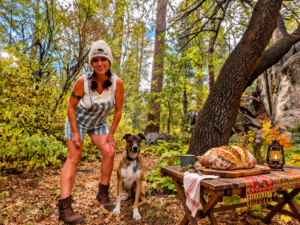

If I am going through all this effort to make incredible homemade Cinnamon Raisin Bread, I am not sprinkling six-year-old cinnamon dust from the back of the spice cabinet into it.
I prefer Ceylon cinnamon, sometimes called “true cinnamon.” Ceylon cinnamon generally contains much less coumarin than cassia cinnamon, the variety most commonly sold in North America. That difference matters more if someone consumes substantial amounts of cinnamon regularly; there is not good evidence that Ceylon cinnamon is some miracle health food. I just love its more delicate, complex flavor in homemade bread. Ceylon Cinnamon can be hard to find at regular grocery stores but you can click this link and purchase it here.
As far as raisins go, I prefer organic Flame raisins in this Batard because they are plump, sweet and fantastic tucked into those buttery cinnamon swirls. Buy good raisins here. We are baking French-inspired breakfast bread here, not making your grandmother’s 1987 bran cereal.
Always Purchase Good Yeast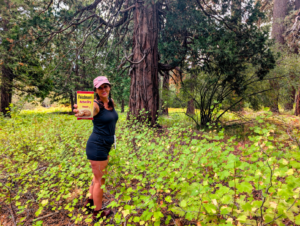

Yeast is not the ingredient where I get cheap. When I’m baking artisan bread at home, I buy high-quality yeast and store it properly. If you bake frequently, purchasing yeast in a larger package can also be far more economical than buying those tiny packets over and over again. And once you open a larger package, an airtight yeast-storage container is extremely handy. Because yeast is alive. You hope. Which leads us to the question every home baker has screamed at a mixing bowl at least once:
Help, My Bread Did Not Rise
If you have ever Googled “why did my bread not rise?” while staring angrily at a lump of dough, congratulations. You are officially a bread baker. There are several reasons homemade bread may not rise. Your yeast may be old or inactive. Your liquid may have been too hot. Your kitchen may be too cold. You may not have given the dough enough time. You could have accidentally added too much flour. Or your dough may simply be moving at yeast speed instead of human-impatience speed. The first suspect I investigate is always the yeast. Is your yeast dead? Seriously, check the expiration date. I worked in grocery stores for 15 years, and let me tell you something: yeast is not exactly the item every stock clerk is sprinting down the baking aisle to rotate. A package can sit around for a very long time. You could absolutely purchase older yeast, especially from a store that does not sell a lot of baking supplies. Check the date before you buy it, and once opened, store it according to the manufacturer’s directions.

Active Dry Yeast vs Instant Yeast
I’m sure you have always pondered: what is the difference between active dry yeast and instant yeast? Active dry yeast has larger granules and traditionally gets dissolved or “proofed” in warm liquid before going into your dough. Instant yeast has finer particles and can usually be mixed directly into your dry ingredients. Modern active dry yeast is generally more forgiving than old-school versions, and many recipes allow it to be added directly to the flour. But if I am troubleshooting questionable yeast, I still like proofing it because I want visual evidence that those tiny little suckers are alive before I sacrifice eight dollars’ worth of organic flour to them. Instant yeast also tends to get moving quickly, which is one reason it is popular with bread bakers. Does active dry yeast automatically create dramatically deeper flavor? Not really. The enormous flavor differences in artisan bread generally come much more from fermentation time, flour, hydration and technique than simply choosing active dry over instant yeast. So if you love active dry yeast, use it. If you love instant yeast, use it. If your yeast expired during the Obama administration, perhaps we should begin there.
How to Proof Yeast and Make Sure It Is Alive

If you are wondering how to test yeast before baking bread, proofing it is simple. Take a small portion of the liquid from your recipe, warm it appropriately, add the active dry yeast and let it sit for roughly 10 to 15 minutes. You are looking for obvious bubbling and expansion. No activity? Your yeast may be dead. Do not dump questionable yeast into your expensive unbleached organic flour and simply hope for the best. Hope is lovely for relationships and Pick 5 tickets at Del Mar Racetrack. It is less helpful in fermentation. A small instant-read digital thermometer is one of my favorite bread-baking tools because guessing liquid temperature with your finger is incredibly inaccurate.
Is Your Water Too Hot? Congratulations, You Murdered Your Yeast
One of the most common answers to “why did my bread not rise?” is that the liquid was simply too hot. Yeast likes warmth. Yeast does not like being boiled alive. For active dry yeast that you are proofing separately, warm liquid around 110° F is a useful target. But remember that the ideal temperature of the finished dough is often cooler; King Arthur notes that wheat-based yeast dough generally performs well when the final dough temperature is roughly 75°F to 78°F. This is why I love having an inexpensive digital instant-read thermometer in my bread-baking drawer. Yes, I said bread-baking drawer. Feel free to judge. Do not rely on the ancient baking instruction that says the water should “feel warm.” My definition of warm after hiking ten miles through snow is apparently the surface of the sun. Use a thermometer.
Are You Giving Your Dough Enough Time to Get Its Life Together?
Bread dough does not care that you are hungry. Bread dough does not care that brunch starts at ten or that your dog is saying she needs to be walked now. And bread dough definitely does not care that your Instagram Reel needs daylight for the best lighting. Bread fermentation happens on its own schedule. Recipes might tell you to let dough rise for one hour, but the condition of the dough matters much more than an exact number of minutes. A warmer kitchen may create a faster rise. A cool mountain cabin or a motohome kitchen at 7,000 feet may slow everything down. Instead of staring obsessively at the clock, watch the dough. Many recipes call for the dough to nearly double in volume during the first rise. If it has barely moved after an hour but your kitchen is chilly, give it more time rather than immediately declaring yeast bankruptcy. Another great option is a proofing basket, or banneton, when you move on to shaping rustic artisan breads. Besides helping support the loaf during its final proof, bannetons create those gorgeous bakery-style rings that make people think you attended culinary school instead of watching bread videos on YouTube in your pajamas.
Why Does a Paris Bakery Smell Like Heaven and My Kitchen Smells Like Warm Flour?
Fermentation. This is one of the biggest secrets behind baking perfect bread at home. You can mix flour, yeast, water and salt and make bread fairly quickly. But longer fermentation gives yeast and en

zymes more time to work, which can build complexity and flavor. That is why a slow overnight rise in the refrigerator can produce bread that tastes far more interesting than dough you rushed through the kitchen in two hours. If your homemade bread technically looks like bread but tastes mostly like baked flour, experiment with a longer, slower fermentation. Your refrigerator is basically a flavor spa for bread dough.
Baking Bread at High Altitude
And then there is my special little bread-baking circus: Baking bread at 7,000 feet. If you are baking bread at high altitude, dough can rise faster because atmospheric pressure is lower. The air is al so generally drier, meaning bread dough can need additional liquid. Hiking at 7,000 feet. Adorable. Bread baking, not so much. So those of us baking in mountain cabins cannot always follow a sea-level bread recipe blindly and expect identical results. Living at 7,000 feet, my bread dough sometimes looks at the recipe’s “rise for two hours” instruction and says, “That’s adorable.” If you live at elevation, a digital scale and thermometer become even more useful because bread baking turns into slightly more of a science experiment.
Oven Temperature, Steam and Getting a Proper Crust
You finally got your bread to rise. Congratulations. Now please do not ruin it in the oven.  One of the secrets to a beautiful, crispy bread crust is starting with a properly preheated oven. Artisan breads generally love serious heat, though the exact oven temperature depends on the recipe and type of loaf. And when I say preheated, I mean actually preheated. Not “the oven beeped three minutes ago while I was on Instagram.” For artisan breads, giving a baking stone, baking steel or Dutch oven plenty of time to heat can make a dramatic difference. A heavy enameled Dutch oven is one of the easiest ways for a home baker to create bakery-style bread because the enclosed pot traps moisture released by the dough during the early part of baking. That moisture creates steam. Steam delays the crust from setting immediately, allowing the loaf to expand during that beautiful burst of oven spring before the exterior becomes crisp and deeply browned.
Why Your Homemade Bread Has a Sad, Pale Crust
If your bread is fully baked but looks like it spent February in Seattle, it probably needs more browning. Do not yank your bread out simply because it has achieved “technically beige.” And once  it leaves the oven, put it on a wire cooling rack and—this is the truly horrifying part—wait before slicing it. You just spent hours making bread and your motorhome kitchen smells incredible. But bread continues setting internally as it cools. Cutting straight into a steaming loaf can leave the crumb gummy. This may be the hardest part of baking perfect bread at home. Not yeast. Not kneading. Self-control. If you drove your motorhome seven hours to the Eastern Sierra just to go leaf peeping in your favorite thrifted romper, I think you have the patience to also wait four hours before shoving your face at some bread.
The Best Tools for Baking Perfect Bread at Home

You absolutely do not need to purchase seventeen specialized gadgets before baking your first loaf. Humans have been baking bread for thousands of years without Prime shipping. But a few tools really do make homemade artisan bread easier. A digital kitchen scale is probably the first one I would buy because weighing flour makes baking far more consistent. An instant-read thermometer is incredibly useful for checking liquid temperature and troubleshooting dough. A Danish dough whisk makes mixing easier. A banneton helps support shaped artisan loaves. A Dutch oven traps steam.
When It Comes to the Magic of Sourdough Bread
When it comes to sourdough bread, you are entering an entirely different little world of fermentation. Unlike commercially yeasted bread, traditional sourdough relies on a starter containing wild yeast and lactic-acid bacteria. And when a sourdough recipe calls for multiple sets of stretch and folds, yes, actually do them. Stretch and folds help develop dough strength without traditional kneading. Do not glance at “six sets of stretch and folds,” decide two seems emotionally sufficient and then blame France when your loaf spreads across the counter. If all else fails, read this article on Sourdough Baking for Dummies.
Baking Perfect Bread at Home Is Mostly About Paying Attention
The biggest secret to baking perfect bread at home is that there really is no single secret. Great homemade bread comes from good flour, healthy yeast, correct hydration, appropriate dough temperature, enough fermentation time, proper shaping, a hot oven and—perhaps most importantly—learning to look at the dough instead of blindly following the clock.  Buy some high-quality yeast, good flour, Ceylon cinnamon and a ridiculous quantity of Flame raisins. Lace up those fall hiking boots, spend your morning taking photos beneath golden aspens and then head back to your mountain cabin or motorhome. It’s bread-baking time at 7,000 feet. And if tomorrow morning finds you somewhere deep in the John Muir Wilderness, sitting beside a snowmelt creek with a homemade French-style Cinnamon Raisin Batard shoved halfway into your hiking pack? Congratulations. You won at breakfast.