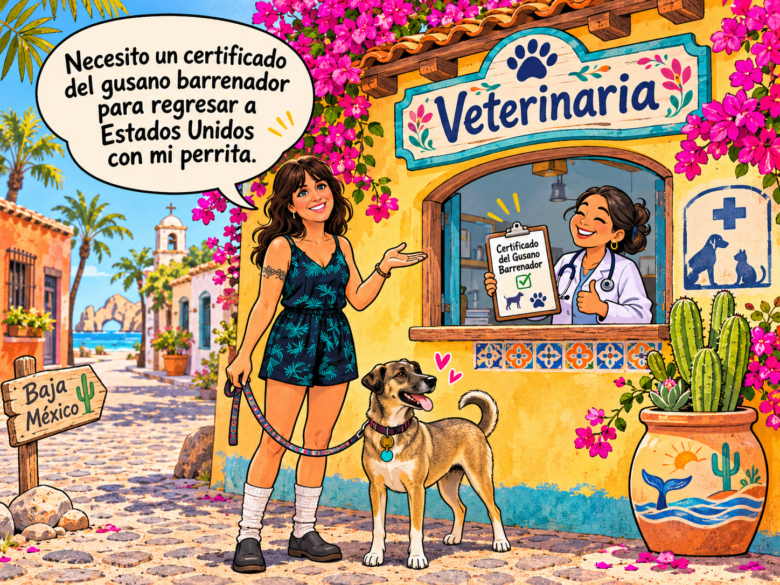
I’ve been traveling up and down the coast of Baja California since I was seventeen years old, back when my parents probably thought I was spending the weekend at a friend’s house. Technically, I was. They just didn’t know that my buddy’s house was a casita south of San Ysidro, in another country.
Fortunately, I was an astute young adult who made intelligent decisions wherever my youthful wanderlust took me. And by intelligent, I mean I was free-spirited but not completely reckless, mostly because I was terrified of two things: my parents finding out where I was and ending up in a Mexican jail. Nothing encourages responsible teenage decision-making quite like imagining your father driving across an international border to personally murder you.
I’ve always been the first person to tell my friends that Baja California is a fantastic place to visit. Pay attention to the U.S. State Department’s travel advisories, use common sense, stay aware of your surroundings and don’t behave like the starring character in an episode of Locked Up Abroad. But Mexico has never been the easiest destination for tourists who require their vacations to be completely predictable. And you should expect that as soon as you cross the border. Your not in Kansas anymore, Dorothy.
There are the sometimes ridiculous border waits when returning to the good old U.S. of A. There are unfamiliar traffic rules, occasional encounters with suspicious law enforcement, and the general realization that driving in another country requires more attention than simply following Google Maps while drinking a Starbucks. Then there’s the drinking water situation. Depending on where you’re staying, you may want bottled or properly filtered water even for brushing your teeth. Nothing says relaxing Mexican beach vacation like accidentally swallowing questionable tap water and spending the next twenty-four hours becoming intimately acquainted with your hotel bathroom. Baja is not necessarily the ideal vacation for the traveler who requires an all-inclusive cruise buffet, color-coded wristbands and a concierge to explain where the ocean is. Personally? Give me Baja’s rugged coastline, fresh fish tacos, cheap lobster, dusty backroads and a little adventure. Especially when my dog gets to come along. Until this year.
Dog-Friendly Baja California: The Vacation Dog Years
Wh en I became a dog mom thirteen years ago, traveling to Baja became even more fun. If you think I love the beaches of Baja California, you should meet my adventure dog. This dog would happily trade our entire mountain cabin for a sandy beach, a few friendly Mexican street dogs and the opportunity to investigate every suspicious smell between Rosarito and Ensenada.
Baja has always felt wonderfully dog-friendly to us. We love finding quiet stretches of coastline, relaxing beneath a beachside palapa and enjoying fresh seafood while Vacation Dog supervises the entire operation.
We live more than three hours from the San Ysidro border, so visiting Mexico is not normally a spontaneous afternoon activity. We usually plan our Baja adventures around longer Southern California trips. But during our recent weeklong San Diego vacation, we had a brilliant idea. Why not spend one entire day south of the border? We have Global Entry and use the appropriate SENTRI access when eligible, so the days of waiting six hours at the border are largely behind us. We could drive to Rosarito, eat fish tacos, buy seafood, let Vacation Dog enjoy the beach and return to California that evening. Vámonos!
And then I discovered the New World screwworm regulations. Apparently, now Vacation Dog now needs more international documentation than some members of Congress.
Taking Your Dog to Mexico in 2026: Welcome to the Screwworm Paperwork Olympics
If you’re planning on taking your dog to Mexico in 2026, there is one extremely important detail you need to know before loading your pup into the Jeep. The border crossing rules have changed. And no, this is not simply another government form where you check a box promising that your dog is a good boy who pays his taxes, doesn’t pee in the house and has never participated in organized crime.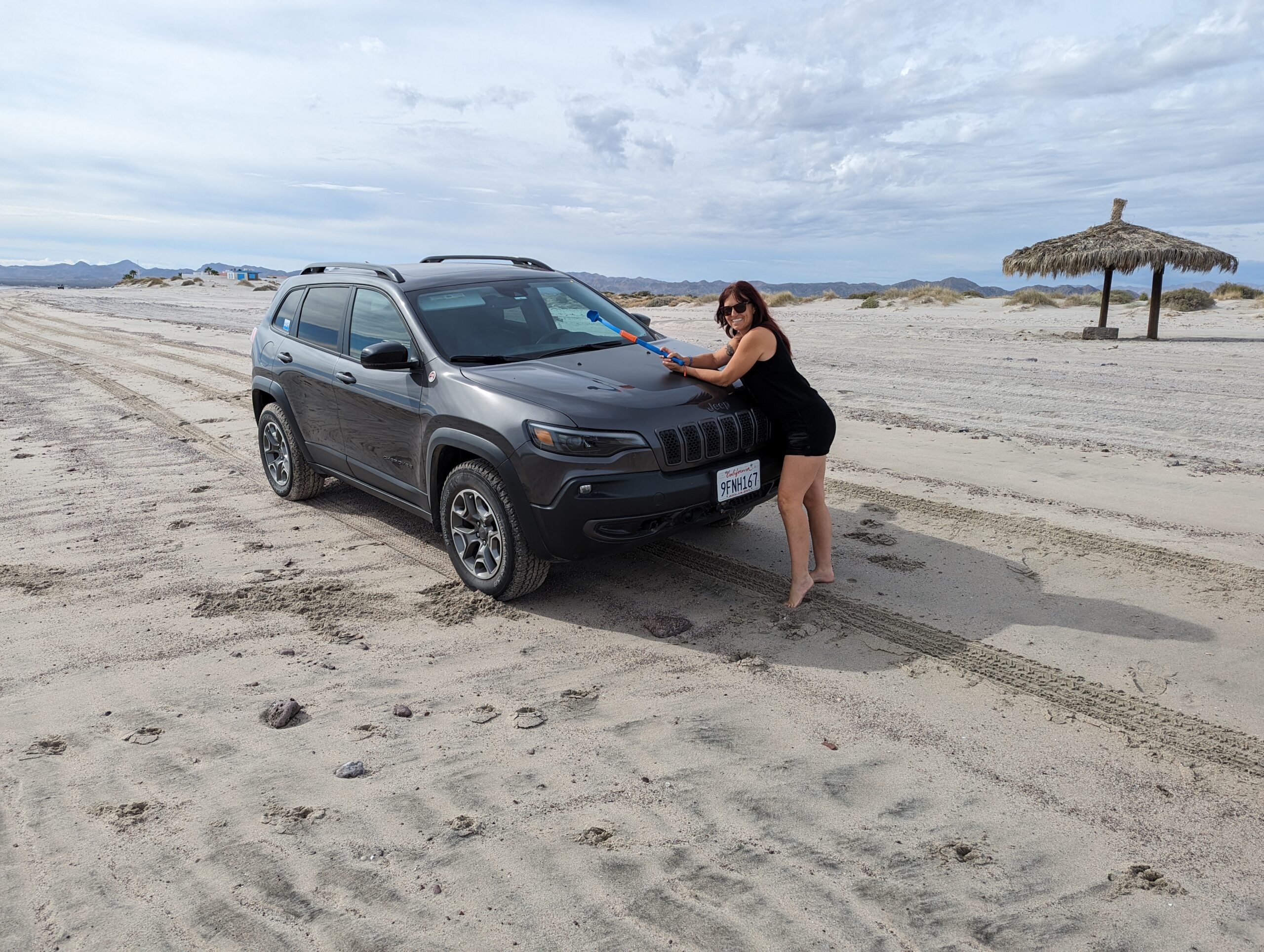
The United States began applying screwworm-related reentry requirements to dogs arriving from Mexico on November 22, 2024. This includes American dogs returning home after a Mexican vacation. Then, on August 3, 2026, Mexico introduced its own screwworm inspection document requirement for dogs arriving from the United States. That second requirement came from a bilateral agreement between Mexico’s SENASICA animal-health authority and the USDA’s Animal and Plant Health Inspection Service. So yes, both governments are involved. And yes, this means your innocent little afternoon of tacos and tequila can require veterinary paperwork before you leave California and another veterinary certification before you return. Apparently, one international border crossing wasn’t complicated enough.
What the Hell Is the New World Screwworm?
Before I started researching the New World screwworm, I pictured something resembling an earthworm with an unfortunate name. The New World screwworm is actually the larval stage of a parasitic fly called Cochliomyia hominivorax. And unlike ordinary maggots that feed on dead tissue, screwworm larvae feed on the living flesh of warm-blooded animals. Congratulations, Mother Nature. You’ve created something more horrifying than the contents of my motorhome’s black tank after a week of eating Indian food.
Why Does Screwworm Spread So Quickly?
Here’s the interesting—and genuinely alarming—part. A single female screwworm fly can lay approximately 200 to 300 eggs at a time and potentially thousands during her lifetime. Those eggs can hatch rapidly, and the larvae feed on living tissue before dropping into the soil to develop into adult flies. Then the cycle begins again. It’s likewise democrats all watch The View and then spew that Fake News to everyone that will listen.
That repro ductive ability makes screwworm outbreaks particularly difficult to control when the flies become established in an area. But here’s an important distinction: New World screwworm is not contagious in the same way as kennel cough or canine influenza. Your dog does not catch screwworm simply by sniffing another dog, sharing a water bowl or playing together on a beach. Infestations occur when adult screwworm flies deposit eggs on a susceptible animal. An infested animal can nevertheless carry developing larvae into a new area, where the larvae may eventually become adult flies capable of starting additional infestations.
That is why agricultural authorities are so concerned about animals crossing international borders. It’s not that Vacation Dog is going to give screwworm to a beach donkey by sharing a particularly enthusiastic nose kiss. It’s that an undetected infestation could help introduce the parasite into another region. And that would be a serious problem.
Wait, Have Dogs Actually Been Infected With Screwworm?

Yes. This was one of the first questions I asked, because most of the screwworm stories I’d encountered involved cattle.
Now, my dog is technically a cattle dog. She’s a Catahoula, after all. But she isn’t out there starring in Yellowstone, chasing livestock across Montana while Kevin Costner broods dramatically in the background. She’s much more interested in beach vacations, hiking trails and convincing me that the passenger seat of the Jeep belongs to her. But unfortunately, screwworm doesn’t care whether your dog has ever seen a cow.
Dogs have been affected by New World screwworm, including domestic dogs reported during the 2026 U.S. outbreak.
The parasite can infest many warm-blooded animals, including cattle, horses, dogs, wildlife and occasionally humans. A dog with a small wound can be vulnerable in an area where screwworm flies are present.The CDC has reported that the current U.S. outbreak has primarily involved livestock, but domestic dogs have also been infested. So while the paperwork may feel excessive when you’re planning a simple beach vacation, the underlying animal-health concern is legitimate. And that’s the annoying part.
I would love to write an entire article about how this is ridiculous government overreach, but then science has to come along and ruin a perfectly good rant.
Why Is the United States So Worried About Screwworm?

The United States spent decades working to eliminate New World screwworm, using a remarkably clever technique involving sterile male flies. Since female screwworm flies mate only once, releasing large numbers of sterile males can prevent successful reproduction and gradually reduce the fly population. It was a major agricultural success. But the parasite has been spreading northward again, and the 2026 outbreak has included confirmed animal infestations in the United States. Reintroducing screwworm on a large scale could cause enormous damage to livestock, wildlife and pets, along with substantial costs for ranchers and animal-health agencies. And unlike a government program to study the mating habits of confused squirrels, this is an agricultural problem with very real consequences.
So I understand the concern. I genuinely do. I just wish there were a more convenient way to protect American agriculture without turning my dog’s Mexican vacation into a two-country veterinary field trip.
What Screwworm Paperwork Does Your Dog Need to Enter Mexico?
As of November 2026, Mexico requires dogs traveling from the United States to have a New World screwworm inspection document signed by a USDA-accredited veterinarian. The inspection document must be issued within five calendar days before entering Mexico. The veterinarian examines your dog for signs of screwworm infestation and completes the required paperwork. This is primarily a physical inspection and certification process, not a routine blood test or vaccination.
So before you head south, make sure you have the correct documentation rather than assuming your ordinary rabies vaccination record is enough.
Bringing Your Dog Back From Mexico to the U.S. The dog & pony & vet show
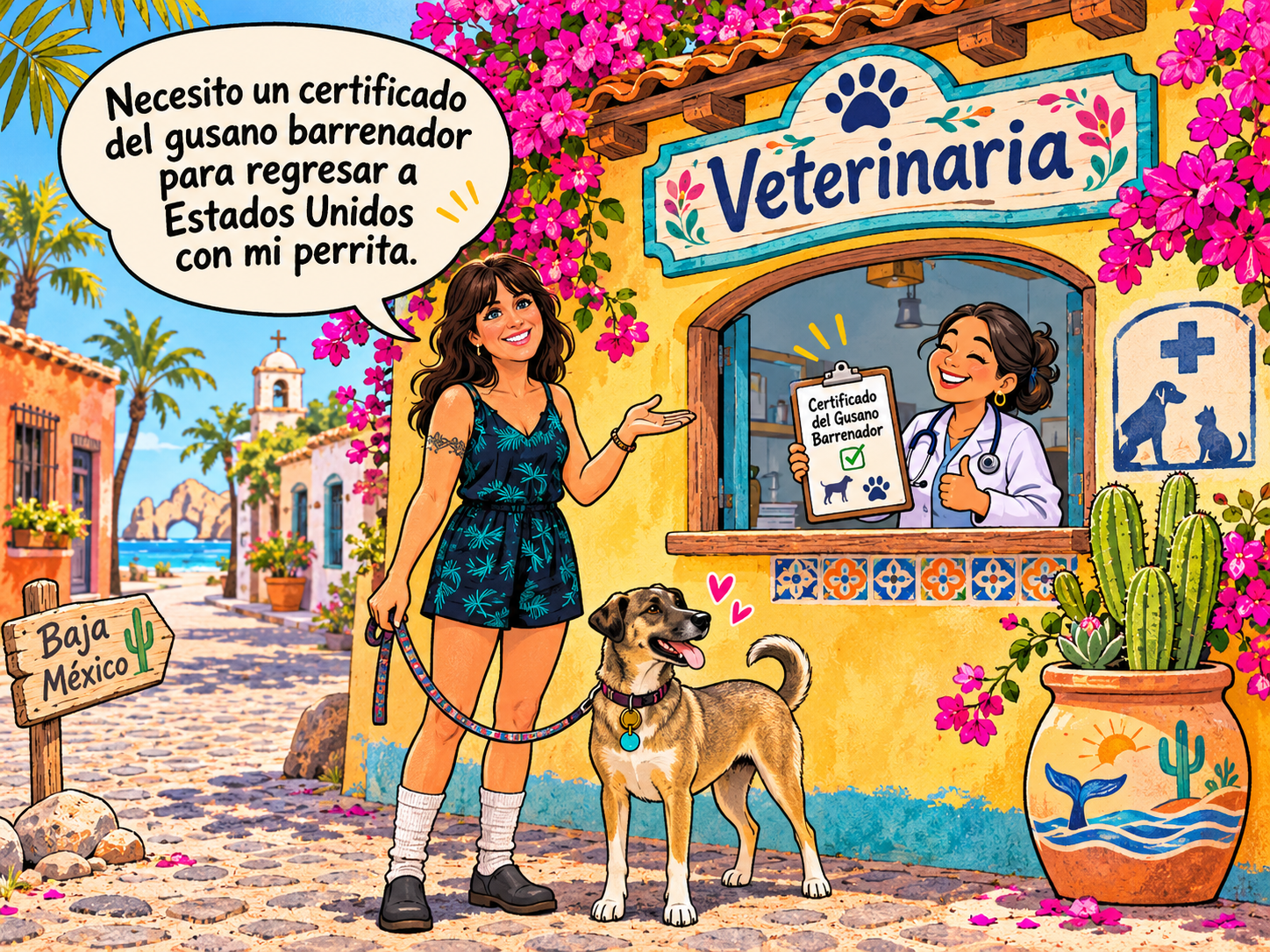
And now we arrive at the part that ruined my afternoon plans. When returning to the United States from Mexico, dogs must meet USDA APHIS screwworm-freedom certification requirements. The certification must come from an authorized veterinary professional in Mexico, and the dog must be inspected for screwworm. A properly authorized Mexican veterinarian can issue the required certification.
And the most frustrating detail?
There is no general same-day tourist exemption.
You can cross into Mexico in the morning, eat lunch in Rosarito, spend an hour at the beach and head home that afternoon. Your dog still needs to meet the applicable requirements for returning to the United States. Apparently, the screwworm doesn’t recognize the difference between a four-hour beach vacation and a six-month international relocation.
How Much Does a Screwworm Vet Inspection Cost in Rosarito?

This is where my inexpensive Baja day trip started getting expensive. Based on reported veterinary prices around the Tijuana area, I would budget approximately 800 to 850 Mexican pesos for a screwworm examination and certification. That’s roughly $40 to $50 American dollars, depending on the exchange rate. These are estimates, not guaranteed Rosarito clinic prices, so call ahead before making plans. And don’t assume that every neighborhood veterinarian can issue the certificate accepted by U.S. border authorities. You need someone properly authorized to provide the required documentation. Mexico loves to make everything complicated.
Now, fifty dollars isn’t exactly going to bankrupt the Hungry Mountaineer household. But fifty dollars buys a lot of delicious fish tacos in Baja. It also buys fresh seafood, a few souvenirs and possibly enough margarita ingredients to make an entire beachside palapa significantly more entertaining.
Instead, I’m supposed to spend part of my vacation finding a veterinario who can examine Vacation Dog and certify that she isn’t secretly transporting flesh-eating fly larvae across an international border. If I ever complete this particular bureaucratic adventure, I swear I’m framing the certificate.
The Problem With a One-Day Dog-Friendly Baja Vacation

Getting the first inspection at home isn’t my biggest complaint. We have a wonderful, slightly eccentric local veterinarian near our mountain cabin in Big Bear Lake. Making an appointment before a planned trip is manageable. The problem is the return inspection. And 5he problem is Mexico Time.
When you’re spending a week or two in Baja, arranging a veterinary appointment is inconvenient but possible. When you’re planning a quick day trip from San Diego, it becomes a much bigger headache. We wanted to drive south, enjoy the coastline, stop for seafood, let Luna investigate the beach and come home.
Not schedule our afternoon around the business hours of a veterinary clinic in Rosarito, which could run on Mexico Time, meaning you will wait hours to see a veterinarian. And here’s another little logistical delight: you can’t simply assume that any veterinarian who examines your dog can issue the certificate required for U.S. entry. How good is your Spanish, because this could take some explanation in espanol.
You need to find an authorized provider, confirm the price, arrange an appointment and make sure the certificate is completed correctly. Which means that instead of sitting beneath a palm-thatched palapa with a jalapeño margarita, I could be sitting in a veterinary waiting room explaining why my dog needs international agricultural clearance. I don’t know about you, but that’s not exactly the vacation brochure I had in mind.
Baja Tourism, Fish Tacos and the Money We Didn’t Spend

The other reason this frustrates me is that I genuinely love Baja California. I’ve been visiting since I was a teenager, and I’ve always encouraged friends to explore the region responsibly. I love the restaurants, the coastline, the local seafood markets, the little shops and the relaxed atmosphere of beach communities like Rosarito and Puerto Nuevo. And yes, I love spending my American dollars there.
There’s an old saying that when the United States catches a cold, Mexico gets pneumonia. The basic idea is that Mexico’s economy is closely connected to what happens north of the border. Tourism is one part of that relationship.
Now, I’m not suggesting that one disappointed American dog mom canceling her lobster lunch is going to collapse the economy of Baja California. But when travel becomes more complicated and expensive, some tourists will reconsider their plans. And those tourists might spend their vacation money somewhere else.
In our case, the money that could have gone toward fresh seafood, Mexican souvenirs and a few bottles of tequila purchased north of the border. Instead some of it was donated to the Del Mar Thoroughbred Club. At least the horses didn’t require Luna to obtain an international veterinary certificate.
So Is Taking Your Dog to Baja Still Worth It?
 Absolutely. I still love Baja California, and I still believe it can be an incredible destination for adventurous dog owners. I also understand why the United States and Mexico want to prevent New World screwworm from spreading. The parasite is real. Dogs can become infested. Livestock producers have legitimate reasons to be concerned. This isn’t a made-up disease, and it isn’t some right wing vaccine conspiracy. It’s a genuine animal-health problem. But that doesn’t mean I have to enjoy the extra paperwork.
For a longer Baja vacation, I’d plan ahead, arrange the inspections and build the veterinary appointments into the itinerary. For a spontaneous day trip from San Diego? I might reconsider whether the fish tacos are worth coordinating two veterinary visits. And that is a sentence I never thought I’d write.
Because I’ve been sneaking off to Baja since I was seventeen years old, when my biggest border-crossing concern was whether my parents would discover that my supposed sleepover involved another country. Now I’m a responsible adult with a Jeep, a Global Entry card, a rescue dog and enough paperwork to start my own agricultural inspection office. Somewhere along the way, being a rebellious teenager became significantly easier than being a middle-aged dog mom.
So screw you, screwworm.
I still love Baja. I still want my cheap mexican lobster. And somebody needs to explain to Vacation Dog why we’re not frolicking at Clam Beach this afternoon. Because I guarantee she isn’t going to accept “international agricultural biosecurity regulations” as a reasonable excuse.

