Long before Big Bear Lake became a hotspot for snowboarders, luxury cabin rentals, and Instagram influencers posing dramatically beside snowbanks in borrowed moon boots, the mountain was home to an even rowdier crowd — the wild burros.
Big Bear’s Wild Burros: Before the Influencers, There Were Donkeys
These fuzzy little outlaws didn’t exactly arrive in style. During the California Gold Rush, prospectors hauled burros up into Holcomb Valley to carry mining equipment, supplies, ore, and probably several quest ionable jars of homemade moonshine. Back in the 1800s, these animals were the unsung heroes of mountain survival. Gold miners may have gotten the glory, but the burros were doing the actual labor while some prospector named Earl was busy “supervising” from a tree stump.
Today, spotting the wild burros of Big Bear Lake has become one of the most unique wildlife experiences in Southern California. Visitors come from all over hoping to see these legendary mountain donkeys wandering through the pines, grazing near the secret Eye of God, or staring judgmentally at hikers like they personally disapprove of your Hoka footwear choices.
And honestly? They kind of own the mountain.
Gold Rush Prospectors and Their Emotional Support Donkeys
For years, Big Bear celebrated this strange little piece of local history during the famous Old Miners Days festival. But this was not some cute small-town parade where a few donkeys stood quietly in the background while somebody’s uncle played banjo music.
No. Big Bear took things to a completely unhinged level.
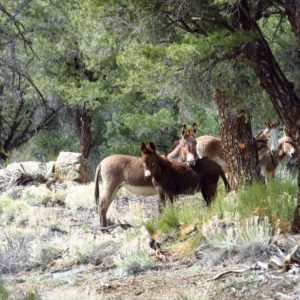
The Old Miners Days donkey race was essentially a full-contact historical fever dream. Contestants first had to head out into Holcomb Valley, where the gold rush originally exploded back in 1860, locate an actual wild burro somewhere in the wilderness, somehow convince this feral donkey to cooperate with humanity, transport it down near Highway 18 below Cushenbury Summit, strap a mining pack onto it, and then lead the animal in a ten-kilometer race all the way into t of Big Bear’s mining era, and — if the burros decide to cooperate — witness one of California’s strangest surviving Gold Rush legacies wandering freely through the pines.
Basically, imagine a marathon combined with an equine hostage negotiation. These old-school prospectors were not horse whisperers. They were ass whisperers. And according to PETA, we are all assholes for supporting Old Miner’s Days. So, unsurprisingly, by the 1990s, California animal rights activists looked at this entire situation and said, “Absolutely not.” The burro races were outlawed, and the wild donkeys were left to roam the east end of the valley in relative peace. Which was wonderful for the burros. Possibly less wonderful for population control.
The Rise of the burros in Big Bear Lake : The Wild West to the Wildest Weekends
Because here’s the thing nobody tells you about wild donkeys in Big Bear Lake: these animals breed like tourists booking lakefront cabins on a holiday weekend. One male burro can impregnate up to forty Jennies in a single breeding season. Add in the fact that Big Bear has relatively few mountain lions — one of the burro’s only real predators — and suddenly the local donkey population started multiplying fas ter than sourdough starter during lockdown
By the late 1990s, officials organized a major burro roundup, relocating many of the animals off the mountain near Reche Canyon outside Riverside. For years afterward, sightings of Big Bear’s wild burros became more mountain legend than reality. Locals would whisper about seeing them deep in the forest while tourists nodded politely like somebody describing Bigfoot.
Then the pandemic happened. And somehow, by 2020, Big Bear Lake once again had almost as many jackasses as Covid cases. And no, I’m still not talking about the tourists filling every Airbnb in town.
As it turns out, the wild burros of Big Bear Lake have been staging one heck of a comeback tour in recent years. After spending decades as little more than quirky mountain folklore, these fuzzy freeloaders are once again trotting proudly through neighborhoods, forests, hiking trails, golf courses, and occasionally straight through traffic like they pay property taxes here.
In 2025, locals estimate there are now roughly 150–200 wild burros roaming the Big Bear Valley area. Of course, getting an exact population count is nearly impossible because donkeys, much like your cousin Randy at Thanksgiving, tend to appear uninvited, eat everything in sight, roll their eyes at your version of politics and refuse to leave when asked politely.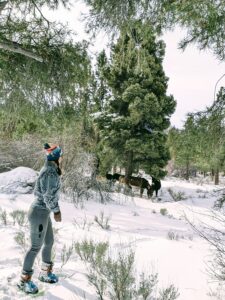
At some point, I swear these burros held a secret union meeting deep in Holcomb Valley and collectively decided, “You know what? This mountain belongs to us now.” And honestly? They may have a point.
While visiting Big Bear Lake, you may spot an entire donkey family casually strolling through the parking lot of your favorite mountain café like they’re headed to brunch. One minute you’re carrying an overpriced oat milk latte, the next minute a baby burro is inspecting your Subaru with the intensity of an HOA president searching for illegal lawn ornaments. These donkeys are masters of passive-aggressive mountain traffic control. They’ll stand directly in front of your car with the confidence of a crossing guard who has absolutely nowhere else to be.
Wild Means Wild — Please Don’t Feed or Ride the Burros
Naturally, nobody in town is exactly furious about the Great Big Bear Donkey Renaissance. They’re ridiculously adorable. But they are also still wild animals.
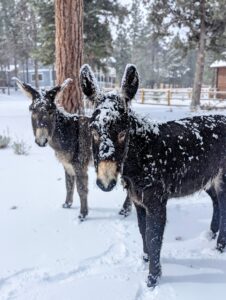 If you’ve ever dreamed of taking a peaceful Big Bear Lake hiking tour through quiet pine forests and scenic mountain meadows, you should understand there is now a very real possibility your wilderness experience will include dodging donkey poop every seventeen feet. Nature is healing. Sort of.
Big Bear Lake Donkey Viewing Hike — California’s Most Chaotic Wildlife Tour
The wild donkey situation in Big Bear Lake has become one of the funniest and most unexpectedly charming parts of visiting the mountain. Tourists now actively search for wild burro viewing hikes and guided donkey tours just for the chance to spot these furry little chaos goblins wandering through the forest. And honestly, I completely understand the obsession.
Today, joining a Big Bear Lake donkey viewing hike is one of the most entertaining ways to experience the wilder side of the mountain. Unlike crowded tourist attractions, these guided wildlife hikes give visitors the chance to explore scenic forest trails, learn the bizarre history of Big Bear’s mining era, and — if the burros decide to cooperate — witness one of California’s strangest surviving Gold Rush legacies wandering freely through the pines.
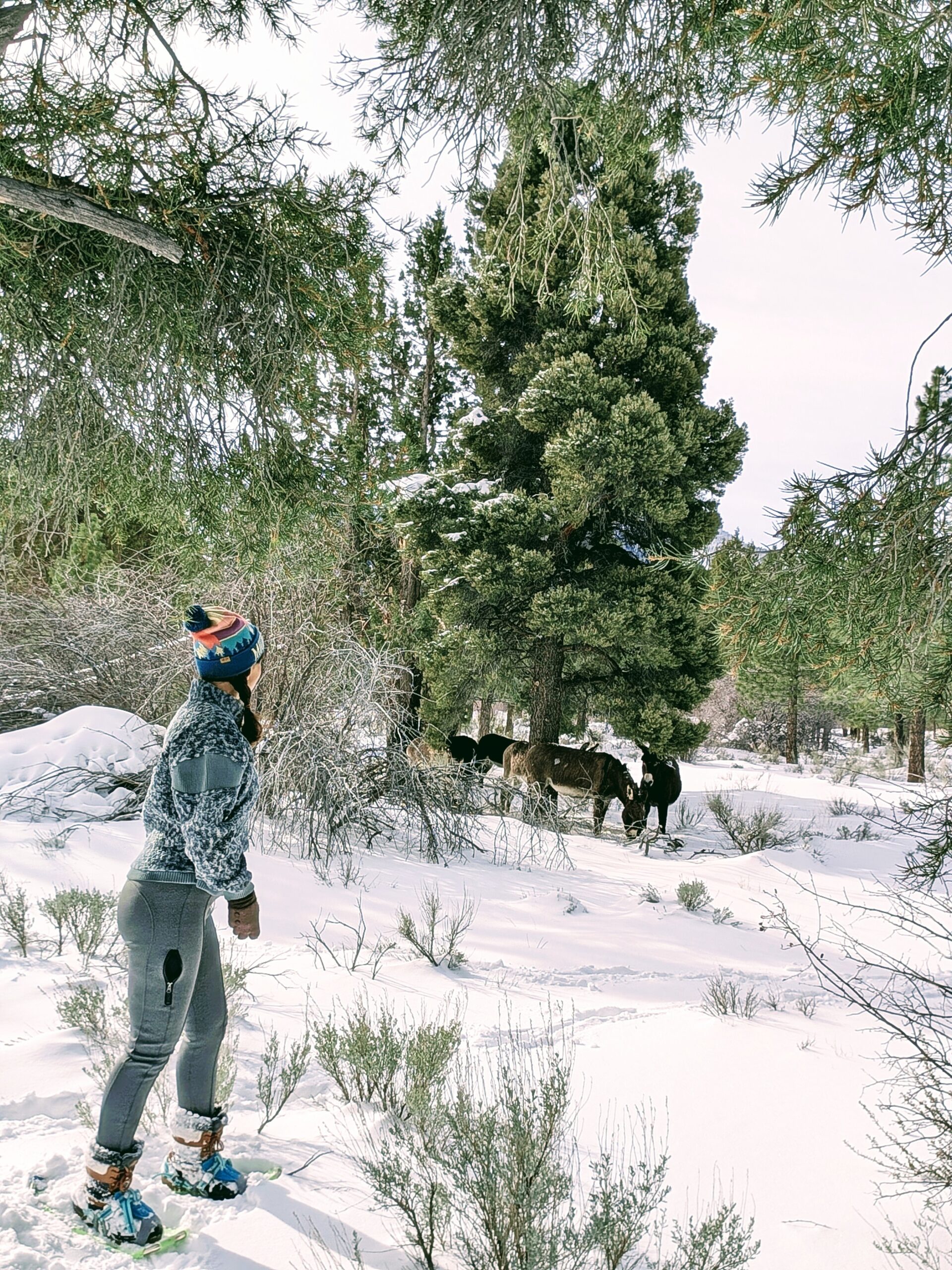
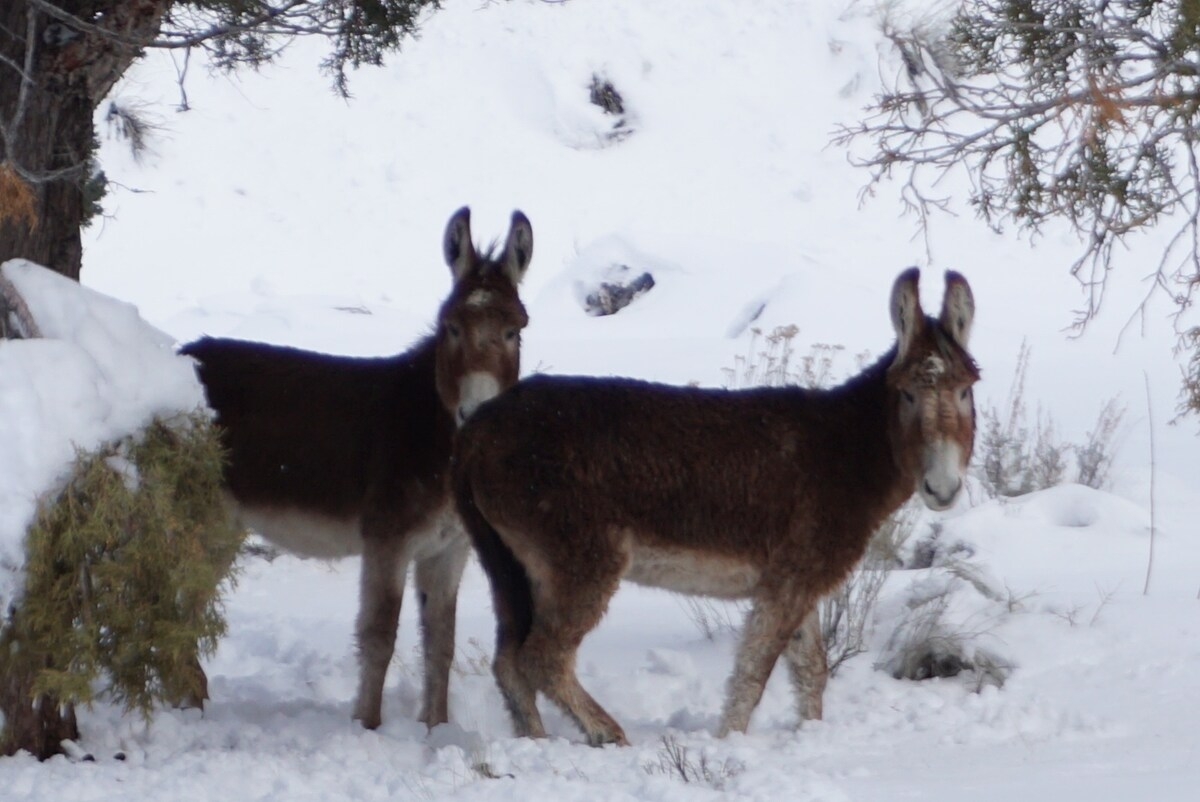
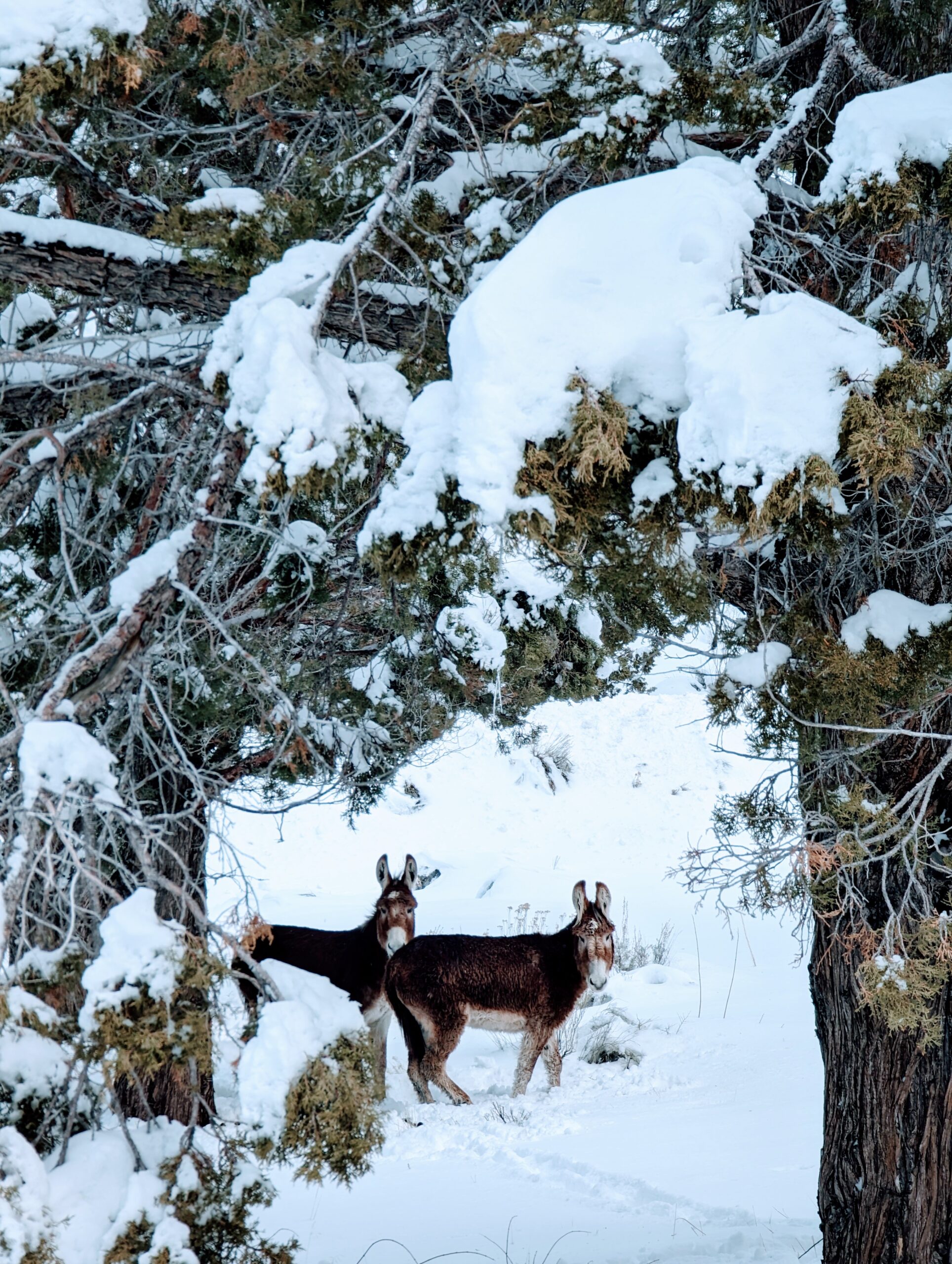
What did I do on my day off this week? I went snowshoeing through a winter wonderland, then attended what can only be described as a very serious neighborhood summit meeting on Fairway Boulevard to discuss potential names for our resident baby donkeys. This is mountain life now.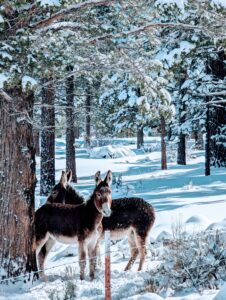
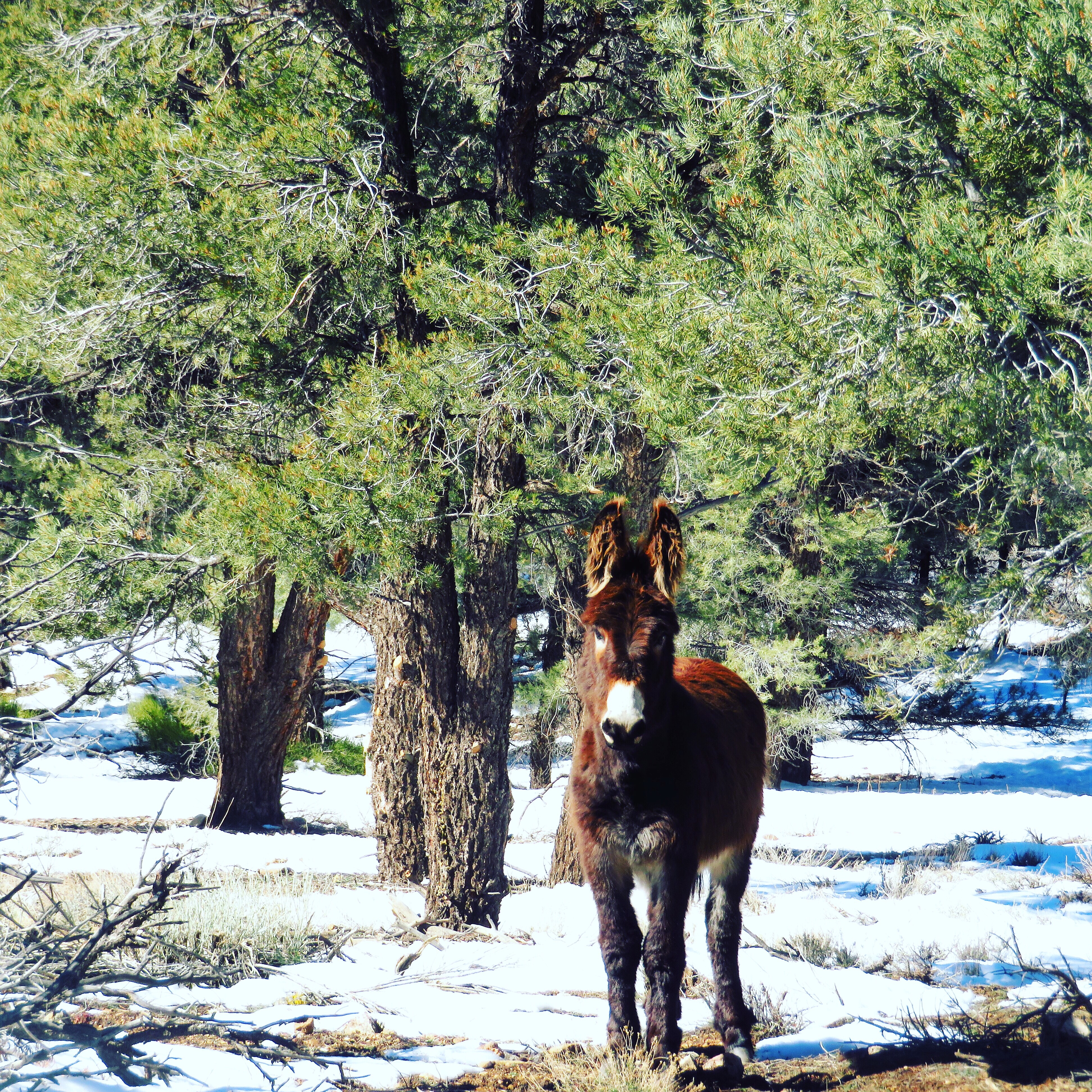
As an equine lover, you have no idea how much self-control it takes not to pet the fluffy ears of the two weanling burros currently hanging around our neighborhood corner every morning like unemployed teenagers loitering outside a gas station. But locals are also extremely protective of the burros and want to keep Big Bear wild.
Our resident 4H queen, Bobbi Jean, became very emotionally invested in determining whether the babies were actually female donkeys or not and suggested perhaps we should “check.” I gently reminded her that these are still wild animals and there is, in fact, a strict no-touching-the-miniature-mountain-donkeys rule.
The Burros Are Wild Animals, Not Petting Zoo Employees
Probably for the best. Because once you pet one fluffy baby burro ear, it’s only a matter of time before you’re building them tiny custom bunk beds and referring to yourself as their emotional support human.
You might assume the biggest threat facing the wild burros of Big Bear Lake w ould be the occasional mountain lion lurking out in the forest looking for a midnight snack. And yes, technically that does happen from time to time in a very National Geographic meets mountain horror movie sort of way.
But honestly? The biggest danger to Big Bear’s wild burros is humans. Specifically, tourists armed with fast food and terrible ideas. Every year, visitors come to Big Bear Lake and decide it would somehow be adorable to feed the wild donkeys leftover French fries, hamburger buns, fajita scraps, or half a breakfast burrito they bought at a mountain café fifteen minutes earlier.
Please Don’t Feed the Wildlife — Especially the Tiny Furry Traffic Managers
And listen, I understand the temptation. A fluffy wild burro strolls up to you with giant Disney eyes, twitchy ears, and the expression of a tiny unemployed horse who just wants “one little snack.” The self-control required not to hand over your entire taco plate is immense. But feeding wild burros in Big Bear Lake is genuinely dangerous for the animals. Once these donkeys start associating humans with food, they lose their natural fear of cars, roads, neighborhoods, and traffic. They begin approaching vehicles looking for handouts like tiny four-legged panhandlers working the lunch rush.
And sadly, that’s exactly how many of them end up getting hit on local highways.
The burros are not trying to cause chaos. They simply learn that cars sometimes equal snacks. One tourist feeds them apple slices out a Subaru window, another tosses them French fries, and suddenly these donkeys are standing in the middle of the road expecting a drive-thru experience. Nature was not prepared for DoorDash donkey culture. And while everyone means well, feeding wildlife almost always ends badly for the wildlife.
The burros of Big Bear Lake do not need Big Macs.
They do not need fajita mix.
They definitely do not need the leftover kale slaw from your overpriced mountain sandwich shop lunch.
Honestly, some of these donkeys probably eat better than I do already.
The best way to safely enjoy Big Bear’s wild burros is from a respectful distance during a guided donkey viewing hike or wildlife tour where visitors can observe their natural behavior without interfering with it. Watching baby burros wander through the pines or seeing an entire herd move through Holcomb Valley is honestly magical enough without trying to turn the experience into a mobile petting zoo.
Because the goal is to keep Big Bear wild — not turn the burros into emotionally dependent parking lot snack addicts standing outside coffee shops waiting for oat milk muffins.
Where to Spot the Wild Burros in Big Bear Lake
If you’re hoping to spot the famous wild burros of Big Bear Lake during your mountain vacation, the good news is this: the donkeys are absolutely thriving right now. Here are some of the best places to see wild burros in Big Bear Lake: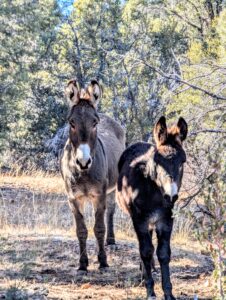
Hiking Trails Around the East End of the Valley
If you’re planning a scenic Big Bear Lake hiking adventure, especially around Holcomb Valley or the east side of town, there’s a very good chance you’ll encounter wild donkeys somewhere along the trail.
You’ll be peacefully hiking through the pine forest, admiring the mountain views, feeling deeply connected to nature… and then suddenly a donkey appears directly in the middle of the trail like it’s auditioning for a Bravo reality series called Real Housewives of Holcomb Valley.
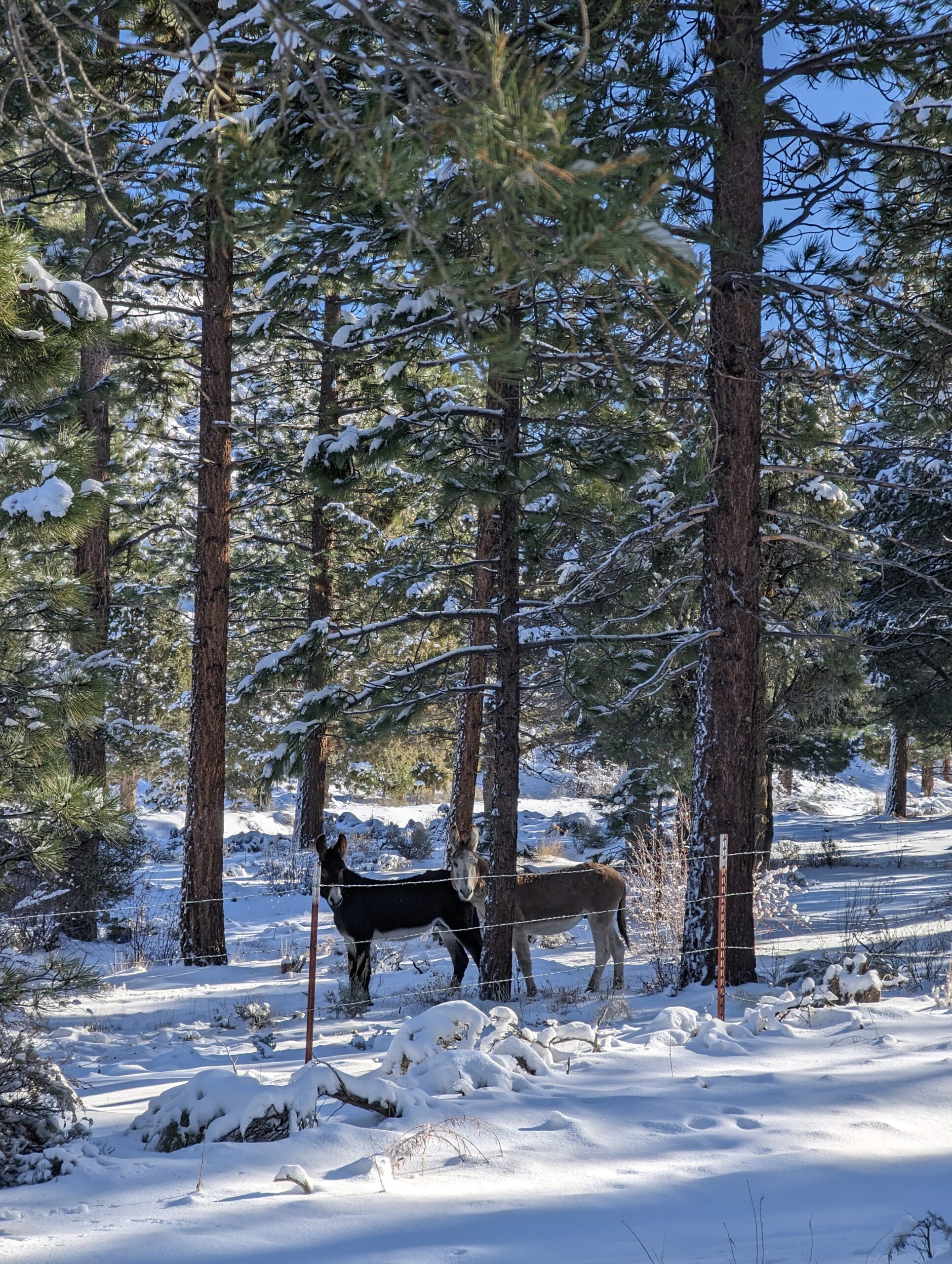
The burros are especially active during the winter months when they wander lower into the valley searching for food and easier terrain. Some days they seem to appear on nearly every trail in the area.
And unlike deer, these donkeys do not scamper away politely. No, they stand there staring at you like you’re the one trespassing on private property.
Coffee Shops, Parking Lots, and Random Neighborhoods
One of the funniest things about Big Bear’s wild burros is that they have absolutely no respect for traditional wildlife boundaries.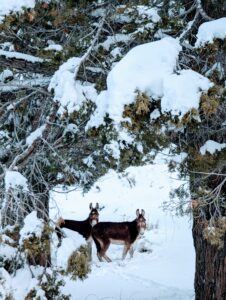
You may head into a local coffee shop for a latte and casually discover an entire donkey family grazing outside the parking lot like they’re meeting friends for brunch. The burros regularly wander through neighborhoods, golf courses, roadside pullouts, parking lots, and occasionally directly in front of traffic because apparently crosswalk laws no longer apply once you grow hooves.
And the best part? They genuinely do not care that tourists are photographing them.
Want the Best Chance of Seeing the Burros?
While the donkeys wander throughout Big Bear Lake, sightings can vary depending on weather, season, and where the herds decide to roam that week.
Booking a guided donkey viewing hike with a local hiking guide gives visitors the best opportunity to safely spot the wild burros while also learning about Big Bear’s Gold Rush history, local wildlife, and the strange mountain saga of California’s most opinionated donkeys.
How to Coexist With the Wild Burros (Without Becoming a Viral News Story)
If you’re visiting Big Bear Lake and happen to encounter the wild burros, congratulations. You have officially entered their territory now. Here are a few very important local rules:
Don’t Feed the Donkeys
Yes, they are adorable.
No, they do not need your trail mix, leftover burrito, protein bar, or artisanal sourdough sandwich. Feeding the burros teaches them to approach cars and humans for food, which sadly leads to highway accidents and injured animals. Also, once a donkey learns tourists carry snacks, it becomes approximately as subtle as a seagull at a beach picnic.
Don’t Try to Ride Them
These are wild animals, not furry mountain Uber drivers. Every local has at least one story about a tourist looking at a burro and thinking:
“How hard could it be?” Very hard.
The donkey will immediately give you a look that says:
“Absolutely not, Brenda.”
Respect Their Space
Wild burros are generally calm, curious animals, but they still deserve distance and respect.
Do not chase them for selfies.
Do not corner baby burros.
Do not attempt to pet them because “they looked friendly.”
This is not a petting zoo.
This is simply Big Bear Lake being weird again.
And let me tell you, it hurts getting bitten by an equine. You could lose a finger. Seriously. Do you like having ten fingers?
Respect the Burros, People
The wild burros of Big Bear Lake are far more than quirky roadside attractions or four-legged Instagram celebrities.
They’re living pieces of Big Bear’s Gold Rush history — stubborn, hilarious survivors that somehow became one of the mountain’s most beloved local legends.
So the next time you spot a burro wandering through the pines, blocking traffic, or judging your hiking outfit from across a parking lot, take a photo, enjoy the moment, and admire them from a respectful distance.
Because keeping Big Bear wild means letting the donkeys stay gloriously weird, wonderfully stubborn, and completely untamed for future generations to enjoy.
How did wild burros first arrive in Big Bear Lake?
▼
Big Bear’s wild burros originally arrived during the 1860s California Gold Rush. Prospectors hauled these resilient animals up into the high-altitude terrain of Holcomb Valley to serve as the primary beasts of burden, carrying heavy mining equipment, camp supplies, gold ore, and rations through the rugged mountain backcountry.
What is the history behind the famous Big Bear burro races?
▼
For decades, the town’s Old Miners Days festival featured a chaotic donkey race honoring its mining past. Contestants had to trek deep into Holcomb Valley, capture an actual wild burro, transport it down near Highway 18 below Cushenbury Summit, rig it with a full mining pack, and lead the stubborn animal on a grueling 10-kilometer race. Following intense pressure from animal rights groups, the races were officially outlawed by the 1990s.
Why has the wild donkey population grown so quickly in recent years?
▼
Wild burros have a remarkably fast breeding cycle; a single dominant male can impregnate up to 40 jennies in a single mating season. Because the San Bernardino Mountains have a very low population of natural predators like mountain lions, the herd numbers have skyrocketed unhindered, resulting in an estimated 150 to 200 wild burros roaming the valley today.
Where can I safely view wild burros and what are the safety rules?
▼
The best places to spot herds are on wilderness hiking trails throughout Holcomb Valley and across the east end of the Big Bear Valley. They also frequently meander through local mountain neighborhoods, parking lots, and golf courses. It is strictly prohibited to feed, ride, or touch the burros. Handing out human snacks causes them to lose their natural fear of traffic, drawing them dangerously onto local mountain highways where they risk being struck by moving vehicles.

 ould be the occasional mountain lion lurking out in the forest looking for a midnight snack. And yes, technically that does happen from time to time in a very National Geographic meets mountain horror movie sort of way.
 Nature was not prepared for DoorDash donkey culture. And while everyone means well, feeding wildlife almost always ends badly for the wildlife.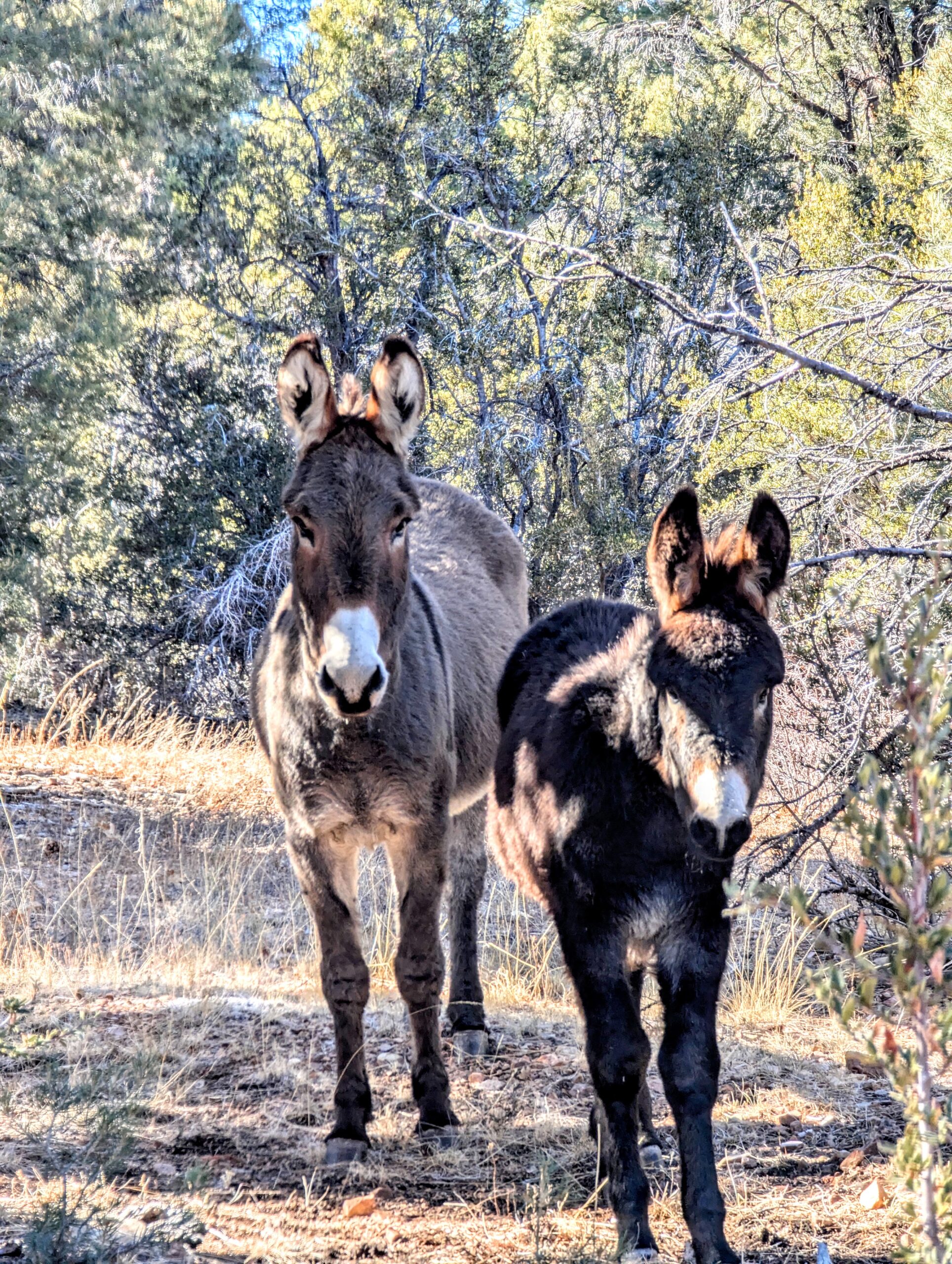
 You have officially entered their territory now. Here are a few very important local rules:

Comments
Don’t feed the donkeys!
Author
Yes, they are wild animals and should be treated as such.