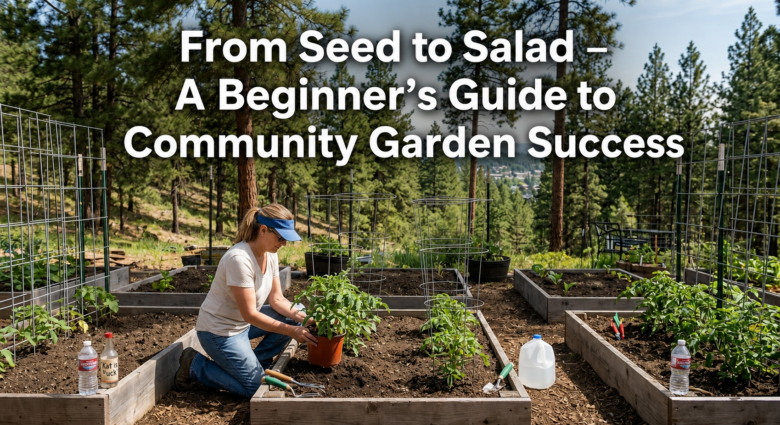
I’ve always dreamed of being one of those effortlessly chic gardeners with a magical green thumb—the kind who casually harvests heirloom tomatoes while wearing a gently thrifted linen romper. Unfortunately, owning a collection of vintage summertime rompers and cute gardening gloves does not make you a tomato-growing goddess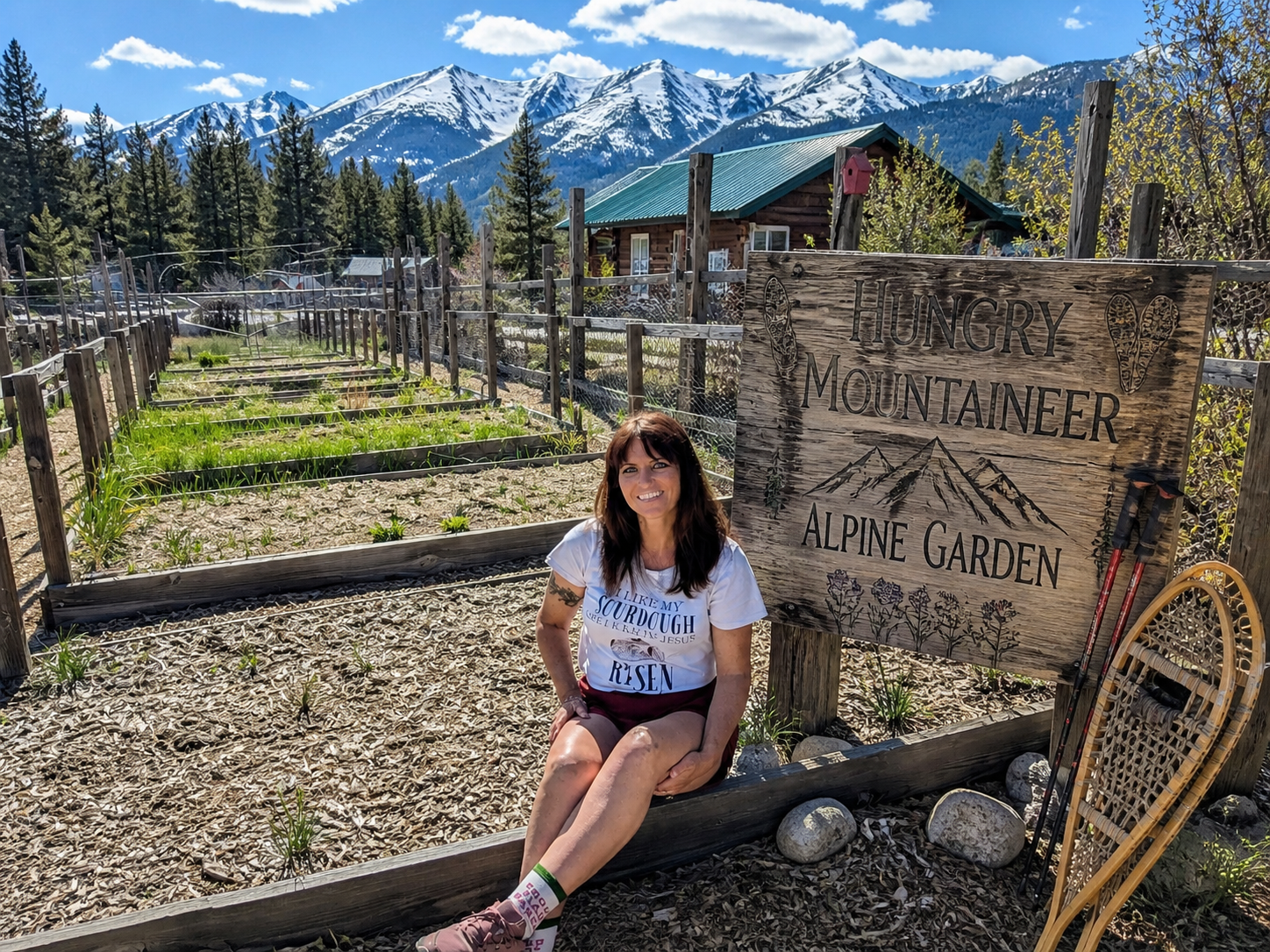 .
.
But every mid-May, I pray… and I plant. And this springtime I came up with these easy community garden tips.
This year, things got a little more serious in my organic gardening journey. I officially joined a community garden in Big Bear Lake, which means I’ve fully entered my chicken manure, compost piles, ladybugs, and DIY organic pest control era. And yes, you can buy live ladybugs on Amazon!
Of course, before you even plant a seed, you need to get your plot ready for the season ahead. This is not 1999. You need a Cordless Tiller Cultivator in your gardener’s life!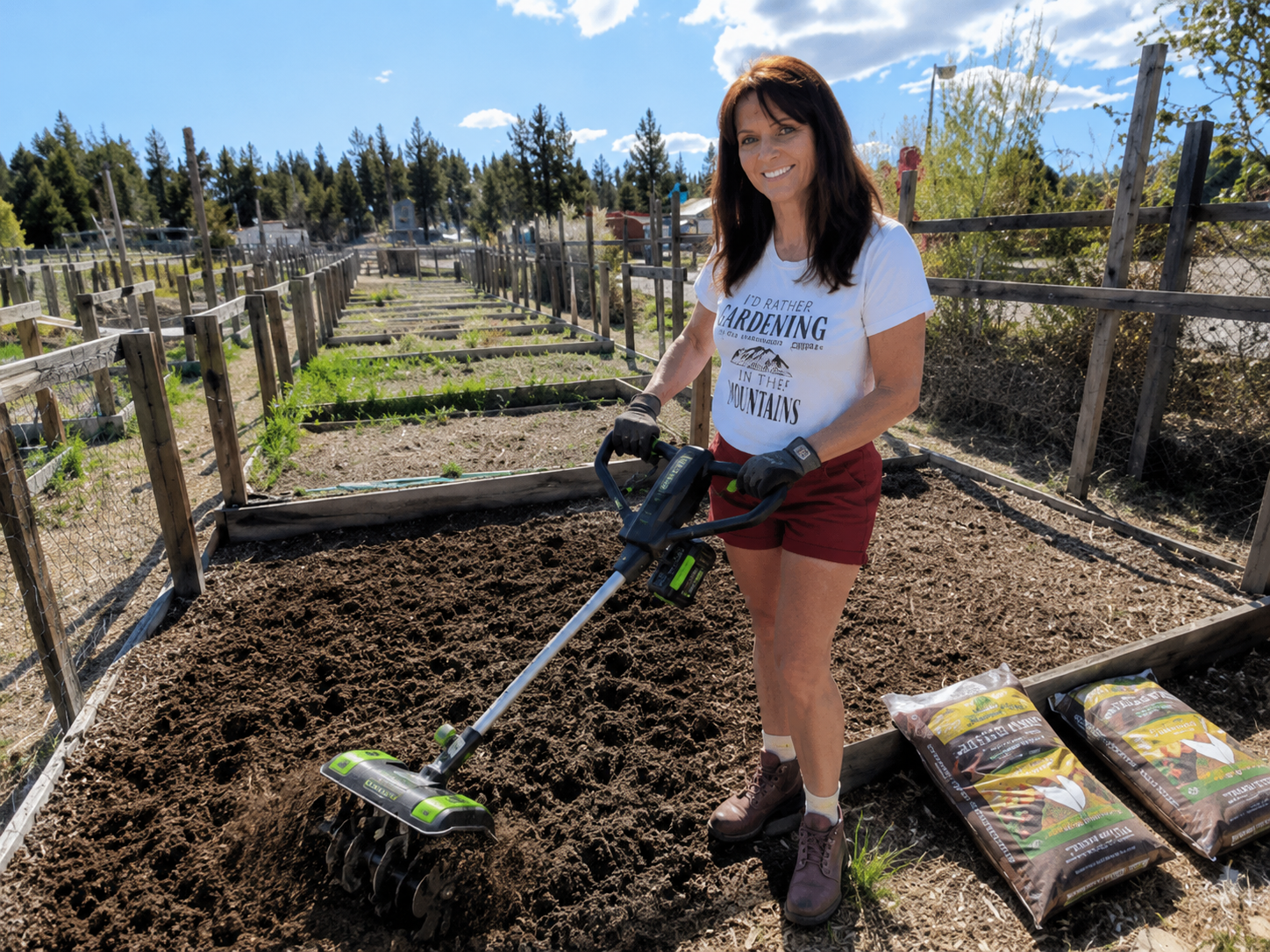
Mountain Gardening: Where Hope Goes to Freeze
Let’s talk about high-altitude gardening for a second. Gardening in Big Bear Lake is not for the weak. Sitting at over 6,500 feet, we’re working with a short growing season (Zone 6B/7A) and a climate that treats tomatoes like a gamble. I may be a degenerate gambler but I usually save my big bets for the racetrack. Ask me where I gamble more cash on in the springtime, the Home Depot gardening department or Louisville and Kentucky Derby week. Wait, don’t ask me.
And away they go!
With that first Saturday in May on the horizon, all of us mountain gardeners are dying to swipe our AmEx’s at the garden center but we know it’s way too early. Here at 6,500 feet, sure, you can plant after Mother’s Day…but you might also wake up to a foot of snow on Memorial Day weekend.
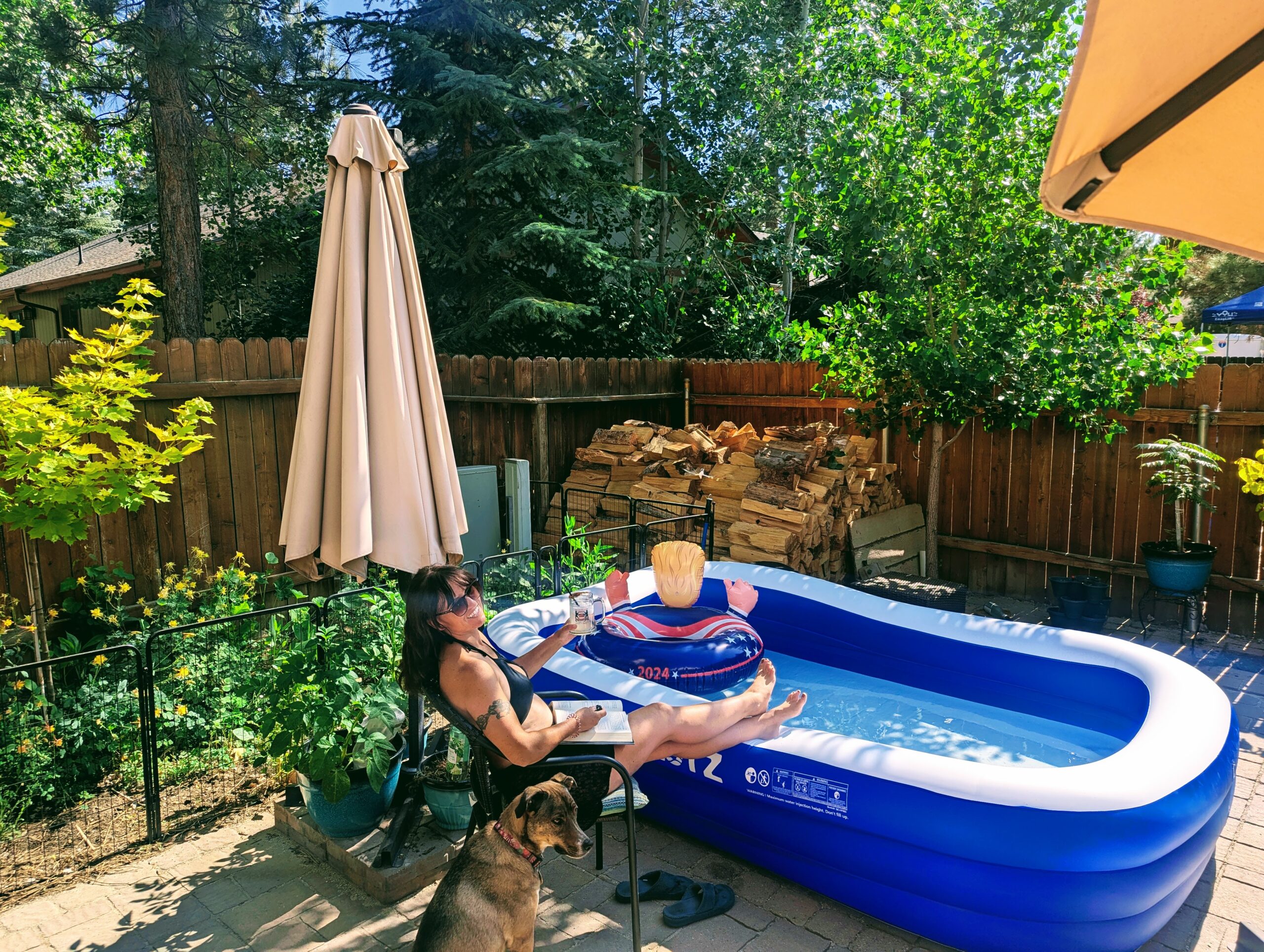
For us in this small town, yes, Memorial Day is a weekend where we remember those who serve and those we have lost, but it’s also that weekend where we pray we didn’t buy Crook Neck Squash plants too early. But in August, when everyone at the community garden is begging you to take some zucchini home, that is when rushing to the community garden plots at 8 p.m. in late May to cover your tomatoes with a frost coming in feels worth it.
Mountain gardening isn’t relaxing. It’s plant-based Russian roulette. Let’s face it, you need some local community garden tips.
Why a Community Garden Just Makes Sense
If you’re a healthy foodie like me and your yard has exactly four fruit trees and approximately zero usable sunlight, a community garden plot sounds very intriguing.
There was a time when my front yard garden was thriving—neighbors literally stopped to take selfies with our giant, pristine Cherokee Purple Tomatoes. Now? I’m yelling at the neighborhood Airbnb guests not to pick my plums like this is some kind of DIY Whole Foods experience. Trespassers will be forced to watch The View.
👉 Enter: the community garden lifestyle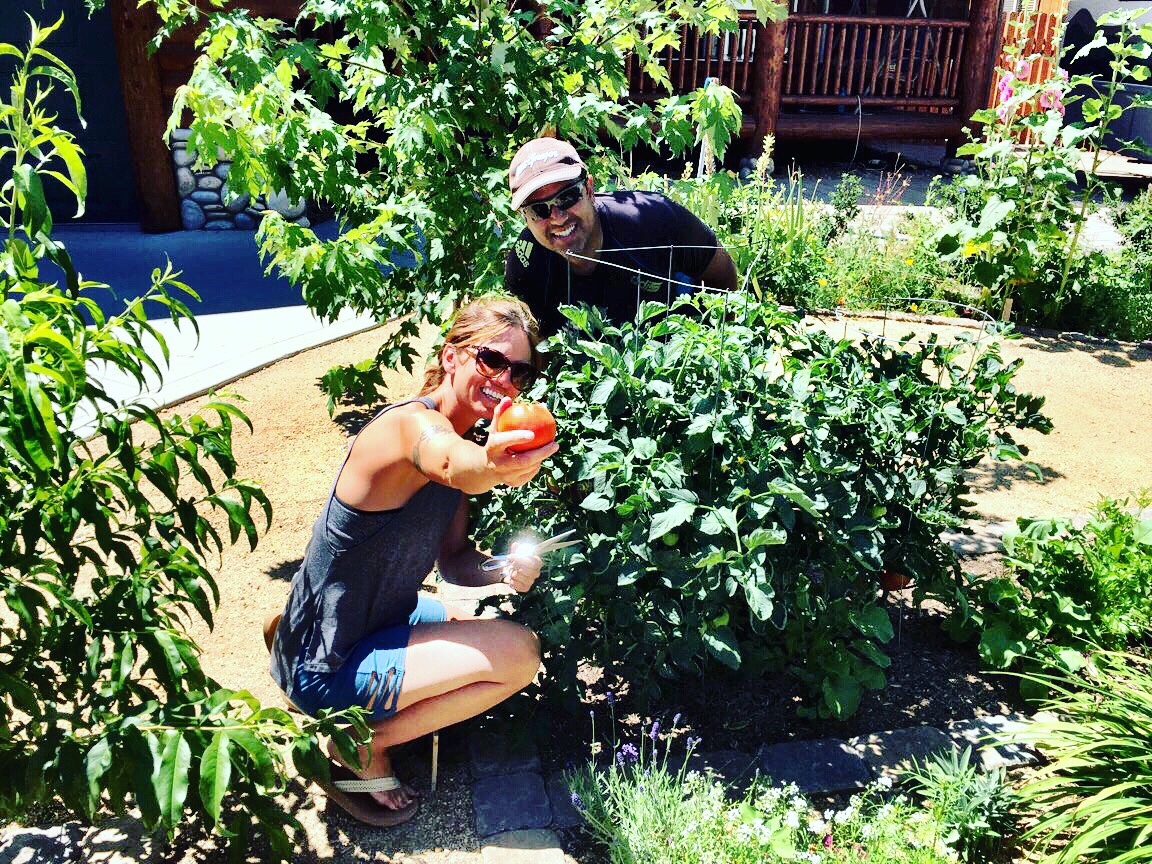
Breaking Bread… Even with the Prius Crowd
One of the best parts of joining a community garden isn’t just the vegetables—it’s the people. Yes, even the ones driving Priuses and protesting in kaftans on “Freedom Corner.” Because at the end of the day, gardening has a funny way of humbling everyone.
There’s something deeply grounding about standing elbow-deep in soil, covered in chicken compost, realizing:
👉 We’re all just trying to grow something.
It actually reminds me of the Bible, Acts 2:46–47—people gathering daily, sharing meals, living simply, and supporting each other. Honestly, that spirit shows up in a community garden more than you’d expect.
2026 was the year I embraced our community garden community, sure I may be the only one in the parking lot with a Trump bumper sticker on my Jeep Trailhawk but the first rule of coexisting is breaking bread with your neighbors, no matter who they voted for, right? And that starts in the community garden 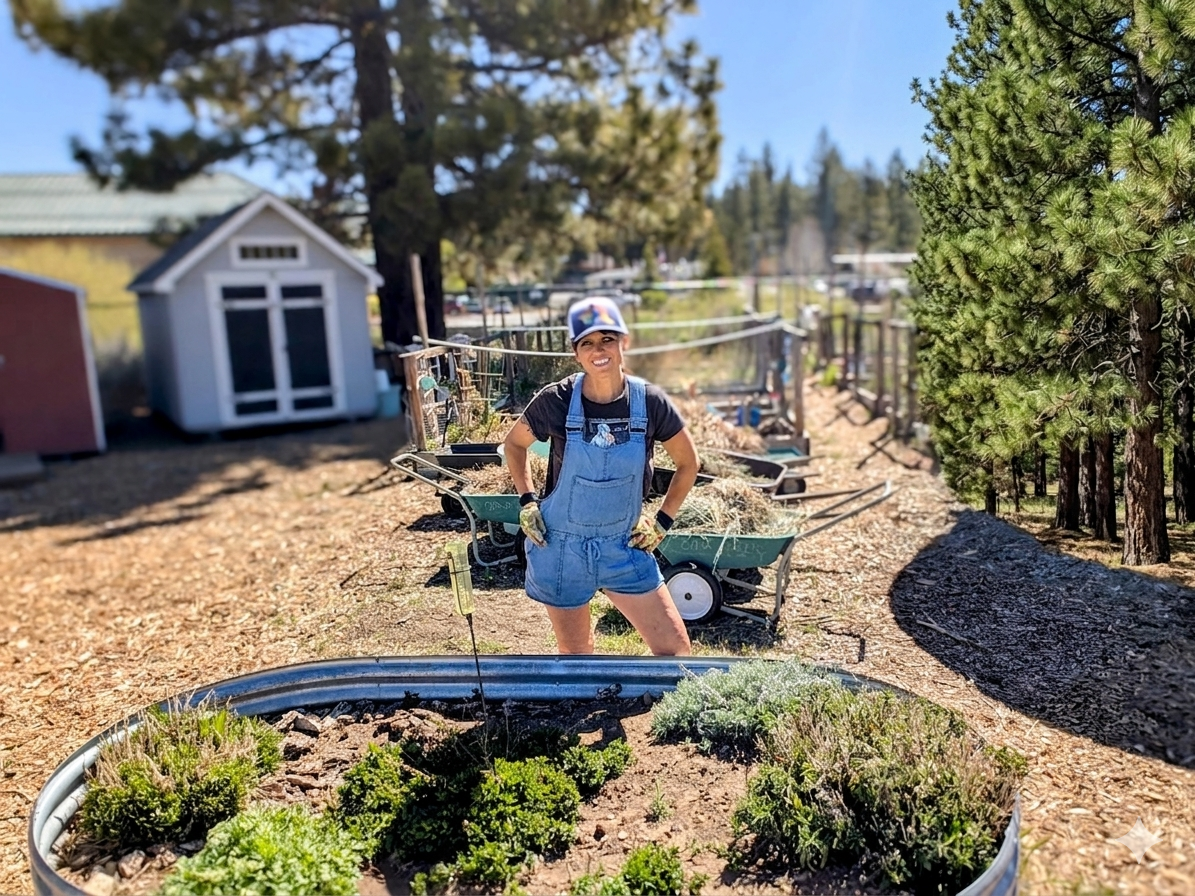 with a rake in hand and deep overall pockets full of seeds.
Minus the debates. I was politely told to leave my Make America Healthy Again shirt at home. Seems ironic, isn’t that why we are all here to begin with, on our knees in the organic fertilizer and chicken shit with dirt under our nails for days? Did you know you can even buy Chicken Manure on Amazon these days? Can you believe this shit? Chicken shit that is…
Sustainable Living Starts in the Dirt
Let’s talk about why this matters beyond just flexing your zucchini harvest.
When it comes to living a sustainable lifestyle, we try as hard as we can to grow as many natural foods in our home garden as possible. We like to shop local and if most of those tomatoes and herbs come from our own soil, even better. Curbing that carbon footprint starts at home, especially if it means you don’t spend as much time driving to Costco to purchase food flown from thousands of miles from different countries.
These community green spaces reduce urban heat islands and manage stormwater runoff. In our small town, our community garden also grows food for the local food bank, a great way to giv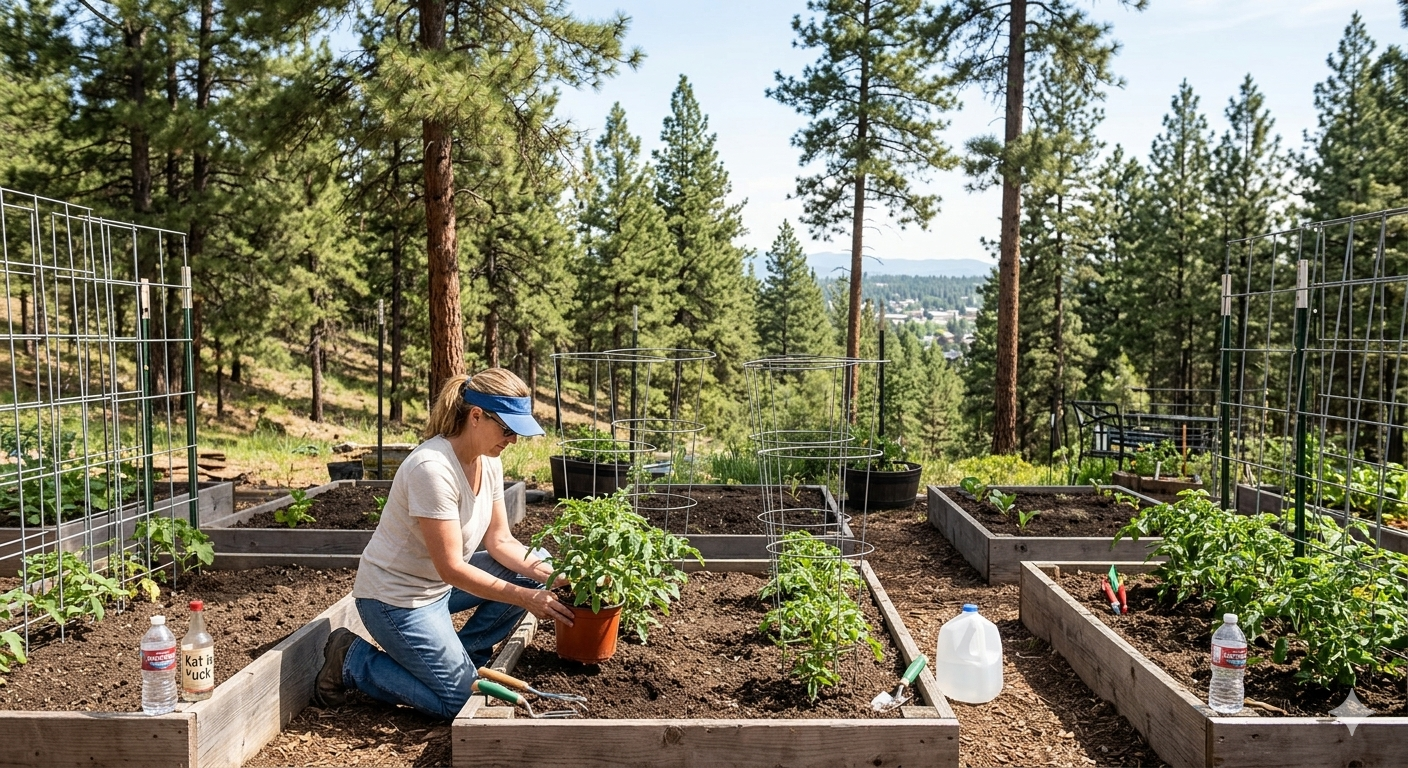 e back, organically, to the community.
Waste Reduction: Many community gardens, like ours, encourage composting, reducing landfill waste and creating nutrient-rich soil.
Growing your own food in a local community garden:
- Reduces your carbon footprint
- Improves soil health
- Supports pollinators
Fun fact: most U.S. tomatoes are shipped from over 1,000 miles away. Meanwhile, your backyard tomato is just sitting there like:
👉 “I could’ve saved you gas money AND I’m way more delicious than those GMO tomatoes.”
Even organic farming legend Eliot Coleman found that local greenhouse lettuce uses a fraction of the energy required for long-distance transport. So yes—your tomatoes are basically climate act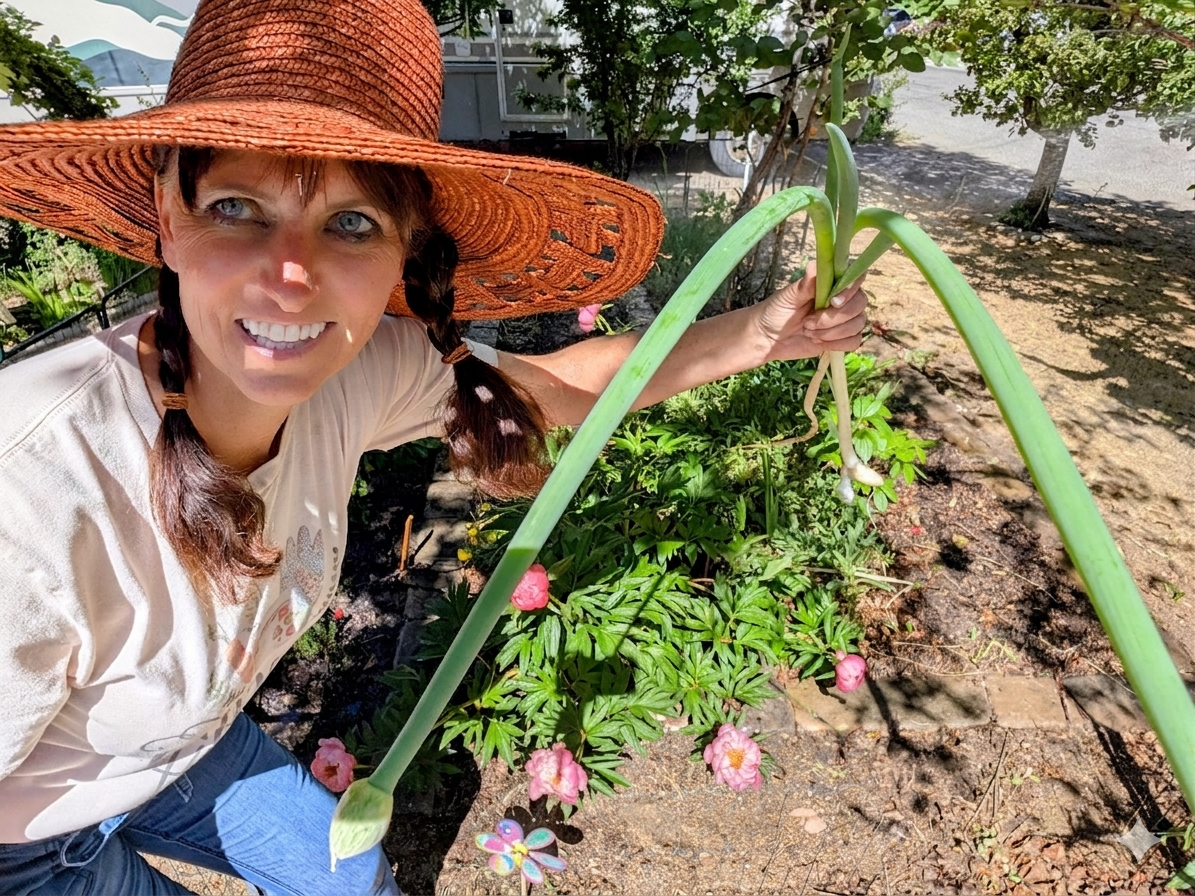 ivists.
How to Actually Succeed in a Community Garden
Let’s get practical—because praying alone won’t grow vegetables.
I lucked out and had a friend who had a plot at the community garden in 2025. He told me a spot was opening up in our small community garden 6 months in advance. I jumped on it and got my name on the top of the list six months ahead of time. I am serious about arugula! Our local community garden only has 35 beds for rent during a season and in a town of 17,000, those high-quality organic beds are in demand!
So, you are ready to commit to this community garden lifestyle? Get ready for fun, festivities, and fruits and veggies! And aphids. There could be aphids.
Plan Ahead
With a short growing season, planning your garden layout is everything.
- Start seeds early (You can start plants in the garage or with grow lights. But I’m not that kind of prepper, no, not yet!
- Or buy plants locally once they’ve acclimated
- Hit garden centers the day shipments arrive for the best picks
- Purchase a decorative garden fence to lock out bigger pests, such as bunnies who love to eat red leaf organic lettuce
- In our organic garden, we swear by these mole and rabbit solar repellent.
Companion Planting: Because Even Tomatoes Have Preferred Social Circles
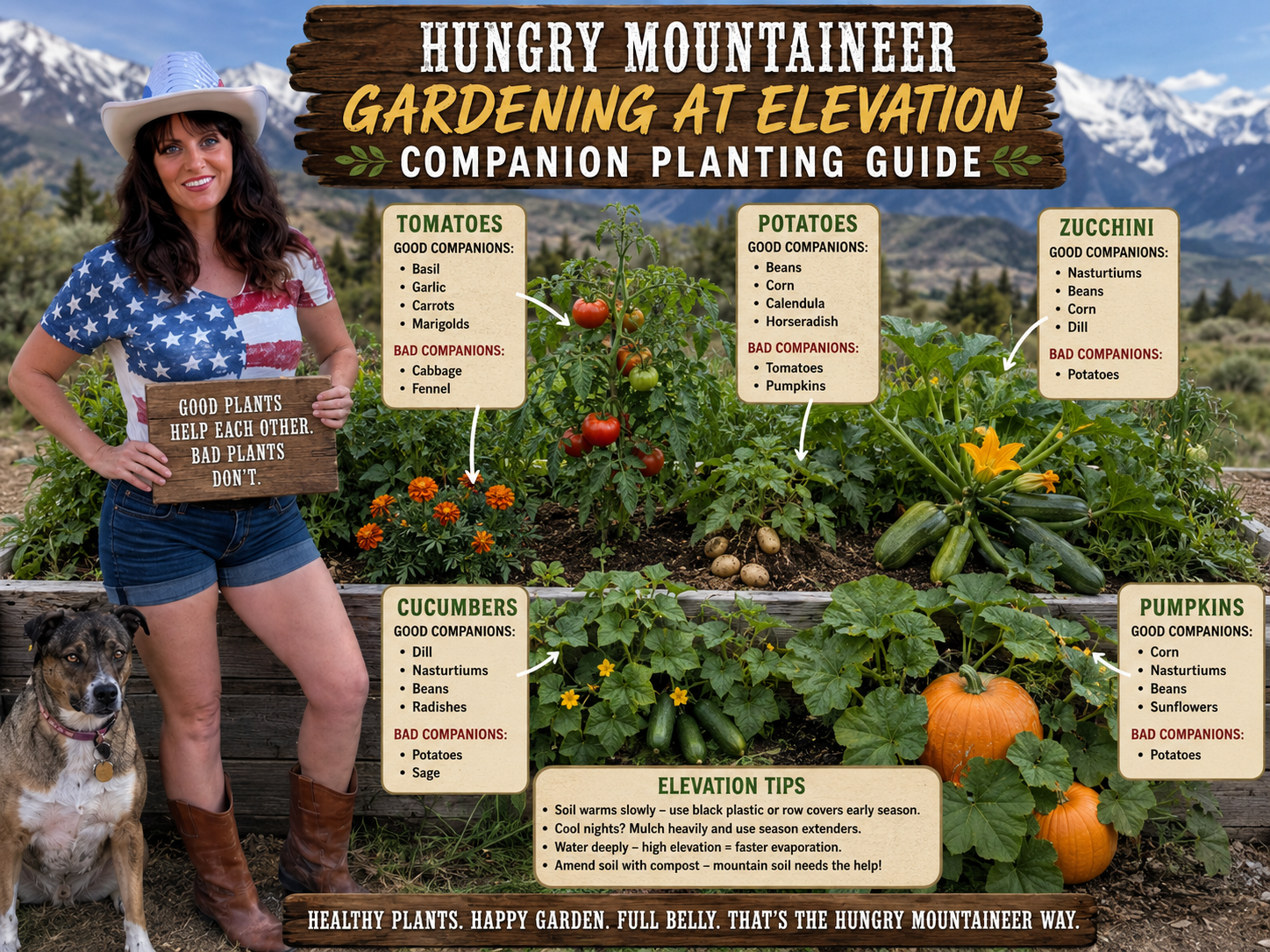
Plant companion plants together whenever you can, because some plants are besties—like tomato and basil—and some plants absolutely should not be forced to socialize, kind of like you and that one liberal cousin at Thanksgiving.
I also found these fantastic little garden spinners at Dollar Tree to help keep the birds away, because once again, Dollar Tree is out here solving life’s problems for $1.25 while the rest of us overpay for “garden accessories” at Hobby Lobby.
Marigolds are another must-have in the vegetable garden because they help keep whiteflies away and attract pollinators, which is basically the gardening version of hiring tiny winged interns. My neighbor also generously offered me several garbage bags full of horse poop, which is thoughtful, alarming and very mountain-town wholesome. But after a quick Google search, I learned that if you’re using horse manure in your garden, you need to mix that shit into the soil about six weeks before planting because it can be high in ammonia. The more you know, the more you realize gardening is just compost, optimism and weird neighbor gifts.
Location Matters (More Than You Think)
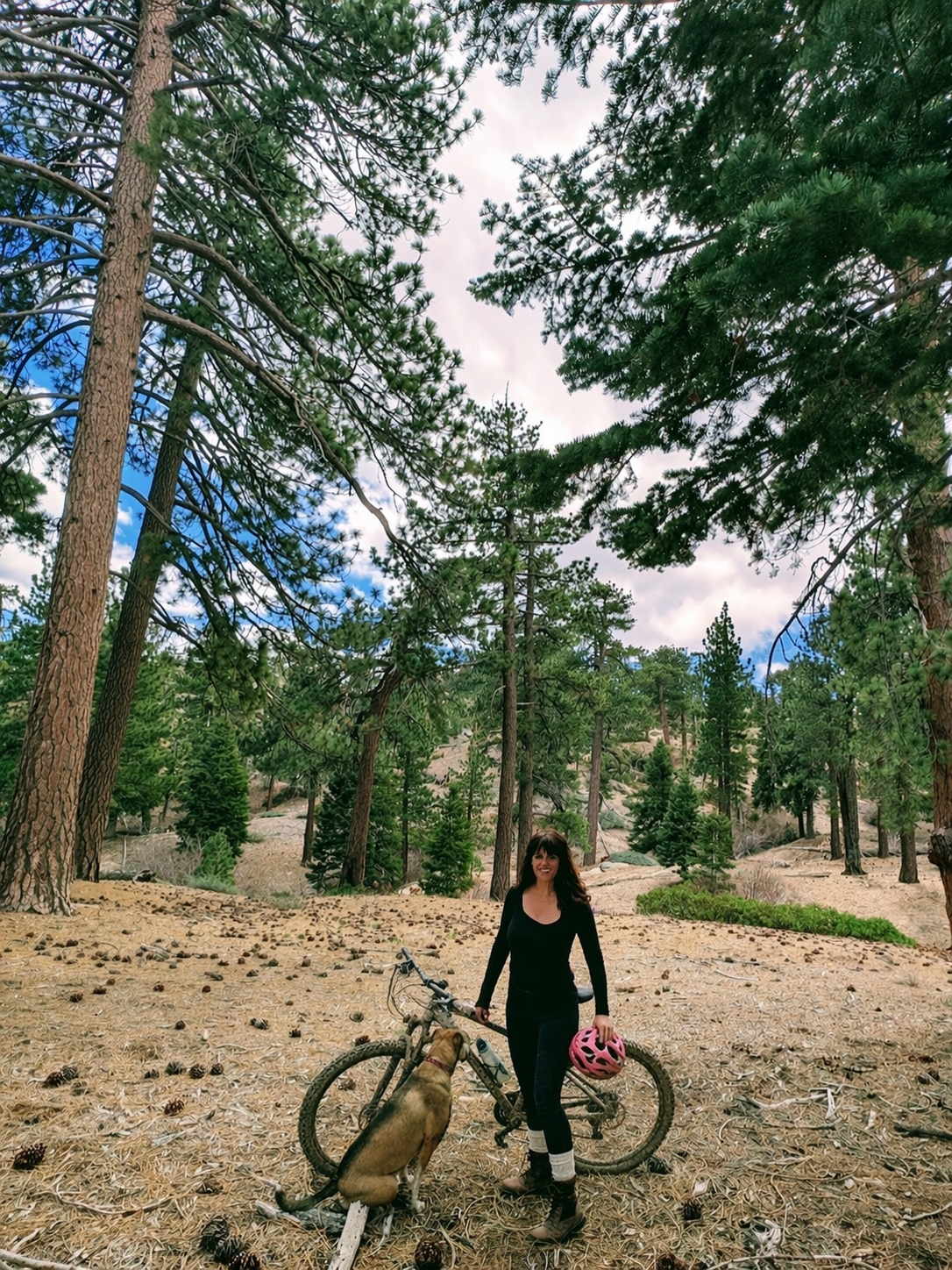
Here is a great community garden tip: your community garden plot should be close to home. Why?
Because you’ll need to:
- Water every 1–2 days
- Check for pests
- Panic about frost
My plot is a 36-minute mountain bike ride away from my cabin kitchen, which I tell myself is “sustainable living” and not just cardio punishment. Many days, I decide to really be a sustainable gardener and community member and mountain bike to the garden to water, especially on Tuesday mornings, then I can stop at our local Farmer’s Market on the way home. Sustainable Tuesdays are my kind of fun!
Talk to Your Neighbors (But Keep It Surface Level)
Community gardens are like group projects—you don’t need to know everyone’s life story. Stalk your local garden plot the summer before to get a good idea of what your neighbors are growing successfully. Talk to your neighbors! You don’t need to go deep and ask who they are voting for or why on earth they drive a Prius, but be the friendly outgoing one and your neighbors will give you great advice.
- Ask what grows well
- Learn pest control tricks
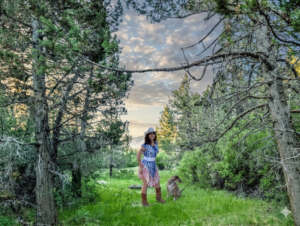
We love this planet! - Arrange plant-watering swaps

Also: veggie trades = elite gardener currency
Mother Earth will make you strong if you give her love and care
John Denver famously crooned, Inch by inch, row by row, gonna make this garden grow.
All it takes is a rake and a hoe and a piece of fertile ground.
Inch by inch, row by row, Someone bless the seeds I sow.
That melody takes me back to 1979 and to my childhood, playing in the dirt as organic a childhood as any 80s child could wish for. I may have grown up but I basically never stopped playing in the dirt.
Mid-May, with no freezing temperatures on the horizon, I finally headed to the community garden center at last to stock up on some veggies and herbs such as tomatos, Crook-Neck Squash, all the lettuces, basil and Persian cucumbers.
Was it hard to wait so long to finally buy the veggies I wanted? Absolutely, but when it comes to community garden tips, you really need to try and be patient. Buy those cukes too early and you are just wasting money in the long run.
Gardening Is Just Yoga with Dirt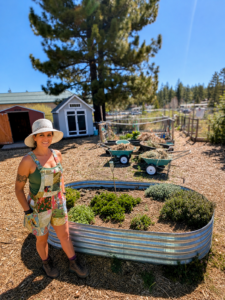
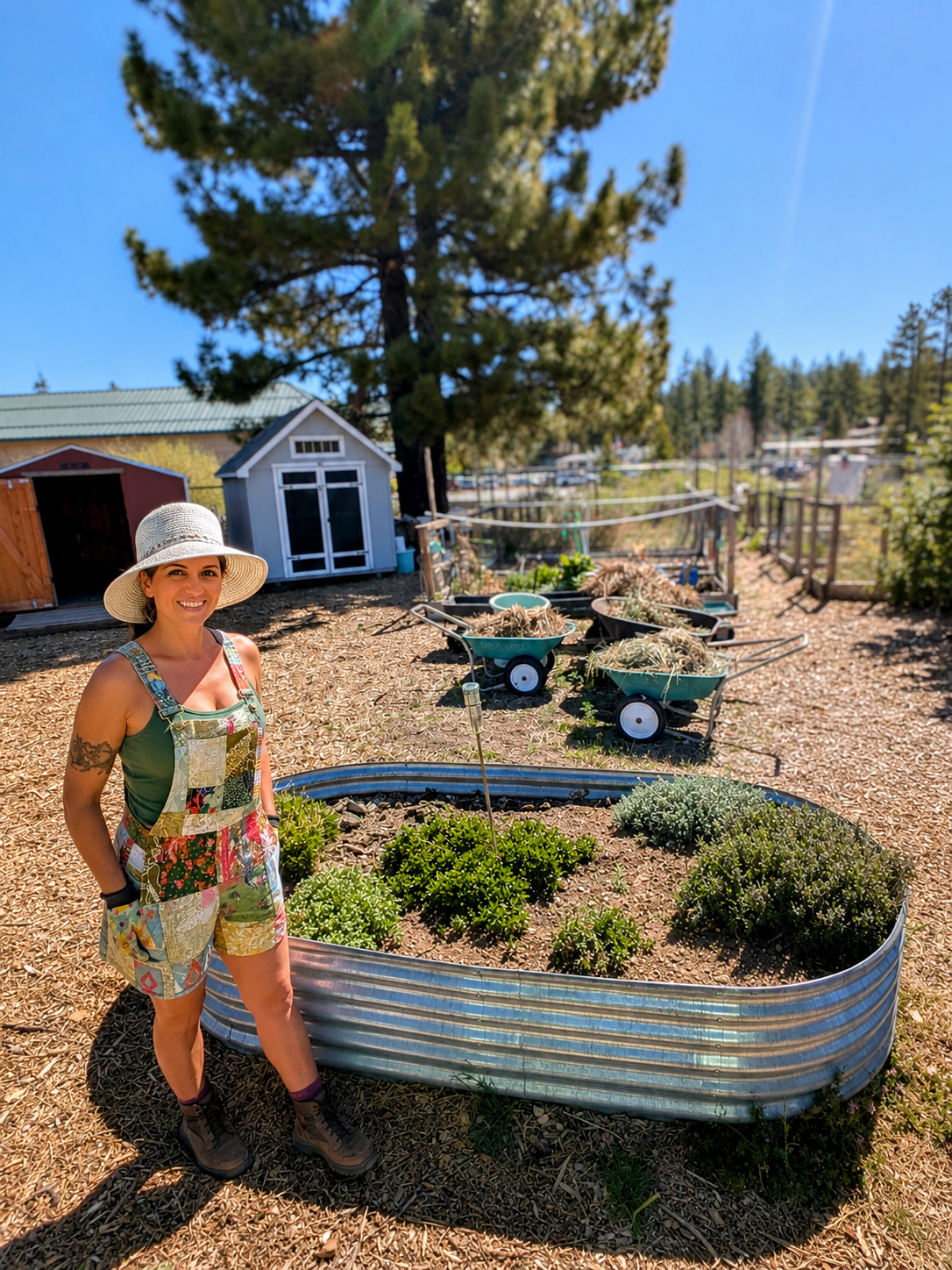
After you purchase an embarrassing amount of plants at your local garden store (I don’t judge), it’s time for the fun part: planting. Make sure you have fresh gardening gloves with no holes in them and a knee pad. Always wear closed-toe shoes when working in the garden. You will just be way more comfortable as inner peace is great, but have you tried aggressively weeding? At some point, you will find yourself in positions such as Downward Facing Hoe (Like downward dog, but fueled by rage and weeds)
Chicken Manure– Turning Yesterday’s Cluck Into Tomorrow’s Tomatoes
Let’s not sugarcoat it. Organic gardening = managing poop like a professional.
Chicken manure is:
- High in nitrogen
- Lower in weed seeds than cow manure
- Basically, plant steroids (but organic)
Just make sure to:
👉 Let it age 6–8 weeks before planting (because salmonella is not part of the aesthetic)
Why chicken manure? Doesn’t your garden deserve premium poop? We swear by chicken shit in our gardening household. Grow Big or Go Home – Powered by Chicken Poop. Chicken poo is higher in calcium than other livestock manures, all natural and safe for your family, unlike Miracle-Gro, which is not RFK Jr approved.
Backyard Crops – Keep Your Kale Close…and your Parsley closer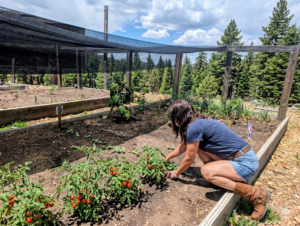
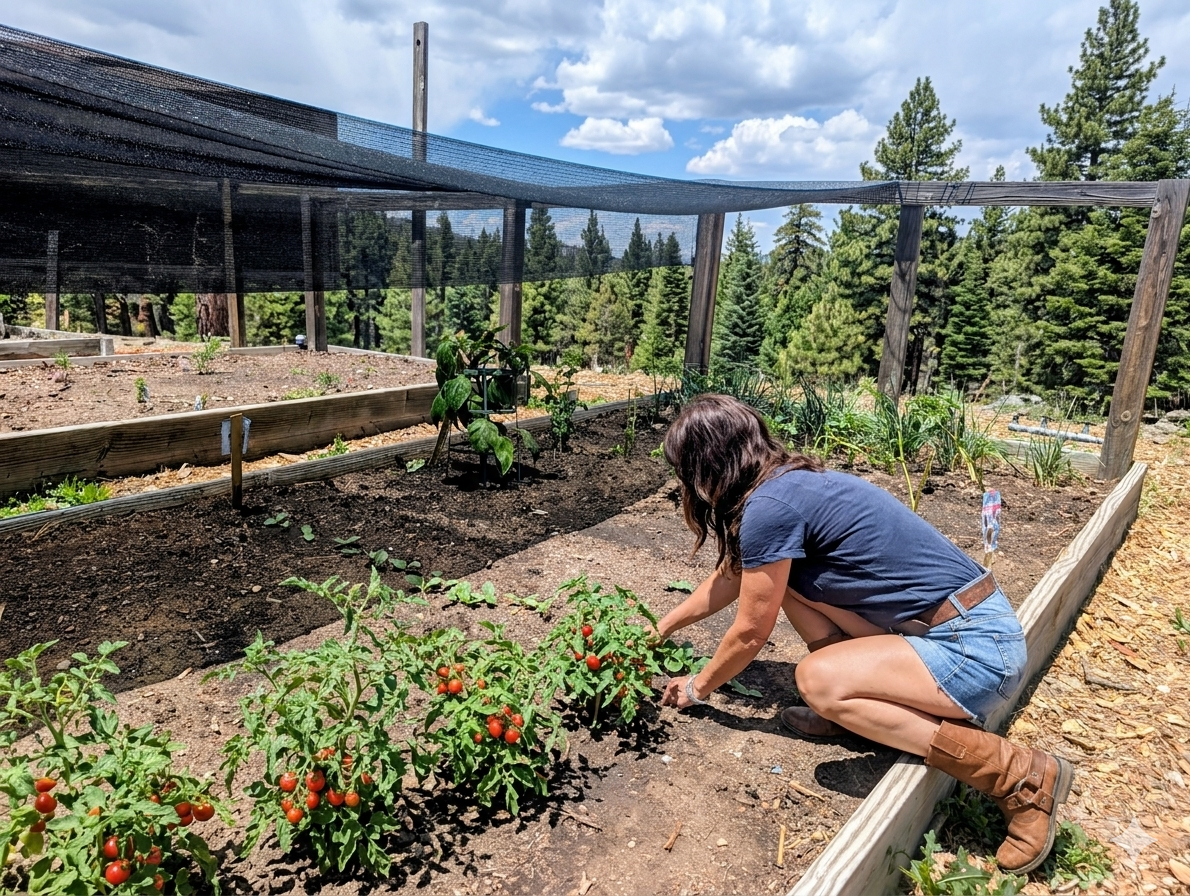
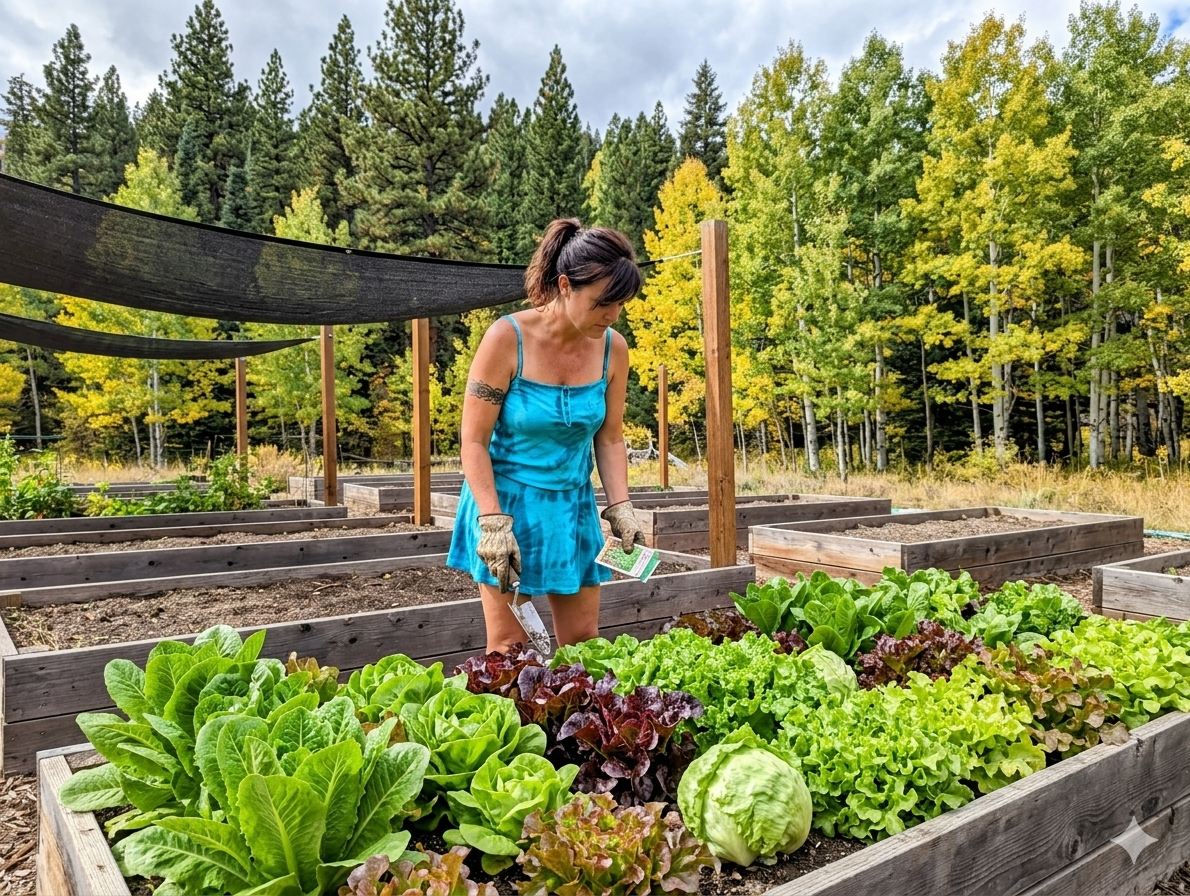
Not everything belongs in a shared space. So what should you grow in your home backyard and not all the way in town at the community garden? Pot. Just kidding. What you really want to grow at home are the things you use every day in cooking. Think about the herbs you want to grab and go last-minute to throw in a salad. In my case, so much lettuce and kale, because if you are anything like me, lettuce is life, literally.
Just remember when you seed, if planting a Soup Plantation salad bar of lettuce, make sure you stagger your lettuce planting every few weeks. This way, you will be tossing lettuce leaves in your salad spinner all summer long.
What to Grow at Home vs. the Community Garden
Grow at Home:
- Herbs (mint, oregano, chives)
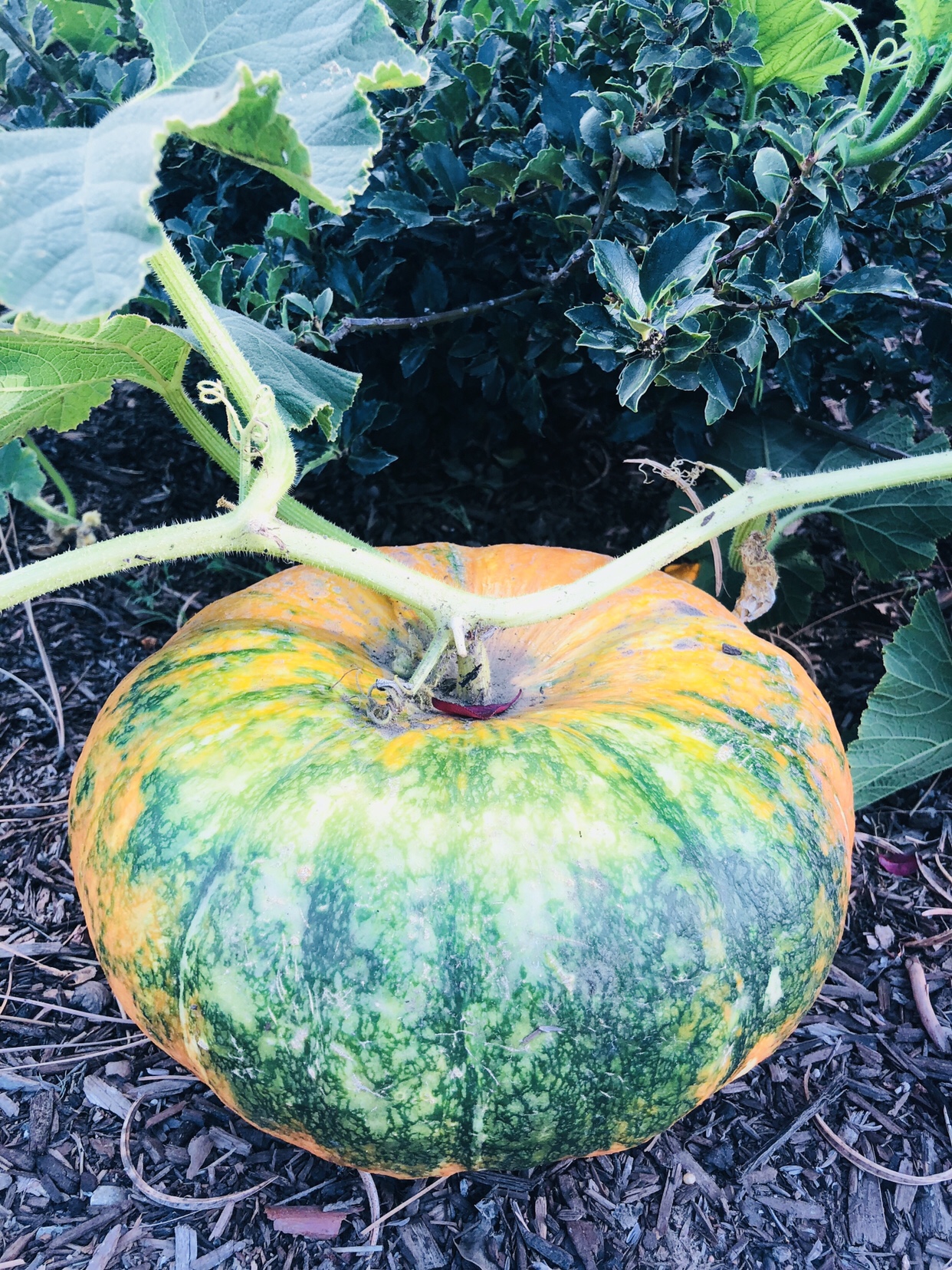
Community garden tips: Pumpkin plants get bigger than you would expect! - Lettuce
- Daily-use greens
Avoid at the Community Garden:
- Pumpkins (they will take over like a hostile roommate). You can plant one pumpkin plant and it will take up your entire twelve-by-twelve plot! And sure, you can have it spilling over into the aisle but that is just rude to your community garden neighbors, like not weeding the dandelions out of your yard or putting up a Biden for President banner back in 2020. If you want to grow more than one pumpkin plant, think about getting two separate plots.
- Anything you’ll need constantly, you want to grow in your home garden to have on hand when cooking lunch.
👉 Community garden = production
👉 Home garden = convenience
How to coop
If you are living that community garden lifestyle this summer, don’t forget about Dollar Tree! I grabbed a stack of cheap stepping stones from Dollar Tree and—look at me, suddenly a landscape architect—mapped out little walkways between my plants. Not only does it save my knees, but it also keeps me from trampling my own basil like a clumsy garden troll every time I go in.
Tomatoes; Finally!
 When it’s finally time to put your precious tomato plants in the ground (after weeks of weather anxiety and checking the forecast obsessively), do yourself—and your plants—a favor: Give that root ball a gentle spray before planting.
Why? Because half the time those poor things are root-bound and stressed, just like the rest of us. A little moisture helps loosen them up so they don’t go into full meltdown the second they hit real soil. Think of it as a calming pre-plant spa treatment.
Epsom Salt – Because Even Tomatoes Need Electrolytes
Now let’s talk about giving your plants a fighting chance. When planting tomatoes, peppers, or eggplant, toss about 1 teaspoon of Epsom salts into the planting hole—but dilute it in water first so you don’t absolutely shock the system.
Epsom salt is rich in magnesium, which:
- Helps plants absorb nutrients
- Supports strong growth
- Keeps your tomatoes from looking store-bought
Basically, it’s the plant version of electrolytes after a rough day.
Bone Meal & Eggshells – Your Garden’s Calcium Obsession
If your tomatoes had a wishlist, calcium would be at the top.
Adding bone meal or crushed eggshells to your planting hole helps:
- Strengthen roots
- Prevent blossom-end rot (aka tomato tragedy)
Wood Ash – From Fireplace to Fancy Soil Condiment

Yes, that leftover ash from your fireplace? Congratulations, it’s now garden gold. Wood ash is packed with potassium and calcium and works best for plants that like neutral to slightly alkaline soil.
Your VIP list of plants that love it:
- Tomatoes (less rot, more glory)
- Garlic, onions, leeks
- Leafy greens like kale and spinach
- Root veggies like carrots, beets, and parsnips
👉 Pro tip: Mix wood ash into your compost or chicken manure early so it distributes evenly—don’t just dump it like you’re seasoning a steak.
Also:
- Only use clean, untreated hardwood ash (oak, maple)
- No weird chemicals, no sketchy burned furniture—this is a garden, not my parents’ house.
Grow Up, Not Out – Climbing Plants for the Win
If you’re working with a small space (hello, community garden life), you need to think vertically.
Plant things like:
- Beans
- Snap peas
They climb, they produce like overachievers, and they don’t hog your entire plot like a pumpkin with boundary issues.
The Hula Hoe – Because This Is How You Hoe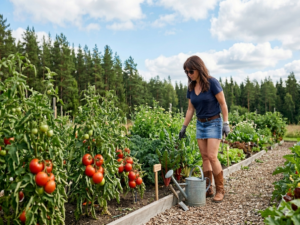
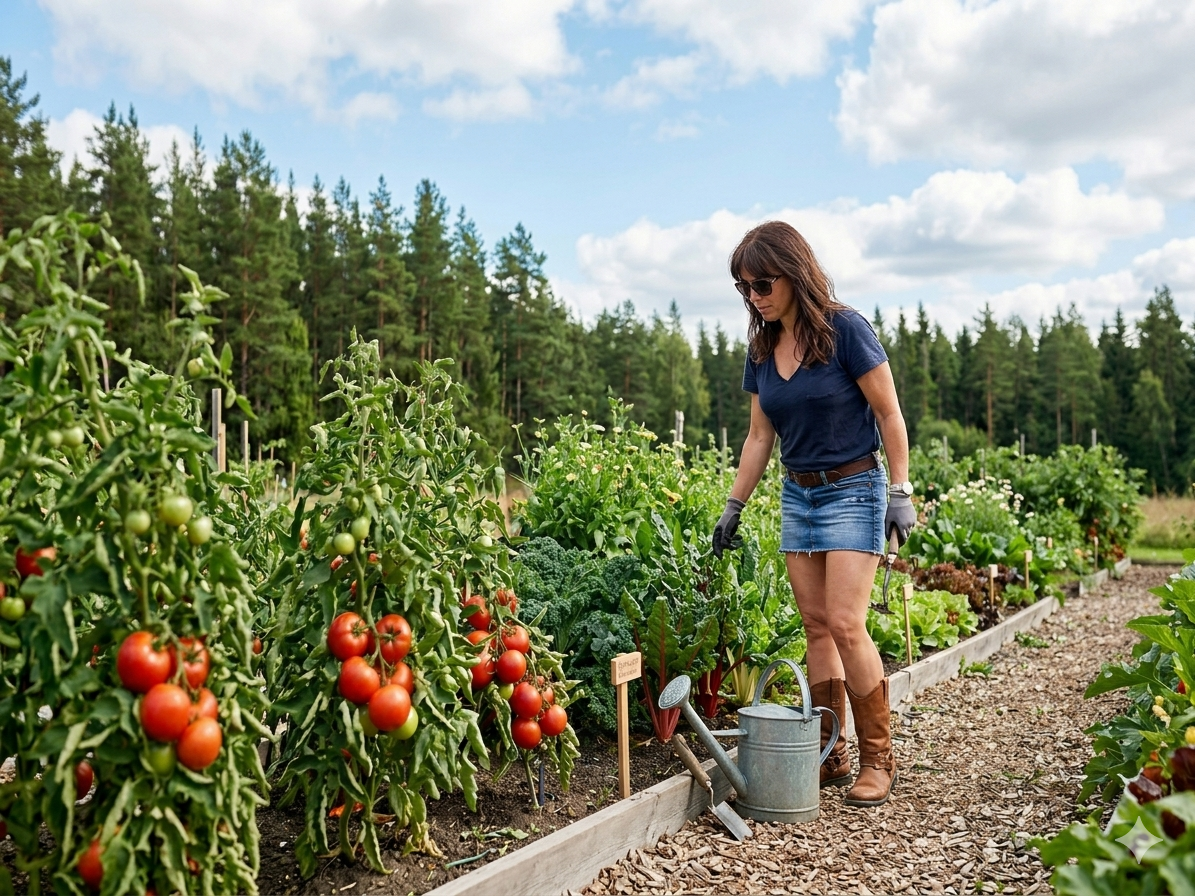
Let’s talk tools. Yes, your community garden probably provides tools. No, they are not your tools. Sometimes you just need to bring a few things from home. Enter: the Hula Hoe.
This thing glides through weeds like it has a personal vendetta, and I love it for that. I bring my own slightly bougie hoe from home because if I’m going to spend hours bent over in the dirt, I at least want to feel like I have premium equipment.
👉 Gardening tip:
Good tools won’t fix your life… but they will make weeding slightly easier on your back.
Organic Pest Control: Peace, Love, and Get Off My Tomatoes
I support nature. I do not support aphids. I’m not saying murder should be legal, I’m just saying maybe in the case of aphids and possibly all those rabbits that would make a delicious Rabbit Curry. This keeps the aphids, bunnies and yes, even the local Big Bear burros out of my home garden. I simply adore our mountain wildlife when we all have boundaries.
My go-to organic pest control methods:
- Cayenne pepper spray
- Garlic + oil mix
- And yes… Neem oil
Neem Oil: Aunty Approved, Bugs Evicted
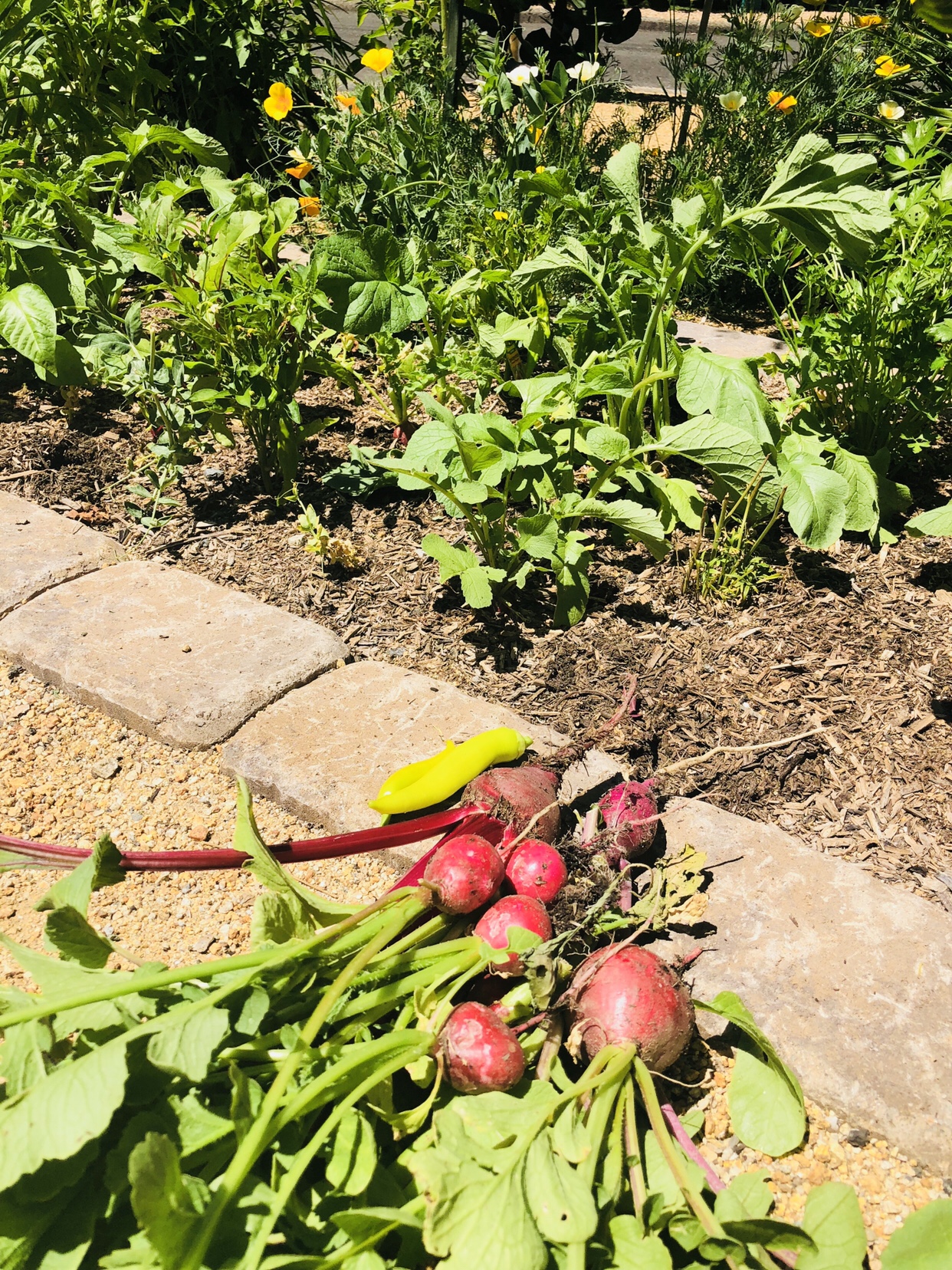
In Indian gardening traditions, Neem is basically sacred—and once you use it, you’ll understand why. In Indian culture—where Neem trees naturally grow—they’re often called Indian lilacs or even sacred trees. Once the oil is cold-pressed and you start spraying it in your organic garden, it all clicks. Suddenly, the aphids disappear, the powdery mildew backs off, and your plants start acting as if they’ve finally found religion. There’s a reason generations of Indian gardeners swear by Nem oil—it’s basically the OG organic pest control. When it comes to white flies, namaste, assholes and get off my tomatoes. It’s a little bit Ayurvedic, a lot bit “Get Lost, Bugs.”
And because neem likes to overachieve, it’s not just for your plants. It also doubles as a surprisingly great pre-gardening skin and hair treatment—because if you’re going to battle bugs and the sun, you might as well show up moisturized and slightly smug about it.
When it comes to insects in your organic garden and even skincare treatment, Neem oil is the organic answer.
Why do you need Neem oil in your life?
- Disrupts pest life cycles
- Kills fungus like powdery mildew
- Doesn’t harm beneficial insects
It’s:
👉 Natural
👉 Effective
👉 Slightly smelly (but worth it)
Community Garden Perks: Confessions of a community garden goddess
At some point in the season:
- You will have too much zucchini
- Someone will have too much mint
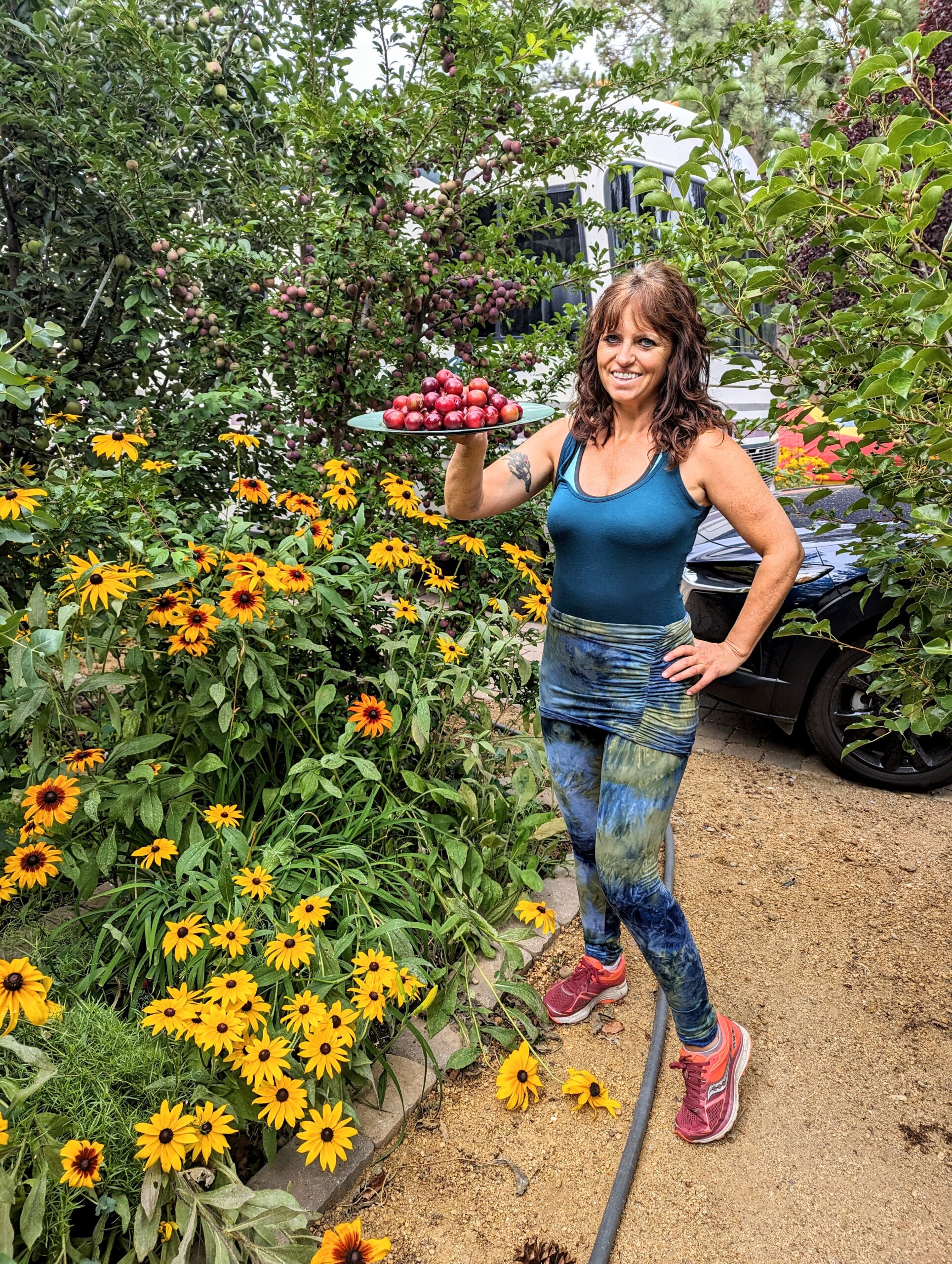
- There will be peaches. So many peaches.
Because, let’s face it, all of us local gardeners here at the community garden also have a fruit tree or six at home and sometimes we just happen to have “Millions of Peaches” as Green Day grunge rock puts it. Someday soon, you will have so much freshly grown lettuce, forget about stocking up at Costco! One thing with growing your own lettuce, you need to purchase a Salad Spinner. Like crunching on beetles in your green leaf? Me neither.
Every year, our community garden is just chock full of organic mint. Of course, no one knows what to do with that much mint. Until I entered the organic garden community. Don’t worry, Fox Farm Community Garden, the Backcountry Snack Sherpa is here to save the day and the gardening season with her Mango Mint Chutney made with locally grown organic mint! This foodie Guide to Everything Wild in Big Bear Lake is also in charge of all the best Anglo Indian snacks. No charcuterie board is complete without a side of this vibrant green chutney, available all summer long!
Community garden life naturally turn into:
👉 Seed swaps
👉 Fruit exchanges
👉 Accidental charcuterie sourcing operations
And honestly? That’s the best part.
Sunburned Scarecrow Pose
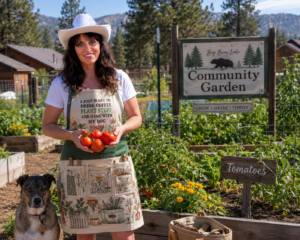
May through October, this community garden lifestyle is a great way to live healthy, more sustainably, get to know your neighbors and ignore all those Fake News foods out there dripping with additives, pesticides and artificial flavors. I truly recommend joining your local community garden lifestyle. Your health, your family and your community will thank you later!
It’s about:
👉 Growing your own food
👉 Connecting with your community
👉 Getting dirt under your nails and calling it therapy
Because let’s be real:
Gardening is cheaper than therapy… and you get tomatoes.
Community Garden Tips FAQ
What are the best community garden tips for beginners?
The best community garden tips for beginners are to plan your garden before planting, choose crops that match your local climate, talk to experienced gardeners, water consistently, watch for pests, and keep your plot close enough to visit often. Community gardening is rewarding, but it is not a “plant it and forget it” situation unless your goal is to grow weeds and disappointment.
Is community gardening good for sustainable living?
Yes, community gardening is a great way to live more sustainably. Growing your own vegetables, herbs, and fruit helps reduce your carbon footprint, supports local pollinators, improves soil health, encourages composting, and cuts down on grocery-store produce shipped from far away. Plus, nothing tastes better than a tomato that did not spend a week riding in a truck like it was on a sad cross-country road trip.
How do I start a community garden plot?
To start a community garden plot, first find a local community garden and ask about availability, fees, rules, water access, and planting dates. Many community gardens have waiting lists, so get your name on the list early. Once you have a plot, plan your layout, choose crops that grow well in your area, bring basic tools, and prepare yourself emotionally for the fact that aphids may also RSVP.
What should I grow in a community garden?
Good crops for a community garden include tomatoes, squash, cucumbers, beans, snap peas, peppers, eggplant, leafy greens, basil, and other herbs. In a small community garden plot, it is smart to grow vertically when possible and avoid crops that take over the entire space, like pumpkins, unless you want your neighbors quietly judging your plant boundary issues.
What should I grow at home instead of in a community garden?
Grow daily-use herbs and greens at home, especially items you want to grab quickly while cooking. Herbs like mint, oregano, chives, basil, parsley, lettuce, kale, and other salad greens are great backyard or patio crops. The community garden is perfect for bigger production crops, while the home garden is for convenience, because nobody wants to bike across town just to garnish lunch.
What are the best community garden tips for high-altitude gardening?
For high-altitude gardening, wait until the risk of frost has passed, choose plants suited for a short growing season, buy locally acclimated plants when possible, and be ready to cover tender vegetables if late spring cold weather moves in. Mountain gardening requires patience, flexible expectations, and the emotional strength to accept that Memorial Day weekend may still bring frost drama.
When should I plant vegetables in Big Bear Lake?
In Big Bear Lake and other high-altitude mountain towns, gardeners usually wait until mid-May or later to plant warm-season vegetables, depending on the forecast. Even after Mother’s Day, late frost or even snow can still happen. Check local conditions before planting tomatoes, peppers, cucumbers, squash, and basil, because mountain gardening is basically plant-based Russian roulette with cuter gloves.
Why is companion planting important in a vegetable garden?
Companion planting helps certain plants grow better together, attract pollinators, repel pests, and make better use of garden space. Tomato and basil are a classic companion planting pair, while marigolds are popular because they help attract pollinators and may help discourage pests like whiteflies. Some plants are besties, and some should not be forced to socialize, kind of like you and that one liberal cousin at Thanksgiving.
Are marigolds good for a vegetable garden?
Yes, marigolds are a great addition to a vegetable garden because they attract pollinators and are often used as companion plants near tomatoes and other vegetables. Many gardeners plant marigolds to help discourage pests, add color, and make the garden look cheerful instead of like a dirt rectangle full of anxiety.
Can I use horse manure in my vegetable garden?
Yes, horse manure can be used in a vegetable garden, but it should be aged or composted before planting. Fresh horse manure can be high in ammonia and may burn young plants if it is added too close to planting time. Mix it into the soil well ahead of planting so it has time to break down, because “surprise bags of horse poop” may be a thoughtful mountain-town gift, but your tomatoes still deserve boundaries.
Is chicken manure good for organic gardening?
Chicken manure can be excellent for organic gardening because it is rich in nitrogen and can help support strong plant growth. However, it should be aged or composted before planting to avoid burning plants and to reduce food-safety risks. In other words, chicken manure is basically premium poop for tomatoes, but it still needs time to calm down before entering polite garden society.
How long should chicken manure age before planting?
Chicken manure should be aged or composted before it is added near edible crops. Many gardeners let chicken manure age for at least several weeks before planting, and longer composting is even better. Fresh manure can be too strong for young plants, so do not toss it straight onto tender seedlings unless you are trying to create a tiny vegetable crime scene.
Can Epsom salt help tomato plants?
Epsom salt contains magnesium, which can help plants if your soil is low in magnesium. Some gardeners add a small amount of diluted Epsom salt when planting tomatoes, peppers, or eggplant. Use it carefully and avoid overdoing it, because plants need balanced soil nutrition, not a full spa day with electrolytes and unrealistic expectations.
Why add bone meal or eggshells when planting tomatoes?
Bone meal and crushed eggshells are often added to tomato planting holes because they provide calcium and other nutrients that support root growth and may help reduce the risk of blossom-end rot when soil moisture and nutrition are balanced. Tomatoes can be dramatic little divas, and calcium is one way to keep them from turning their problems into your problems.
Is wood ash good for the garden?
Wood ash can be useful in the garden because it contains potassium and calcium, but it should be used carefully because it can raise soil pH. It works best for plants that prefer neutral to slightly alkaline soil. Only use clean, untreated hardwood ash, and never use ash from painted wood, treated lumber, trash, or anything sketchy enough to make your garden question your judgment.
How do I control pests naturally in an organic garden?
Natural pest control in an organic garden can include companion planting, marigolds, neem oil, garlic spray, cayenne pepper spray, garden spinners, barriers, fencing, and regular pest checks. Organic pest control works best when you stay consistent and catch problems early, before aphids turn your tomatoes into an all-inclusive resort.
What does neem oil do in an organic garden?
Neem oil is a popular organic gardening tool used to help manage pests like aphids and whiteflies and fungal problems like powdery mildew. It should be used according to label directions, ideally in the cooler part of the day, and with care around pollinators. Neem oil is natural, effective, slightly smelly, and basically the organic gardener’s way of saying, “Namaste, bugs, now get off my tomatoes.”
How do I keep rabbits and other animals out of my garden?
To keep rabbits and other animals out of your garden, use fencing, raised beds, garden netting, repellents, motion-activated deterrents, and barriers around tender greens. Wildlife is charming until it treats your organic lettuce like a free salad bar, so protect your crops early before the bunnies, birds, and burros mistake your garden for a buffet.
Why should I talk to other gardeners at a community garden?
Talking to other gardeners is one of the best ways to learn what grows well in your local community garden. Experienced gardeners can share advice about pests, watering schedules, frost timing, soil amendments, and which plants thrive in your specific microclimate. You do not need to ask who they voted for, but you should absolutely ask why their tomatoes look better than yours.
What tools should I bring to a community garden?
Useful community garden tools include gardening gloves, a knee pad, hand trowel, pruners, watering can or hose attachment, hula hoe, small rake, plant ties, stakes, sunscreen, and closed-toe shoes. Community gardens may provide shared tools, but bringing a few favorites from home makes weeding, planting, and pretending you have your life together much easier.
Why grow climbing plants in a small community garden plot?
Climbing plants like beans and snap peas are great for small community garden plots because they grow vertically instead of taking over the whole bed. Growing up instead of out helps save space, improves airflow, and keeps your garden from turning into a pumpkin-led hostile takeover.
Why should I stagger lettuce planting?
Staggering lettuce planting every few weeks helps give you a steady supply of fresh greens instead of one giant harvest followed by salad sadness. Succession planting is especially useful if you love lettuce, kale, herbs, and other quick-growing greens. It keeps the salad spinner busy all season without making you panic-eat an entire raised bed in one weekend.
Is community gardening worth it?
Yes, community gardening is worth it if you want fresh food, time outside, stronger community connections, better access to growing space, and a healthier lifestyle. It can also help you learn from neighbors, trade vegetables, reduce food waste, and reconnect with the dirt in the best possible way. Gardening is cheaper than therapy, and sometimes you even get tomatoes.
“`